

52
that gave rise to “Ecclesiastes,” nor would do so in our own time as biodiversity is
perverted and destroyed across the level playing fields of a seemingly ill-fated
planet. Neither Rembrandt, nor today’s scholars, can understand the totality of futilities that goaded the author(s) of the gloriously tired, troubled, schizophrenic dozen
chapters comprising that which has been described as the single most important
piece of writing in Western Civilization. The word itself is from the Greek word
“ekklesiastes,” its protagonist, Kohelet, referring to an individual who both convenes and also speaks to the assembled.
We have full license, literary, scientific, and moral, to presume meaning, all of its
“under the suns” and other repetitive laments. Translations, however exponentially
recessive, nonetheless convey a meaning altogether relevant to today; the colossal
cautionary tale which is human egotism in the face of our mortality. Those few
pieces of lines quoted above suggest the fragility of human observation, of science;
terse, unambiguous decrees that allow for sufficient flexibility in the face of disaster,
not unlike those final words in Wittgenstein’s Tractatus (The Tractatus LogicoPhilosophicus),
14
“Whereof one cannot speak, thereof one must be silent.”
15
14 By Ludwig Wittgenstein, With an Introduction by Bertrand Russell, Harcourt, Brace & Company,
Inc., New York and London: Kegan Paul, Trench, Trubner & Co., Ltd., 1922.
15 p. 189.
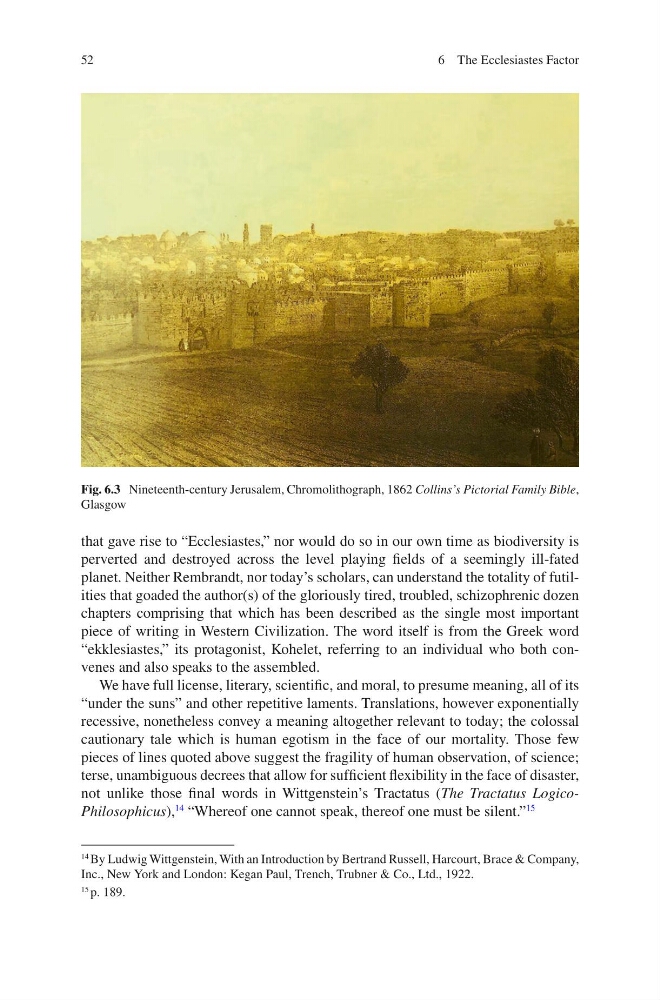
Fig. 6.3 Nineteenth-century Jerusalem, Chromolithograph, 1862 Collins’s Pictorial Family Bible,
Glasgow
6 The Ecclesiastes Factor
that gave rise to “Ecclesiastes,” nor would do so in our own time as biodiversity is
perverted and destroyed across the level playing fields of a seemingly ill-fated
planet. Neither Rembrandt, nor today’s scholars, can understand the totality of futilities that goaded the author(s) of the gloriously tired, troubled, schizophrenic dozen
chapters comprising that which has been described as the single most important
piece of writing in Western Civilization. The word itself is from the Greek word
“ekklesiastes,” its protagonist, Kohelet, referring to an individual who both convenes and also speaks to the assembled.
We have full license, literary, scientific, and moral, to presume meaning, all of its
“under the suns” and other repetitive laments. Translations, however exponentially
recessive, nonetheless convey a meaning altogether relevant to today; the colossal
cautionary tale which is human egotism in the face of our mortality. Those few
pieces of lines quoted above suggest the fragility of human observation, of science;
terse, unambiguous decrees that allow for sufficient flexibility in the face of disaster,
not unlike those final words in Wittgenstein’s Tractatus (The Tractatus LogicoPhilosophicus),
14
“Whereof one cannot speak, thereof one must be silent.”
15
14 By Ludwig Wittgenstein, With an Introduction by Bertrand Russell, Harcourt, Brace & Company,
Inc., New York and London: Kegan Paul, Trench, Trubner & Co., Ltd., 1922.
15 p. 189.
Fig. 6.3 Nineteenth-century Jerusalem, Chromolithograph, 1862 Collins’s Pictorial Family Bible,
Glasgow
6 The Ecclesiastes Factor