

714
As the escalating stressors of humanity’s inflictions narrow the gaps between
options, it is supposed that natural selection brutalizes variety, singling out choices
with fright and flight. But if this were strictly the case, the microbial mats in thermal
vents, or the macrofaunal communities that rapidly reinvented the charred slopes of
a Mt. Saint Helens or Iceland’s Surtsey would not demonstrate such astonishing,
post-catastrophic diversity. Natural selection, while evident in the world’s marine
muds,
2
poses our greatest intellectual challenge. Namely, that the forensics argue
convincingly that the prime Darwinian motif is in fact incommensurate with the last
remaining hominin whose internal powers of fertility and compounding consumption have proved comfortable with the ruination of every biological protocol and
proxy. These were current during the years Darwin was writing his On the Origin of
Species by Means of Natural Selection (1859). Side-stepping every primordial rule
of logic that longs for what Matthew Arnold exhorted as that “Endless extinction of
unhappy hates” (“Merope,” 1858, l. 100), that would otherwise assist evolution in
her leisurely and beneficent approach to engendering and liberating interdependent
life forms, H. sapiens have selected subversion.
Even as China witnesses its lowest birth rate since 1949 (the one-child policy
having finally been rejected in 2016),
3
that country is still marching toward 1.5
2 See “How the dinosaur-killing asteroid primed Earth for modern life,” by Tim Vernimmen,
January 16, 2020, National Geographic, https://www.nationalgeographic.com/science/2020/01/
how-dinosaur-killing-asteroid-primed-earth-for-modern-life/. Accessed January 17, 2020.
3 See “China’s Looming Crisis: A Shrinking Population,” by Steven Lee Myers, Jin Wu
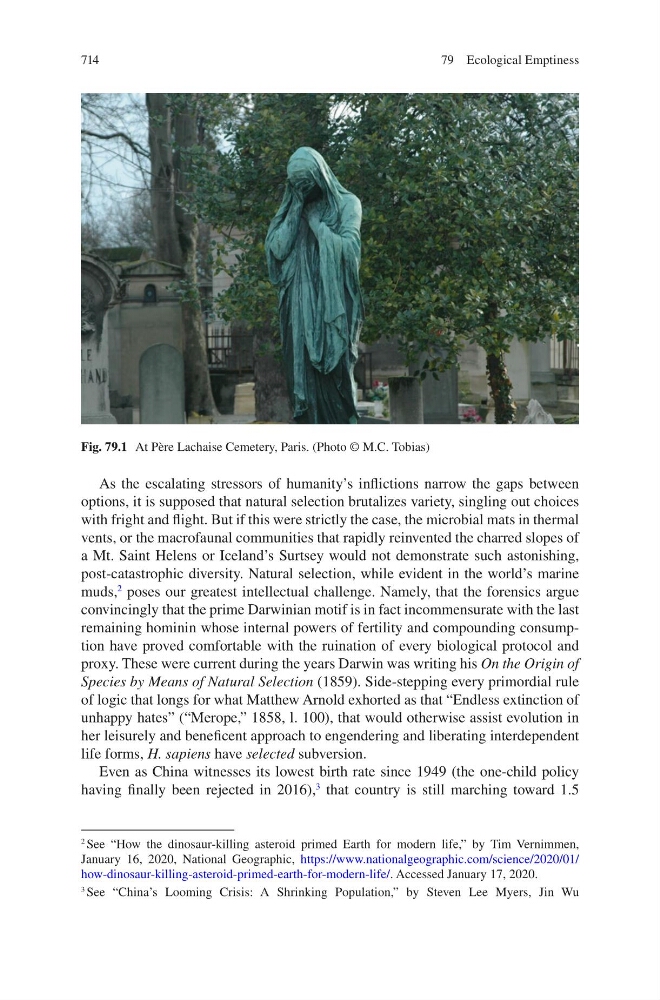
Fig. 79.1 At Père Lachaise Cemetery, Paris. (Photo © M.C. Tobias)
79 Ecological Emptiness