

644
Wildlife, Federal, State, and CITES listings (Convention on International Trade in
Endangered Species of Wild Fauna and Flora), from nation to nation, are not credible when weighed against the subjective. The individual’s subjective personality
hinges upon an entirely different set of calculations from those predicated by any
group of Homo sapiens. Their separate constraints ignite a biological swathe of
variability that fosters judicious paradigms and markers, possibly environmental
fates themselves, that may be like the idea of uncontacted tribes, a matter of ratiocination and terminology within the penumbra of human linguistic chaos, biosolipsism, and support systems in the name of scientific cohesion—one of numerous
prospective storylines, accumulations of anecdotes.
For the sake of allegorical clarity, this syndrome of moral and physical confusion
led from the naming of plants and animals in the Bible to the Parmenides dialogue
featuring the one and the many. No matter into which human language its description is enshrined, all its words carry the same weight of semions, whether, for example, in the Jain, Ptolemaic, Aristotelian, or Newtonian world orders. Quantum
physics may question certainty, as both Heisenberg and Wittgenstein have made
tentatively clear. But even their assertions were the byproducts of a cultural hubris
fortified by the zoology of their combined circumstances. The outcomes are symbolic of a general predicament which is the core of vagueness. It cannot presume to
know the Other because to itself, by itself, for itself, and in any other guise, it is a
collection of false consciousness, presumptive negatives.
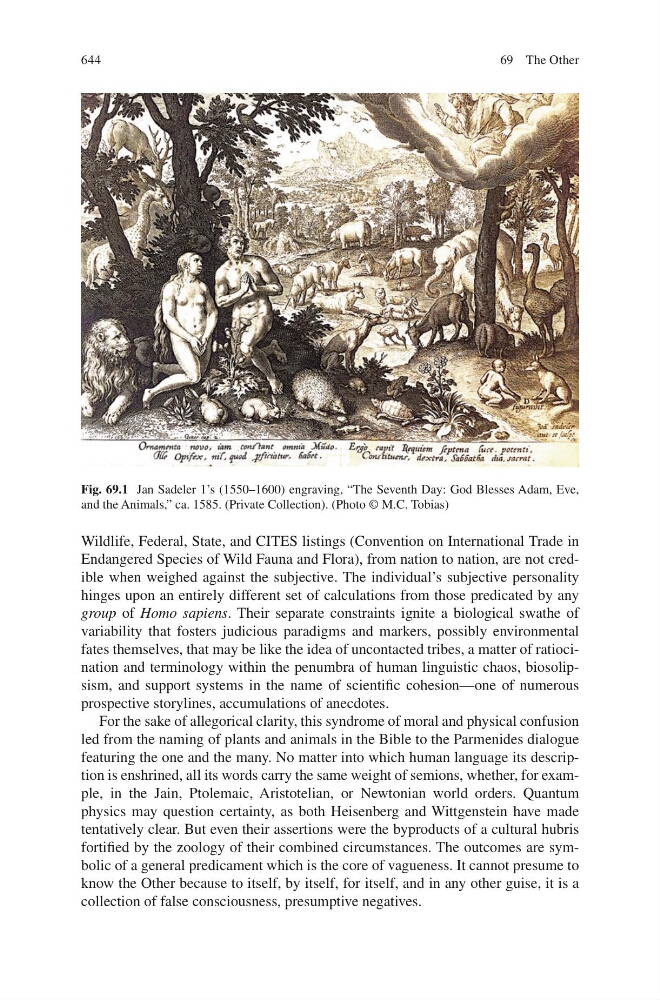
Fig. 69.1 Jan Sadeler 1’s (1550–1600) engraving, “The Seventh Day: God Blesses Adam, Eve,
and the Animals,” ca. 1585. (Private Collection). (Photo © M.C. Tobias)
69 The Other