

563
in the National Museum in Prague which “possesses 34 specimens of 14 extinct and
nearly extinct species of birds” including “an upper jaw” and “three leg bones” of a
dodo from a marsh in the Mauritius; a “mandible,” a “lower beak,”
30
obtained at an
unknown date from “Reálka na Smíchovê a secondary school in Prague-Smichov,
Czech Republic.”
31
Unlike the Greak Auk, that utilized various North Atlantic
islands, such as St. Kilda, the Dodo appears to have largely been restricted to the
30 “P610.1111/j.1474-919X.200600478.x-002910, mount, no date or locality.
31 See “Extinct and nearly extinct birds in the collections of the National Museum, Prague, Czech
Republic,” by Jirí Mlíkovský, Department of Zoology, National Museum (NMP), Journal of the
National Museum (Prague), Natural History Series Vol. 181 (9): 95–123. © Národní museum,
Praha, Czech Republic 2012, https://www.researchgate.net/profile/Jiri_Mlikovsky2/publication/2724900549_Extinct_and_nearly_extinct_birds_in_the_collections_of_the_National_
Museum_Prague_Czech_Republic/links/54c61ada0cf277664ff2d3ea.pdf; See also, 338 Bull.
B.O.C. 2003 123A Extinct and endangered (“E&E”) birds: a proposed list for collection catalogues by M. P. Adams, J.H.Cooper and N.J. Collar, http://www.scricciolo.com/extinct_endangered_list.pdf. See also http://www.thriftbooks.com/w/lost-animals-extinctions-and-the-photo
graphic-record/9415316/. And https://books.google.com/books/about/Extinct_Birds.html?id=
z7RIAkGw0-UC. See also, Anwar Janoo, “Discovery of isolated dodo bones [Raphus cucullatus
(L.) Aves, Columbiformes] from Mauritius cave shelters highlights human predation, with a comment on the status of the family Raphidae, Wetmore, 1930. Annales de Paléontologie 91: pp. 167–
180. See also, David L. Roberts and Andrew R. Solow, “Flightless birds: When did the dodo
become extinct?” Nature 425 (6964), 2003.
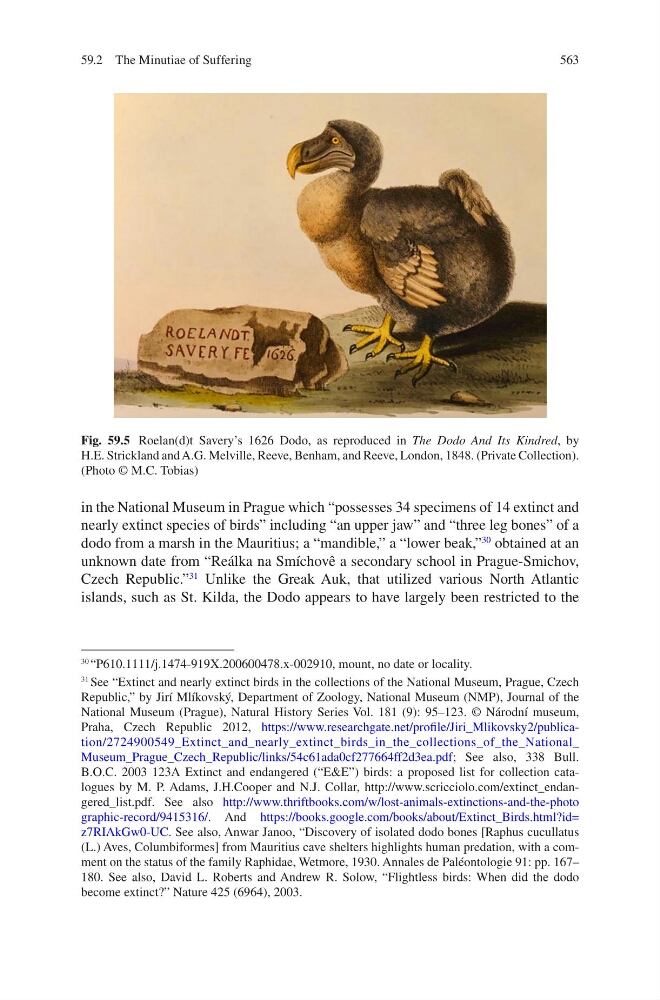
Fig. 59.5 Roelan(d)t Savery’s 1626 Dodo, as reproduced in The Dodo And Its Kindred, by
H.E. Strickland and A.G. Melville, Reeve, Benham, and Reeve, London, 1848. (Private Collection).
(Photo © M.C. Tobias)
59.2 The Minutiae of Suffering
in the National Museum in Prague which “possesses 34 specimens of 14 extinct and
nearly extinct species of birds” including “an upper jaw” and “three leg bones” of a
dodo from a marsh in the Mauritius; a “mandible,” a “lower beak,”
30
obtained at an
unknown date from “Reálka na Smíchovê a secondary school in Prague-Smichov,
Czech Republic.”
31
Unlike the Greak Auk, that utilized various North Atlantic
islands, such as St. Kilda, the Dodo appears to have largely been restricted to the
30 “P610.1111/j.1474-919X.200600478.x-002910, mount, no date or locality.
31 See “Extinct and nearly extinct birds in the collections of the National Museum, Prague, Czech
Republic,” by Jirí Mlíkovský, Department of Zoology, National Museum (NMP), Journal of the
National Museum (Prague), Natural History Series Vol. 181 (9): 95–123. © Národní museum,
Praha, Czech Republic 2012, https://www.researchgate.net/profile/Jiri_Mlikovsky2/publication/2724900549_Extinct_and_nearly_extinct_birds_in_the_collections_of_the_National_
Museum_Prague_Czech_Republic/links/54c61ada0cf277664ff2d3ea.pdf; See also, 338 Bull.
B.O.C. 2003 123A Extinct and endangered (“E&E”) birds: a proposed list for collection catalogues by M. P. Adams, J.H.Cooper and N.J. Collar, http://www.scricciolo.com/extinct_endangered_list.pdf. See also http://www.thriftbooks.com/w/lost-animals-extinctions-and-the-photo
graphic-record/9415316/. And https://books.google.com/books/about/Extinct_Birds.html?id=
z7RIAkGw0-UC. See also, Anwar Janoo, “Discovery of isolated dodo bones [Raphus cucullatus
(L.) Aves, Columbiformes] from Mauritius cave shelters highlights human predation, with a comment on the status of the family Raphidae, Wetmore, 1930. Annales de Paléontologie 91: pp. 167–
180. See also, David L. Roberts and Andrew R. Solow, “Flightless birds: When did the dodo
become extinct?” Nature 425 (6964), 2003.
Fig. 59.5 Roelan(d)t Savery’s 1626 Dodo, as reproduced in The Dodo And Its Kindred, by
H.E. Strickland and A.G. Melville, Reeve, Benham, and Reeve, London, 1848. (Private Collection).
(Photo © M.C. Tobias)
59.2 The Minutiae of Suffering