

526
logic a paradox; our most fervent ecological whims nothing more than the sudden
birth of an idea, one after the other with no end in sight, no purpose, no teleology,
nothing to say that any one of them has greater relevancy than any other.
In an era teeming with environmental reversals, animals and habitat in torment,
how do we go about seizing upon imperatives, when everything we sense and do
represents a pantheistic catastrophe, an amalgam of urgencies at the heart of any
moral conception? The task before us is dizzying. A tachycardia pulse rate of 400.
The mind is stymied by excessive asseveration, the fast-deteriorating condition of
the planet, but one we cannot see at once, not from where we stand. And so it is all
imagined, in dread, in the dark.
To be fraught, more or less solitary, in southwestern Haiti, or on the politically
contested, all but uninhabited island of Navassa, 35-miles due west from Haiti’s
Tiburon Peninsula, 103 miles south of Guantanamo Bay, in either case, scrounging
for food, water, medical supplies, tied to one’s ancestors by way of an enormous tree
that has been worshipped for generations: and then to imagine the rest of the world.
Or, the sole occupants of a stone hut in the Hajhir massif in the center of the
island of Socotra, Yemen, 150 miles out into the Arabian Sea from Somalia, several
hundred miles south of the Yemeni mainland. A family, goats, donkeys, camels. But
also some 35,000 Socotris, many in the mountains, who continue to endure the warring fiascos across Yemen and the Gulf of Aden, famine, vying militaries, and the
aftermath of a disastrous Cyclonic storm, “Megh” which struck the archipelago
November 5, 2015, destroying a huge percentage of Socotra’s intensely isolated
infrastructure. Yet, the Socotri people have unified around conservation. The island’s
UNESCO status is well earned.
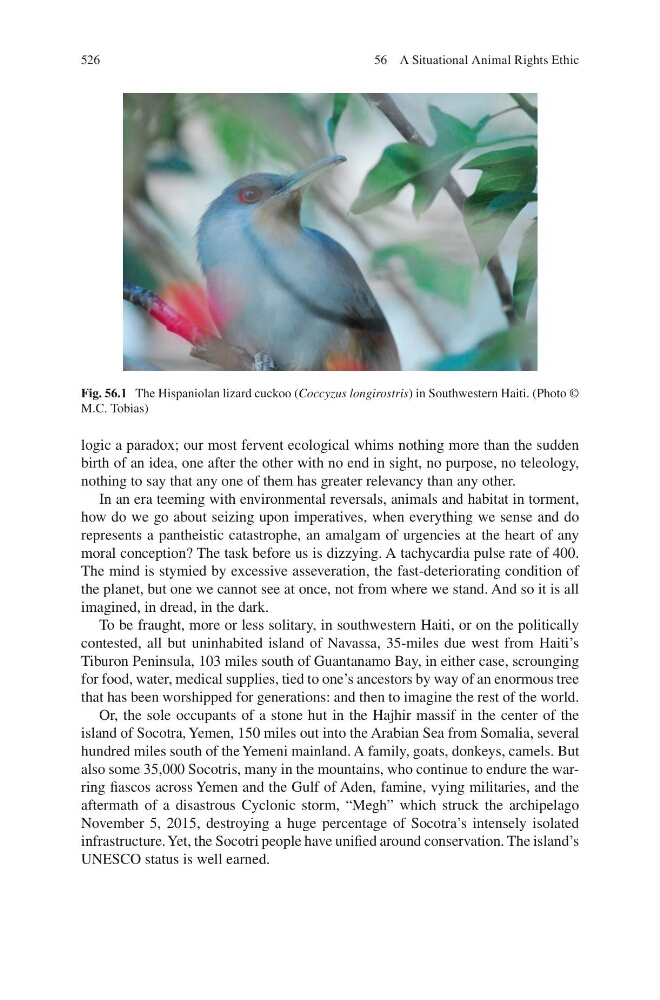
Fig. 56.1 The Hispaniolan lizard cuckoo (Coccyzus longirostris) in Southwestern Haiti. (Photo ©
M.C. Tobias)
56 A Situational Animal Rights Ethic
logic a paradox; our most fervent ecological whims nothing more than the sudden
birth of an idea, one after the other with no end in sight, no purpose, no teleology,
nothing to say that any one of them has greater relevancy than any other.
In an era teeming with environmental reversals, animals and habitat in torment,
how do we go about seizing upon imperatives, when everything we sense and do
represents a pantheistic catastrophe, an amalgam of urgencies at the heart of any
moral conception? The task before us is dizzying. A tachycardia pulse rate of 400.
The mind is stymied by excessive asseveration, the fast-deteriorating condition of
the planet, but one we cannot see at once, not from where we stand. And so it is all
imagined, in dread, in the dark.
To be fraught, more or less solitary, in southwestern Haiti, or on the politically
contested, all but uninhabited island of Navassa, 35-miles due west from Haiti’s
Tiburon Peninsula, 103 miles south of Guantanamo Bay, in either case, scrounging
for food, water, medical supplies, tied to one’s ancestors by way of an enormous tree
that has been worshipped for generations: and then to imagine the rest of the world.
Or, the sole occupants of a stone hut in the Hajhir massif in the center of the
island of Socotra, Yemen, 150 miles out into the Arabian Sea from Somalia, several
hundred miles south of the Yemeni mainland. A family, goats, donkeys, camels. But
also some 35,000 Socotris, many in the mountains, who continue to endure the warring fiascos across Yemen and the Gulf of Aden, famine, vying militaries, and the
aftermath of a disastrous Cyclonic storm, “Megh” which struck the archipelago
November 5, 2015, destroying a huge percentage of Socotra’s intensely isolated
infrastructure. Yet, the Socotri people have unified around conservation. The island’s
UNESCO status is well earned.
Fig. 56.1 The Hispaniolan lizard cuckoo (Coccyzus longirostris) in Southwestern Haiti. (Photo ©
M.C. Tobias)
56 A Situational Animal Rights Ethic