

495
whose time is fast running out. Or, as Charles Darwin wrote, “Hence, rare species
will be less quickly modified or improved within any given period; they will consequently be beaten in the race for life by the modified and improved descendants of
the commoner species”.
62
We can search among the behavioral data for the earliest known primates, or
ants, or sharks, or the lost trilobites, and speculate upon what constitutes lasting,
biological success, and, simultaneously, plumb the earliest philosophical caveats in
an effort to determine that which is most common to all ecological idealism. These
primeval factors, in whatever specific or combinatorial effect, from a Darwinian
perspective must inform the genotypes of choice leading us into the future. What
proteins, genes, ideas and wholistic organisms, modified through descent in time,
have noticeably exerted the resilience to get organisms through evolutionary cul-desacs? Disease outbreaks? Genetic squeezes? Intense competition? Sporadic violence searching for stability?
Such questions now have genetic markers along the way of their odysseys, and a
fascinated intellectual era engrossed by probability statistics that intimate the end of
the line, or not. Our obsessions with doomsday lend eerie credibility to our instincts.
Mathematics and computational biology appear destined to assist in this most arrogant of efforts; arrogant in that it has welcomed through cruelty, escalating total
fertility rates, geopolitical/socio-pathological trial and error, incredulity, and a true
fiasco of single-generational thinking and consumption, the prospect of its very
self-annihilation.
62 Charles Darwin, The Origin Of Species By Means Of Natural Selection Or The Preservation Of
Favoured Races In The Struggle For Life, John Murray, London, Sixth Edition, 1886, Chapter IV,
p. 85.
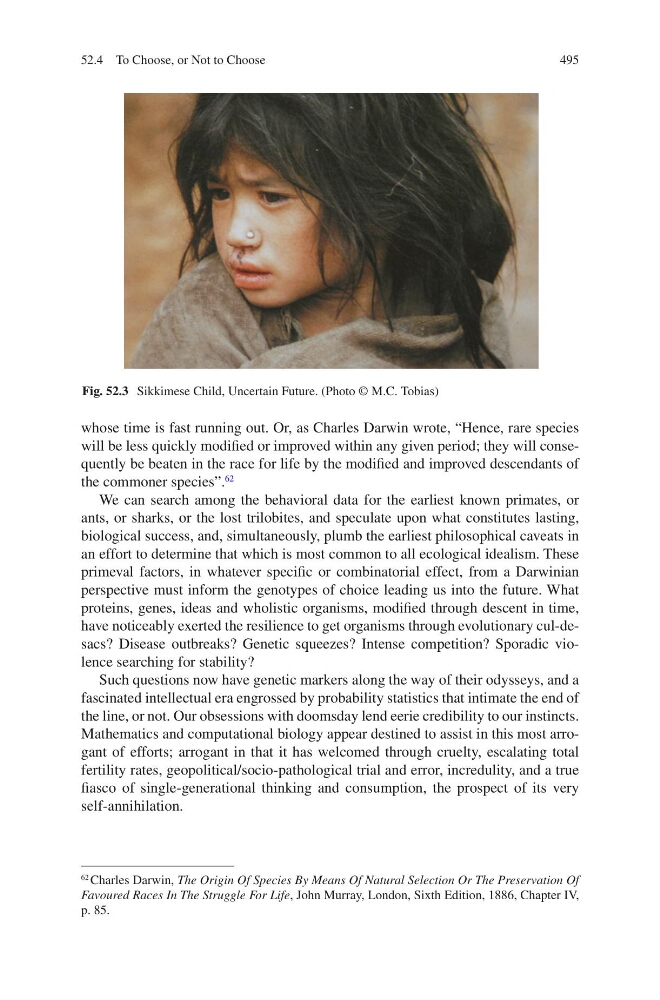
Fig. 52.3 Sikkimese Child, Uncertain Future. (Photo © M.C. Tobias)
52.4 To Choose, or Not to Choose
whose time is fast running out. Or, as Charles Darwin wrote, “Hence, rare species
will be less quickly modified or improved within any given period; they will consequently be beaten in the race for life by the modified and improved descendants of
the commoner species”.
62
We can search among the behavioral data for the earliest known primates, or
ants, or sharks, or the lost trilobites, and speculate upon what constitutes lasting,
biological success, and, simultaneously, plumb the earliest philosophical caveats in
an effort to determine that which is most common to all ecological idealism. These
primeval factors, in whatever specific or combinatorial effect, from a Darwinian
perspective must inform the genotypes of choice leading us into the future. What
proteins, genes, ideas and wholistic organisms, modified through descent in time,
have noticeably exerted the resilience to get organisms through evolutionary cul-desacs? Disease outbreaks? Genetic squeezes? Intense competition? Sporadic violence searching for stability?
Such questions now have genetic markers along the way of their odysseys, and a
fascinated intellectual era engrossed by probability statistics that intimate the end of
the line, or not. Our obsessions with doomsday lend eerie credibility to our instincts.
Mathematics and computational biology appear destined to assist in this most arrogant of efforts; arrogant in that it has welcomed through cruelty, escalating total
fertility rates, geopolitical/socio-pathological trial and error, incredulity, and a true
fiasco of single-generational thinking and consumption, the prospect of its very
self-annihilation.
62 Charles Darwin, The Origin Of Species By Means Of Natural Selection Or The Preservation Of
Favoured Races In The Struggle For Life, John Murray, London, Sixth Edition, 1886, Chapter IV,
p. 85.
Fig. 52.3 Sikkimese Child, Uncertain Future. (Photo © M.C. Tobias)
52.4 To Choose, or Not to Choose