

484
Dostoevsky’s own unthinkable flirtation with a firing squad in Siberia, December
22, 1849. Is there a mathematical basis for bad luck, good fortune, for life itself?
How do those same compulsions that addict some people to blackjack, also favor, or
discourage other behavioral and emotional commands that are ruinous? Do the fluctuating biological rules that dictate the rise and fall and many twists in destiny of
populations, apply with the same levels of latitude to individuals? Does it matter?
Let us preface by suggesting that it does not matter, not merely as an argument
against, or in favor of free will. Rather, we may freely presume that beyond our
assumptions and choices, there is a more wide-ranging free will at large; in the
sense of physical force, unseen, like black background matter, first described in
1933 by Swiss astronomer Fritz Zwicky (1898–1974). He applied his virial theorem
in order to better divine, and partially measure the approximate amount of kinetic
energy and potential forces within both stable and complex systems.
4
4 George W. Collins, II, G. W “Introduction”. The Virial Theorem in Stellar Astrophysics. Pachart
Press, 1978) by the Pachart Foundation dba Pachart Publishing House and reprinted by permission, Made available electronically by the NASA Astrophysics Data System (ADS), 1978.
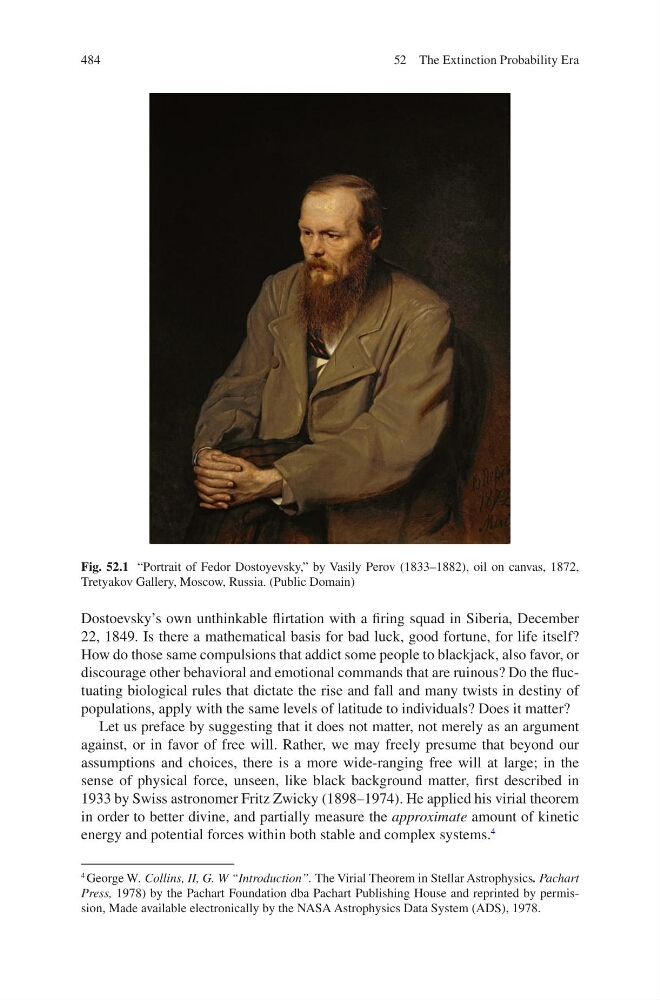
Fig. 52.1 “Portrait of Fedor Dostoyevsky,” by Vasily Perov (1833–1882), oil on canvas, 1872,
Tretyakov Gallery, Moscow, Russia. (Public Domain)
52 The Extinction Probability Era
Dostoevsky’s own unthinkable flirtation with a firing squad in Siberia, December
22, 1849. Is there a mathematical basis for bad luck, good fortune, for life itself?
How do those same compulsions that addict some people to blackjack, also favor, or
discourage other behavioral and emotional commands that are ruinous? Do the fluctuating biological rules that dictate the rise and fall and many twists in destiny of
populations, apply with the same levels of latitude to individuals? Does it matter?
Let us preface by suggesting that it does not matter, not merely as an argument
against, or in favor of free will. Rather, we may freely presume that beyond our
assumptions and choices, there is a more wide-ranging free will at large; in the
sense of physical force, unseen, like black background matter, first described in
1933 by Swiss astronomer Fritz Zwicky (1898–1974). He applied his virial theorem
in order to better divine, and partially measure the approximate amount of kinetic
energy and potential forces within both stable and complex systems.
4
4 George W. Collins, II, G. W “Introduction”. The Virial Theorem in Stellar Astrophysics. Pachart
Press, 1978) by the Pachart Foundation dba Pachart Publishing House and reprinted by permission, Made available electronically by the NASA Astrophysics Data System (ADS), 1978.
Fig. 52.1 “Portrait of Fedor Dostoyevsky,” by Vasily Perov (1833–1882), oil on canvas, 1872,
Tretyakov Gallery, Moscow, Russia. (Public Domain)
52 The Extinction Probability Era