

480
what has been described in the social scientific literature as a syndrome of
ecological illiteracy.
14
But from the global perspective, most easily perceived from the conurbations of
city lights at night, the “nocturnal glow” as viewed from space by the Visible
Infrared Imaging Radiometer Suite sensor fitted to the NASA-NOAA Suomi
National Polar-orbiting Partnership satellite,
15
the electrical presence of humanity
is perhaps pretty to some, and physically nauseating to others. While to other species and habitats this constant hum of energy elicited by one species signifies the
14 See “Quantifying Ecological Literacy in an Adult Western Community: The Development and
Application of a New Assessment Tool and Community Standard,” by Sheryn D. Pitman and
Christopher B. Daniels, PLOS ONE, March 3, 2016, https://doi.org/10.1371/journal.pone.0150648,
https://journals.plos.org/plosone/article?id=10.1371/journal.pone.0150648, Accessed May 11,
2020. See also, “Systemic ecological illiteracy? Shedding light on meaning as an act of though in
higher learning,” North American Association for Environmental Education, 2012, n.a., https://
naaee.org/eepro/research/library/systemic-ecological-illiteracy-shedding?term_node_tid_depth_
join%5B0%5D=2421&page=3, Accessed May 11, 2020; See also, “Environmental Literacy and
its Implications for Effective Public Policy Formation,” by Julianna H. Burchett, The University of
Tennessee, Knoxville, Baker Center for Public Policy, May, 2015, https://pdfs.semanticscholar.org
/14f1/97d9d6d16cedcb6a827c2287710e2530ad93.pdf, Accessed May 11, 2020.
15 See “Bright Nights and City Lights,” NASA, Global Climate Change, Webquest #4 – Beautiful
Earth Gallery, https://climate.nasa.gov/Earth-Day-2020/Bright-Nights-and-City-Lights/. Accessed
May 11, 2020.
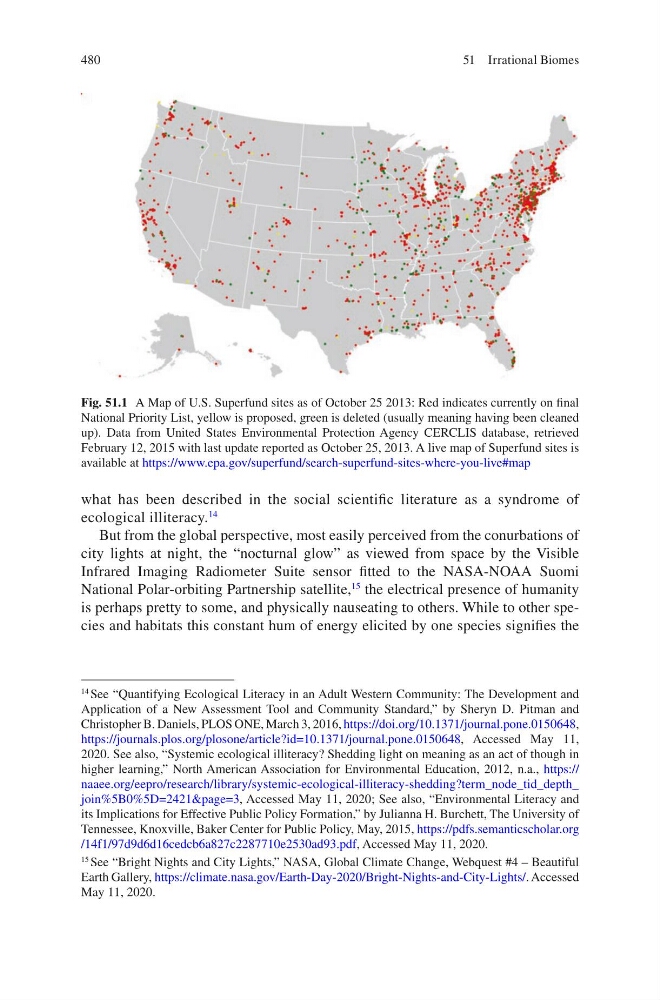
Fig. 51.1 A Map of U.S. Superfund sites as of October 25 2013: Red indicates currently on final
National Priority List, yellow is proposed, green is deleted (usually meaning having been cleaned
up). Data from United States Environmental Protection Agency CERCLIS database, retrieved
February 12, 2015 with last update reported as October 25, 2013. A live map of Superfund sites is
available at https://www.epa.gov/superfund/search- superfund- sites- where- you- live#map
51 Irrational Biomes
what has been described in the social scientific literature as a syndrome of
ecological illiteracy.
14
But from the global perspective, most easily perceived from the conurbations of
city lights at night, the “nocturnal glow” as viewed from space by the Visible
Infrared Imaging Radiometer Suite sensor fitted to the NASA-NOAA Suomi
National Polar-orbiting Partnership satellite,
15
the electrical presence of humanity
is perhaps pretty to some, and physically nauseating to others. While to other species and habitats this constant hum of energy elicited by one species signifies the
14 See “Quantifying Ecological Literacy in an Adult Western Community: The Development and
Application of a New Assessment Tool and Community Standard,” by Sheryn D. Pitman and
Christopher B. Daniels, PLOS ONE, March 3, 2016, https://doi.org/10.1371/journal.pone.0150648,
https://journals.plos.org/plosone/article?id=10.1371/journal.pone.0150648, Accessed May 11,
2020. See also, “Systemic ecological illiteracy? Shedding light on meaning as an act of though in
higher learning,” North American Association for Environmental Education, 2012, n.a., https://
naaee.org/eepro/research/library/systemic-ecological-illiteracy-shedding?term_node_tid_depth_
join%5B0%5D=2421&page=3, Accessed May 11, 2020; See also, “Environmental Literacy and
its Implications for Effective Public Policy Formation,” by Julianna H. Burchett, The University of
Tennessee, Knoxville, Baker Center for Public Policy, May, 2015, https://pdfs.semanticscholar.org
/14f1/97d9d6d16cedcb6a827c2287710e2530ad93.pdf, Accessed May 11, 2020.
15 See “Bright Nights and City Lights,” NASA, Global Climate Change, Webquest #4 – Beautiful
Earth Gallery, https://climate.nasa.gov/Earth-Day-2020/Bright-Nights-and-City-Lights/. Accessed
May 11, 2020.
Fig. 51.1 A Map of U.S. Superfund sites as of October 25 2013: Red indicates currently on final
National Priority List, yellow is proposed, green is deleted (usually meaning having been cleaned
up). Data from United States Environmental Protection Agency CERCLIS database, retrieved
February 12, 2015 with last update reported as October 25, 2013. A live map of Superfund sites is
available at https://www.epa.gov/superfund/search- superfund- sites- where- you- live#map
51 Irrational Biomes