

460
that this, henceforth, would become the very essence of Christianity),
4
humanity
numbered close to 250 million.
5
Based upon early census data from the Mediterranean
and Near East, we may surmise that at least 30% of the human population would
have heard something of Christ by the time Constantine I (272–337 AD, of what
today is İznik, Turkey) called for the meeting in which the earliest formulations of
both church doctrine and the mechanics of its clerics would be drafted. In all of the
demographic tumult since that time, and some 60 to 70 human generations, the ideal
that someone else—combined mortal, immortal, hybrid, tripartite versions of Christ
in many hundreds of denominations—miraculously persisted is itself an astonishing
premise regarding human need, vulnerability, guilt, and the preoccupation with
interpreting that realm between myth and reality, which typically constitutes a perceived ecosystem of some kind.
Art historian Élie Faure wrote that it would “require ten centuries of seclusion
before it [Christian ideals] finds its real expression… to return to the deeper life and
to embrace the hope which has been set free”.
6
That was the freedom of a Saint
Francis who, as Faure so beautifully characterized, “trembled,” “laughed,” “wept
for joy”… “He never ceased loving. He fell asleep and awoke under the trees. He
called the beasts to him, he sang, warbled, and whistled with them…. He asked
4 See https://www.britannica.com/event/First-Council-of-Nicaea-325, Accessed May 5, 2020.
5 ibid.,Vaughns.
6 History of Art, “Mediaeval Art,” Garden City Publishing Co., Inc., Garden City, NY, 1937, p. 263.
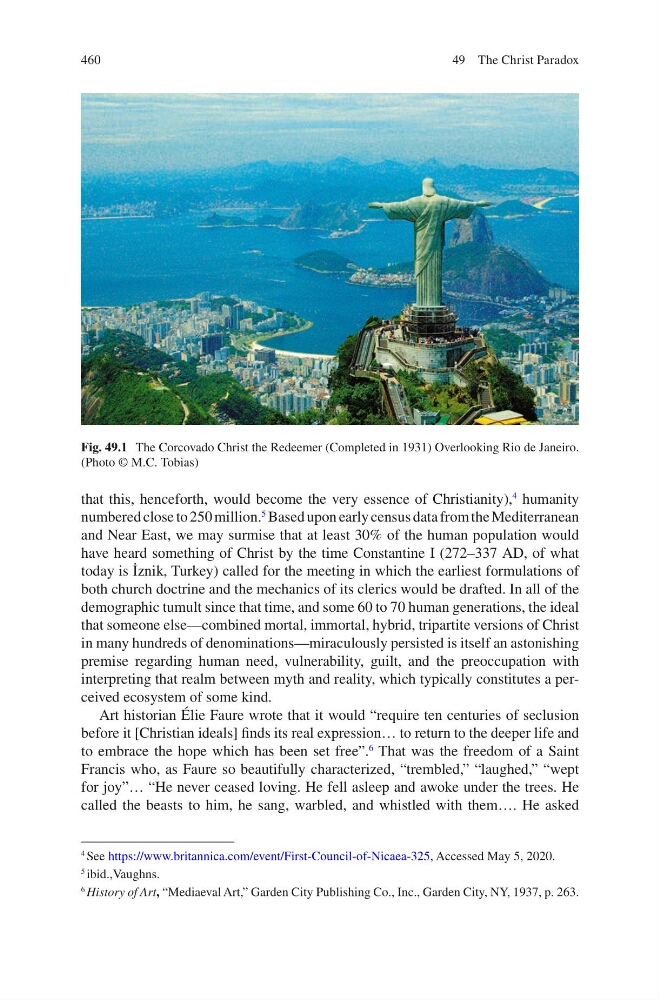
Fig. 49.1 The Corcovado Christ the Redeemer (Completed in 1931) Overlooking Rio de Janeiro.
(Photo © M.C. Tobias)
49 The Christ Paradox
that this, henceforth, would become the very essence of Christianity),
4
humanity
numbered close to 250 million.
5
Based upon early census data from the Mediterranean
and Near East, we may surmise that at least 30% of the human population would
have heard something of Christ by the time Constantine I (272–337 AD, of what
today is İznik, Turkey) called for the meeting in which the earliest formulations of
both church doctrine and the mechanics of its clerics would be drafted. In all of the
demographic tumult since that time, and some 60 to 70 human generations, the ideal
that someone else—combined mortal, immortal, hybrid, tripartite versions of Christ
in many hundreds of denominations—miraculously persisted is itself an astonishing
premise regarding human need, vulnerability, guilt, and the preoccupation with
interpreting that realm between myth and reality, which typically constitutes a perceived ecosystem of some kind.
Art historian Élie Faure wrote that it would “require ten centuries of seclusion
before it [Christian ideals] finds its real expression… to return to the deeper life and
to embrace the hope which has been set free”.
6
That was the freedom of a Saint
Francis who, as Faure so beautifully characterized, “trembled,” “laughed,” “wept
for joy”… “He never ceased loving. He fell asleep and awoke under the trees. He
called the beasts to him, he sang, warbled, and whistled with them…. He asked
4 See https://www.britannica.com/event/First-Council-of-Nicaea-325, Accessed May 5, 2020.
5 ibid.,Vaughns.
6 History of Art, “Mediaeval Art,” Garden City Publishing Co., Inc., Garden City, NY, 1937, p. 263.
Fig. 49.1 The Corcovado Christ the Redeemer (Completed in 1931) Overlooking Rio de Janeiro.
(Photo © M.C. Tobias)
49 The Christ Paradox