

425
of carbon (humans only 0.06 Gt of that total), or—another way of thinking about
it—a rough guestimate (and easily disputable for underestimating countless measures within the full suite of biodiversity) of between 3 and 7 million years of evolution that would be required to generate such rich layerings of vertebrate aggregates.
It does not, however, account for co-dependent life-forms.
29
But placing the gigatons of carbon metric in the line of sight of a Mahavira or
Buddha, and the projected evolutionary equivalency, and translation into pain and
suffering, is exponentially blown wide open when we leave the vertebrate domain
and enter the entirety that are the many Kingdoms of Life: “Protists = 4 GT C;
Archaea = 7 Gt C; Fungi = 12 Gt C; Bacteria = 70 Gt C; Plants = 450 Gt C; All
animals = 2 Gt C;… Arthropods =1 Gt C; Fish = 0.7 Gt C; Mollusks 0.2 Gt C;
Annelids = 0.2 Gt C; Livestock = 0.1 Gt C; Nematodes = 0.02 Gt C; Wild mammals
= 0/007 Gt C; Wild birds = 0.002 Gt C.” Noting that “There are an estimated 550
gigatons of carbon of life in the world. A gigaton is equal to a billion metric tons. A
metric ton is 1,000 kilograms, or about 2,200 pounds.” And 550 billion metric tons
times 2200 pounds = 121,000,000,000,000 (trillion) pounds of sentience, at any
given second. Obviously, the approximately 3 trillion trees still standing throughout
the world are solely mirrored in the data according to their carbon content; nor does
29 See “Wait, Have We Really Wiped Out 60 Percent of Animals?” by Ed Yong, The Atlantic,
October 31, 2018, https://www.theatlantic.com/science/archive/2018/10/have-we-really-killed60-percent-animals-1970/574549/. Assessed April 27, 2020.
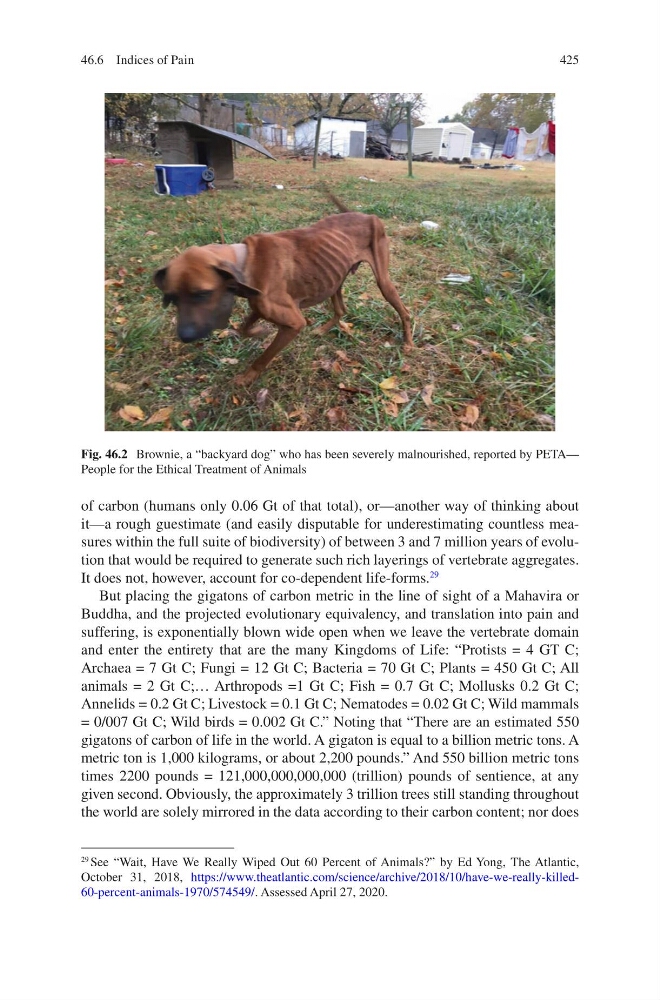
Fig. 46.2 Brownie, a “backyard dog” who has been severely malnourished, reported by PETA—
People for the Ethical Treatment of Animals
46.6 Indices of Pain
of carbon (humans only 0.06 Gt of that total), or—another way of thinking about
it—a rough guestimate (and easily disputable for underestimating countless measures within the full suite of biodiversity) of between 3 and 7 million years of evolution that would be required to generate such rich layerings of vertebrate aggregates.
It does not, however, account for co-dependent life-forms.
29
But placing the gigatons of carbon metric in the line of sight of a Mahavira or
Buddha, and the projected evolutionary equivalency, and translation into pain and
suffering, is exponentially blown wide open when we leave the vertebrate domain
and enter the entirety that are the many Kingdoms of Life: “Protists = 4 GT C;
Archaea = 7 Gt C; Fungi = 12 Gt C; Bacteria = 70 Gt C; Plants = 450 Gt C; All
animals = 2 Gt C;… Arthropods =1 Gt C; Fish = 0.7 Gt C; Mollusks 0.2 Gt C;
Annelids = 0.2 Gt C; Livestock = 0.1 Gt C; Nematodes = 0.02 Gt C; Wild mammals
= 0/007 Gt C; Wild birds = 0.002 Gt C.” Noting that “There are an estimated 550
gigatons of carbon of life in the world. A gigaton is equal to a billion metric tons. A
metric ton is 1,000 kilograms, or about 2,200 pounds.” And 550 billion metric tons
times 2200 pounds = 121,000,000,000,000 (trillion) pounds of sentience, at any
given second. Obviously, the approximately 3 trillion trees still standing throughout
the world are solely mirrored in the data according to their carbon content; nor does
29 See “Wait, Have We Really Wiped Out 60 Percent of Animals?” by Ed Yong, The Atlantic,
October 31, 2018, https://www.theatlantic.com/science/archive/2018/10/have-we-really-killed60-percent-animals-1970/574549/. Assessed April 27, 2020.
Fig. 46.2 Brownie, a “backyard dog” who has been severely malnourished, reported by PETA—
People for the Ethical Treatment of Animals
46.6 Indices of Pain