

420
46.4 Among the Many Tiers of Tragedy
The International Human Suffering Index differentiates between four basic levels,
from minimal to extreme; with each of 10 specific criteria ranked between 1 and 10.
The key, in terms of food, is called “social welfare” and it is characterized formally
as being “the sum of 10 measures: life expectancy, daily caloric intake, clean drinking water, infant immunization, secondary school enrollment, gross national product per capita, the rate of inflation, communication technology (i.e., telephones),
political freedom, and civil rights.”
12
The problem with these formal categories is that they are, ultimately, generic,
divorced from real persons. Ranking anything having to do with pain and suffering
must fail to impress its target audience, just as such nouns as faith, love, compassion, and hunger are largely indefinable. Ronald E. Anderson, Professor Emeritus of
Sociology at the University of Minnesota, has long championed the subjective gradations that translate into different kinds of pain. His writing on world suffering in
its many emotional and psychological forms has helped to redefine the complexity
of the very narrative; of discussing pain when, in truth, we are so hard pressed to
12 See “Human Suffering.” Philippine Legislators’ Committee on Population and Development
Foundation,
Dec.2,
1992,
(11):1–4,
PubMed.gov,
https://www.ncbi.nlm.nih.gov/
pubmed/12179239, Accessed pril 27, 2020. See also the Human Suffering Index in the Dictionary
of Geography, Oxford Reference, https://www.oxfordreference.com/view/10.1093/oi/
authority.20110803095950827.
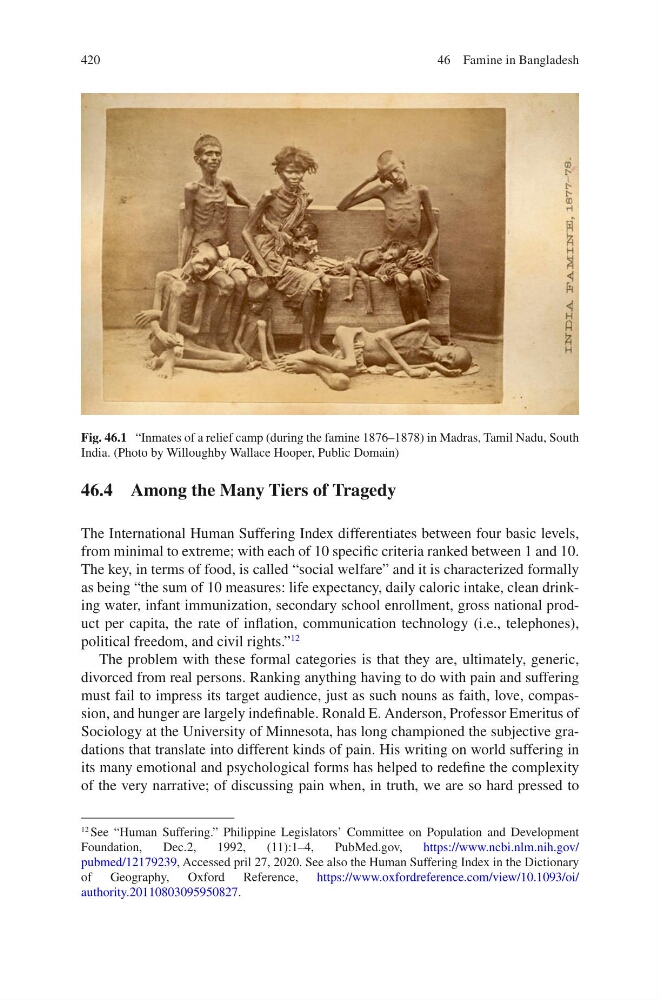
Fig. 46.1 “Inmates of a relief camp (during the famine 1876–1878) in Madras, Tamil Nadu, South
India. (Photo by Willoughby Wallace Hooper, Public Domain)
46 Famine in Bangladesh
46.4 Among the Many Tiers of Tragedy
The International Human Suffering Index differentiates between four basic levels,
from minimal to extreme; with each of 10 specific criteria ranked between 1 and 10.
The key, in terms of food, is called “social welfare” and it is characterized formally
as being “the sum of 10 measures: life expectancy, daily caloric intake, clean drinking water, infant immunization, secondary school enrollment, gross national product per capita, the rate of inflation, communication technology (i.e., telephones),
political freedom, and civil rights.”
12
The problem with these formal categories is that they are, ultimately, generic,
divorced from real persons. Ranking anything having to do with pain and suffering
must fail to impress its target audience, just as such nouns as faith, love, compassion, and hunger are largely indefinable. Ronald E. Anderson, Professor Emeritus of
Sociology at the University of Minnesota, has long championed the subjective gradations that translate into different kinds of pain. His writing on world suffering in
its many emotional and psychological forms has helped to redefine the complexity
of the very narrative; of discussing pain when, in truth, we are so hard pressed to
12 See “Human Suffering.” Philippine Legislators’ Committee on Population and Development
Foundation,
Dec.2,
1992,
(11):1–4,
PubMed.gov,
https://www.ncbi.nlm.nih.gov/
pubmed/12179239, Accessed pril 27, 2020. See also the Human Suffering Index in the Dictionary
of Geography, Oxford Reference, https://www.oxfordreference.com/view/10.1093/oi/
authority.20110803095950827.
Fig. 46.1 “Inmates of a relief camp (during the famine 1876–1878) in Madras, Tamil Nadu, South
India. (Photo by Willoughby Wallace Hooper, Public Domain)
46 Famine in Bangladesh