

390
Juliana interprets as a sign of love.
3
Others throughout the centuries have gone to
great lengths to fathom Juliana’s visions. Claire Foster-Gilbert did her PhD thesis at
King’s College, London, on the ecological ramifications of Juliana’s Revelations.
Amid a flurry of scientific studies and surveys occurring throughout the greater
Norwich ecosystems.
4
Foster-Gilbert declares in her Thesis Abstract, “…can the
Julian of Norwich texts be read today in such a way that they can help address the
twenty-first century ecological crisis, by transforming our ‘buffered’ subjectivity
into the ‘porous’ subjectivity Julian brought to and learnt from her revelations?
This thesis argues that the stresses on the planet that are caused by humanity are
themselves symptoms of an underlying human subjectivity enslaved by Gestell, the
‘essence of technology’, defined by Heidegger, which turns nature and humanity
itself into objects to be exploited.” Restoring Porosity and the Ecological Crisis: A
Post-Ricoeurian Reading of the Julian of Norwich Texts is a penetrating study of
“Wounds, wonder and identity with the Earth,” of “Dying” and of “Transformation”;
3 Barry Windeatt, ed. Revelations of Divine Love, Oxford University Press, Oxford, UK., 2015,
p. 45.
4 See, for example, See also, https://www.norfolkwildlifetrust.org.uk/home; See also, Trees of
Norfolk, by David Richmond, http://norfolknaturalists.org.uk/wp/wp-content/uploads/2017/02/
Trees_1_broadleaf.pdf, Accessed April 20, 2020.
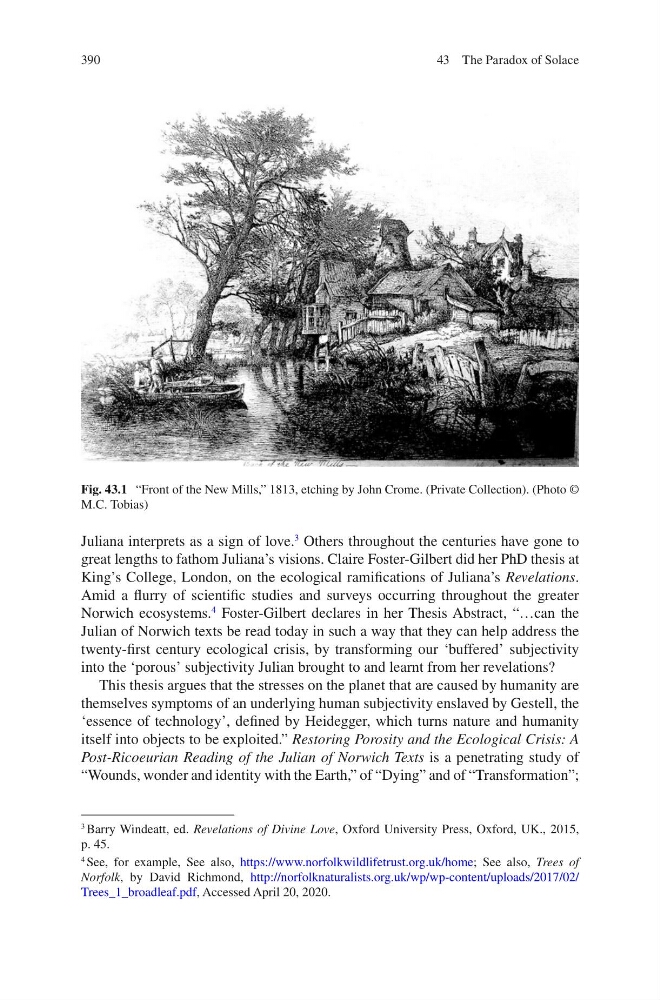
Fig. 43.1 “Front of the New Mills,” 1813, etching by John Crome. (Private Collection). (Photo ©
M.C. Tobias)
43 The Paradox of Solace
Juliana interprets as a sign of love.
3
Others throughout the centuries have gone to
great lengths to fathom Juliana’s visions. Claire Foster-Gilbert did her PhD thesis at
King’s College, London, on the ecological ramifications of Juliana’s Revelations.
Amid a flurry of scientific studies and surveys occurring throughout the greater
Norwich ecosystems.
4
Foster-Gilbert declares in her Thesis Abstract, “…can the
Julian of Norwich texts be read today in such a way that they can help address the
twenty-first century ecological crisis, by transforming our ‘buffered’ subjectivity
into the ‘porous’ subjectivity Julian brought to and learnt from her revelations?
This thesis argues that the stresses on the planet that are caused by humanity are
themselves symptoms of an underlying human subjectivity enslaved by Gestell, the
‘essence of technology’, defined by Heidegger, which turns nature and humanity
itself into objects to be exploited.” Restoring Porosity and the Ecological Crisis: A
Post-Ricoeurian Reading of the Julian of Norwich Texts is a penetrating study of
“Wounds, wonder and identity with the Earth,” of “Dying” and of “Transformation”;
3 Barry Windeatt, ed. Revelations of Divine Love, Oxford University Press, Oxford, UK., 2015,
p. 45.
4 See, for example, See also, https://www.norfolkwildlifetrust.org.uk/home; See also, Trees of
Norfolk, by David Richmond, http://norfolknaturalists.org.uk/wp/wp-content/uploads/2017/02/
Trees_1_broadleaf.pdf, Accessed April 20, 2020.
Fig. 43.1 “Front of the New Mills,” 1813, etching by John Crome. (Private Collection). (Photo ©
M.C. Tobias)
43 The Paradox of Solace