

15
underdog Bloomberg, referenced (by our accounting) two most telling words otherwise lost in the angry miasmas of dramatic stagecraft: “India” and “methane.” While
passed over by his immediate peers, these two fleeting mere mentions by Bloomberg
were not lost, not by a long shot. His foundation’s multimillion-dollar embrace of
global environmental concerns, particularly that of the oceans, and of zero-carbon
civilization has resulted in Bloomberg co-founding and chairing the Task Force on
Climate-Related Financial Disclosures (TCFD). Its charter declares, “Increasing
transparency makes markets more efficient, and economies more stable and
resilient.”
9
But, when observing such social calls for change (good ones), we are
nonetheless only too aware of the distractions. Humanity’s desperate struggles to
maintain a functioning human economy all but undermine the economies of nature,
no matter how persistent the chorus echoing all things sustainable. Good intentions
have not been enough to alter huge tides.
This is a fundamental contradiction. It underscores a powerful and paradoxical
issue for individuals and nations: the origins and expenditures of wealth accumulation. Bloomberg took the debate stage the same week as the world’s wealthiest man,
Jeff Bezos of Amazon, pledged US$10 billion to help combat climate change. Such
newsflashes harken back, in so many guises, to all the words of Adam Smith, Karl
Marx, and Lenin; of Franklin D. Roosevelt’s New Deal; of the Marshall Plan
(European Recovery Program, worth $100 billion in 2018 dollars), and of the 1879
9 https://www.fsb-tcfd.org, Accessed February 20, 2020.
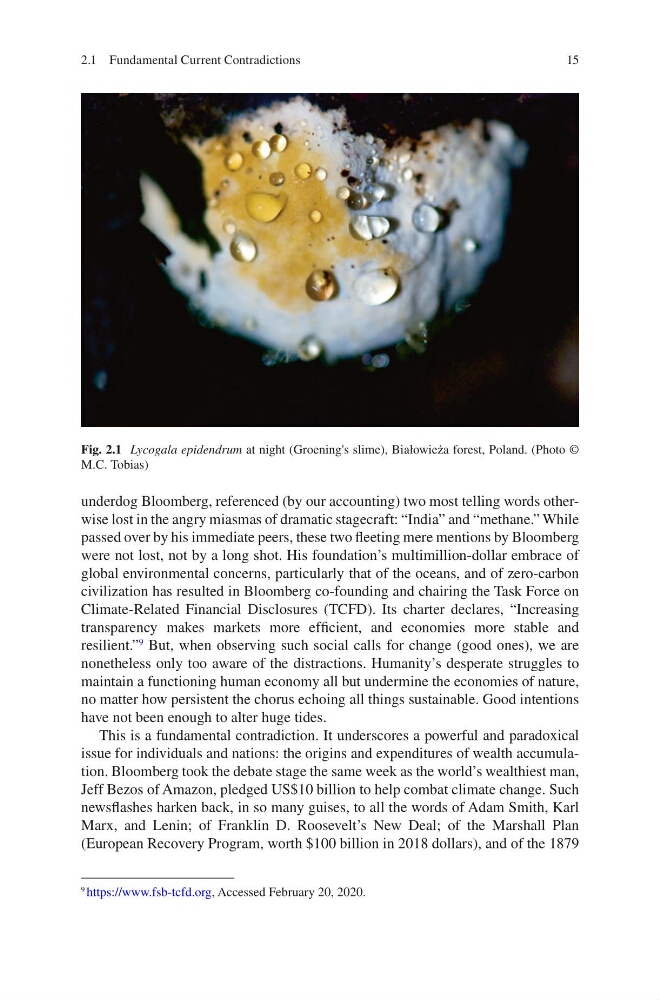
Fig. 2.1 Lycogala epidendrum at night (Groening's slime), Białowieża forest, Poland. (Photo ©
M.C. Tobias)
2.1 Fundamental Current Contradictions
underdog Bloomberg, referenced (by our accounting) two most telling words otherwise lost in the angry miasmas of dramatic stagecraft: “India” and “methane.” While
passed over by his immediate peers, these two fleeting mere mentions by Bloomberg
were not lost, not by a long shot. His foundation’s multimillion-dollar embrace of
global environmental concerns, particularly that of the oceans, and of zero-carbon
civilization has resulted in Bloomberg co-founding and chairing the Task Force on
Climate-Related Financial Disclosures (TCFD). Its charter declares, “Increasing
transparency makes markets more efficient, and economies more stable and
resilient.”
9
But, when observing such social calls for change (good ones), we are
nonetheless only too aware of the distractions. Humanity’s desperate struggles to
maintain a functioning human economy all but undermine the economies of nature,
no matter how persistent the chorus echoing all things sustainable. Good intentions
have not been enough to alter huge tides.
This is a fundamental contradiction. It underscores a powerful and paradoxical
issue for individuals and nations: the origins and expenditures of wealth accumulation. Bloomberg took the debate stage the same week as the world’s wealthiest man,
Jeff Bezos of Amazon, pledged US$10 billion to help combat climate change. Such
newsflashes harken back, in so many guises, to all the words of Adam Smith, Karl
Marx, and Lenin; of Franklin D. Roosevelt’s New Deal; of the Marshall Plan
(European Recovery Program, worth $100 billion in 2018 dollars), and of the 1879
9 https://www.fsb-tcfd.org, Accessed February 20, 2020.
Fig. 2.1 Lycogala epidendrum at night (Groening's slime), Białowieża forest, Poland. (Photo ©
M.C. Tobias)
2.1 Fundamental Current Contradictions