

10
That makes our current condition anything but simple. We can’t just resort to
obvious antiphons, dyads, or traditional structures dictating the nature of narrative
and ethical dialectics to solve our problems. There is too much at stake to cotton to
the comforts of logic and its systematic conclusions upon escalation. We wouldn’t
know where to begin, let alone conclude. And while science insists on itself and its
forms, we believe that we are now in the midst of great scientific change. Paradigm
shifts that go beyond what we can possibly intuit. Hence, we have taken random
variables more seriously than we might have a century ago. There is good reason,
we believe, to take many things seriously. But we do not second-guess what others
are likely to do. As Jacques Maritain wrote of the “father of positivism” and of
modern scientific method, so-called, Auguste Comte (1798–1857), behold a philosopher, declared Maritain, who rightly claimed that science must “remain chastely
distant” from the taint of metaphysics, “characterized above all by the elimination
of every ontological preoccupation…”.
7
We differ, and stray, from that sensibility
and approach.
Thought processes are fascinating. Inspiration may be learned, or not. There are
no proofs for the most important things in life, except to convene in harmony where
it seems to benefit the most numbers, and to refrain from human outburst, as decorum, the quality of kindness and common sense should suggest (Fig. 1.3).
7 See Jacques Maritain, Philosophy of Nature , Philosophical Library, New York 1951, p. 51.
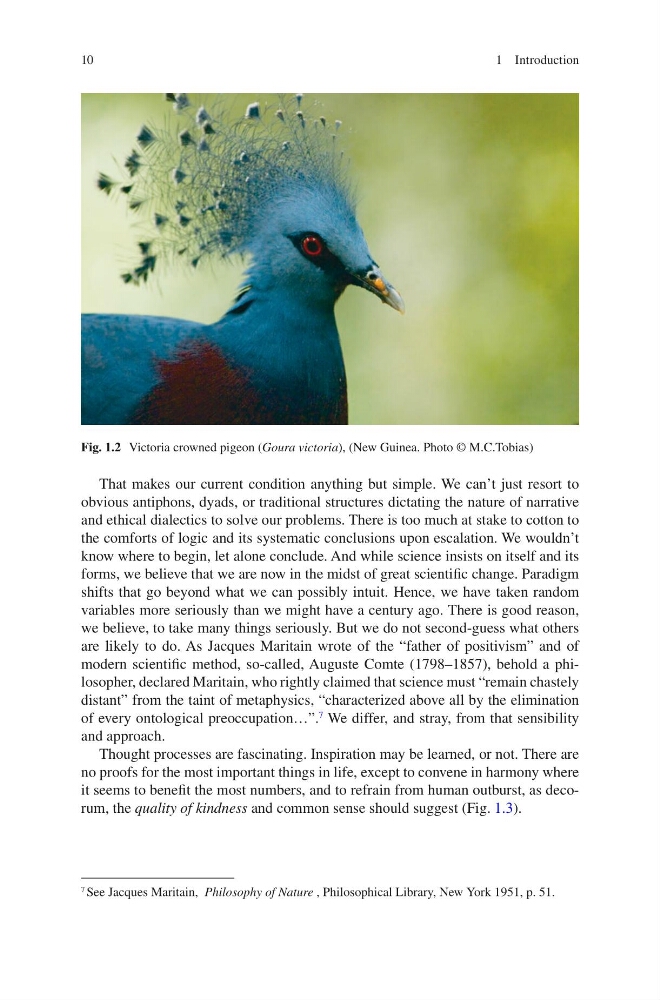
Fig. 1.2 Victoria crowned pigeon (Goura victoria), (New Guinea. Photo © M.C.Tobias)
1 Introduction
That makes our current condition anything but simple. We can’t just resort to
obvious antiphons, dyads, or traditional structures dictating the nature of narrative
and ethical dialectics to solve our problems. There is too much at stake to cotton to
the comforts of logic and its systematic conclusions upon escalation. We wouldn’t
know where to begin, let alone conclude. And while science insists on itself and its
forms, we believe that we are now in the midst of great scientific change. Paradigm
shifts that go beyond what we can possibly intuit. Hence, we have taken random
variables more seriously than we might have a century ago. There is good reason,
we believe, to take many things seriously. But we do not second-guess what others
are likely to do. As Jacques Maritain wrote of the “father of positivism” and of
modern scientific method, so-called, Auguste Comte (1798–1857), behold a philosopher, declared Maritain, who rightly claimed that science must “remain chastely
distant” from the taint of metaphysics, “characterized above all by the elimination
of every ontological preoccupation…”.
7
We differ, and stray, from that sensibility
and approach.
Thought processes are fascinating. Inspiration may be learned, or not. There are
no proofs for the most important things in life, except to convene in harmony where
it seems to benefit the most numbers, and to refrain from human outburst, as decorum, the quality of kindness and common sense should suggest (Fig. 1.3).
7 See Jacques Maritain, Philosophy of Nature , Philosophical Library, New York 1951, p. 51.
Fig. 1.2 Victoria crowned pigeon (Goura victoria), (New Guinea. Photo © M.C.Tobias)
1 Introduction