

272
birds: falcons, vultures, owls, eagles, pelicans, human-headed birds, the odd contradiction of so many feathered stories populating the somber walls of tombs within
pyramids, within a desert; a resoundingly non-aerial environ oriented to the great
Pharaonic dream of taking flight.
In his book of poetry Flight Among The Tombs, Anthony Hecht cites Christopher
Smart, who writes, “Let Mattithiah bless with the Bat, who inhabitieth the desolations of pride, and flieth amongst the tombs.”
4
As with so many ornithological archives in which the passerines and nonpasserine birds are easily identified, it is the context that renders commentary troubling. The once common southern Mediterranean ostrich was adorned in various
psalters and bestiaries as a camel, because of its cloven hooves.
5
In the “Animal
Scroll of the Choju Jimbutsu Giga” (“Frolicking Animals and People” attributed to
Toba Sojo, early twelfth century in Japan) there is little reason to suppose concerted
differentiation between species. They are all of a singular community.
6
The Egyptian fictions were non-fictions, just as so many tales of wonder and of
the infinite—from El Dorado and the Hanging Gardens of Babylon, to Atlantis, the
realms beyond the Boreas, Pinocchio’s Land of Toys, and Shambhala—all occupy a
conversant realm in the imagination that might as well be deemed non-fiction,
4 Flight Among The Tombs: Poems by Anthony Hecht, wood engravings by Leonard Baskin, Alfred
A. Knopf, New York, page prior to Table of Contents, 1996.
5 See the “Bestiary assida (ostrich),” in Birds in Medieval Manuscripts by William Brunsdon Yapp,
Schocken Books, New York, 1982, p. 55.
6 See Painting in the Yamato Style, by Saburo Ienaga, translated by John M. Shields, Weatherhill/
Heibonsha, New York, Tokyo, 1973, p. 44.
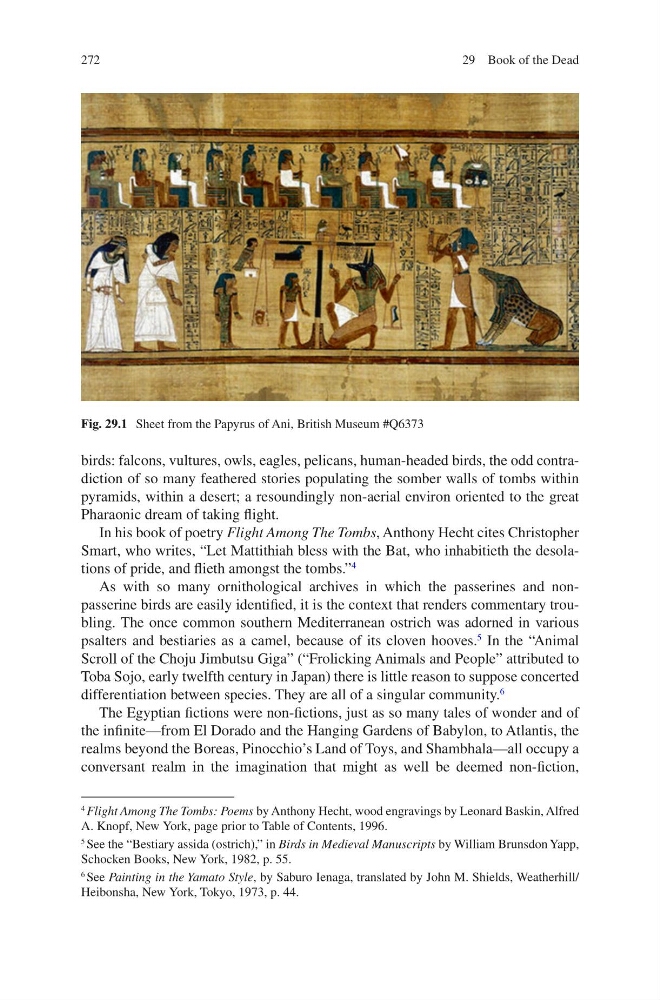
Fig. 29.1 Sheet from the Papyrus of Ani, British Museum #Q6373
29 Book of the Dead
birds: falcons, vultures, owls, eagles, pelicans, human-headed birds, the odd contradiction of so many feathered stories populating the somber walls of tombs within
pyramids, within a desert; a resoundingly non-aerial environ oriented to the great
Pharaonic dream of taking flight.
In his book of poetry Flight Among The Tombs, Anthony Hecht cites Christopher
Smart, who writes, “Let Mattithiah bless with the Bat, who inhabitieth the desolations of pride, and flieth amongst the tombs.”
4
As with so many ornithological archives in which the passerines and nonpasserine birds are easily identified, it is the context that renders commentary troubling. The once common southern Mediterranean ostrich was adorned in various
psalters and bestiaries as a camel, because of its cloven hooves.
5
In the “Animal
Scroll of the Choju Jimbutsu Giga” (“Frolicking Animals and People” attributed to
Toba Sojo, early twelfth century in Japan) there is little reason to suppose concerted
differentiation between species. They are all of a singular community.
6
The Egyptian fictions were non-fictions, just as so many tales of wonder and of
the infinite—from El Dorado and the Hanging Gardens of Babylon, to Atlantis, the
realms beyond the Boreas, Pinocchio’s Land of Toys, and Shambhala—all occupy a
conversant realm in the imagination that might as well be deemed non-fiction,
4 Flight Among The Tombs: Poems by Anthony Hecht, wood engravings by Leonard Baskin, Alfred
A. Knopf, New York, page prior to Table of Contents, 1996.
5 See the “Bestiary assida (ostrich),” in Birds in Medieval Manuscripts by William Brunsdon Yapp,
Schocken Books, New York, 1982, p. 55.
6 See Painting in the Yamato Style, by Saburo Ienaga, translated by John M. Shields, Weatherhill/
Heibonsha, New York, Tokyo, 1973, p. 44.
Fig. 29.1 Sheet from the Papyrus of Ani, British Museum #Q6373
29 Book of the Dead