

264
melancholy reflections.”
3
Or, in the case of the fine Castle of Chinon, Henry the
Second of England’s final, humiliating domicile, where he remained “prey to grief
and disappointment,” a resting place for the “broken-hearted,” and “where his life of
misery was terminated by a fever, in the year 1189.”
4
In 1790, mobs of the French Revolution intent upon eradicating all memories of
the Ancien Régime sacked the great Benedictine Abbaye de Cluny in Saône-etLoire, whose 800 years of construction had commenced as far back as the fourth
century, subsequently burning down the largest library and Church in the world,
beside St. Peter’s Basilica in Rome. Tens of thousands of pieces of the lichen-rich
“brick and ashlar” masonry, the stone hued from southern Burgundian quarries,
5
3 op.cit., France illustrated, exhibiting its landscape scenery, antiquities, military and ecclesiastical architecture, &c.;: Drawings by Thomas Allom, esq., descriptions by the Rev. G. N. Wright,
M.A., Vol. III, Fisher, Son, &Co. The Caxton Press, London, H. Mandeville, Paris, 1840, p. 36.
4 France illustrated, exhibiting its landscape scenery, antiquities, military and ecclesiastical architecture, &c.;: Drawings by Thomas Allom, esq., descriptions by the Rev. G. N. Wright, M.A., Vol.
III, Fisher, Son, & Co. The Caxton Press, London, H. Mandeville, Paris, 1840, p. 45.
5 See “Cluny Abbey, “by Christine Bolli, n.d., Khan Academy, https://www.khanacademy.org/
humanities/medieval-world/romanesque1/a/cluny-abbey, accessed March 14, 2020.
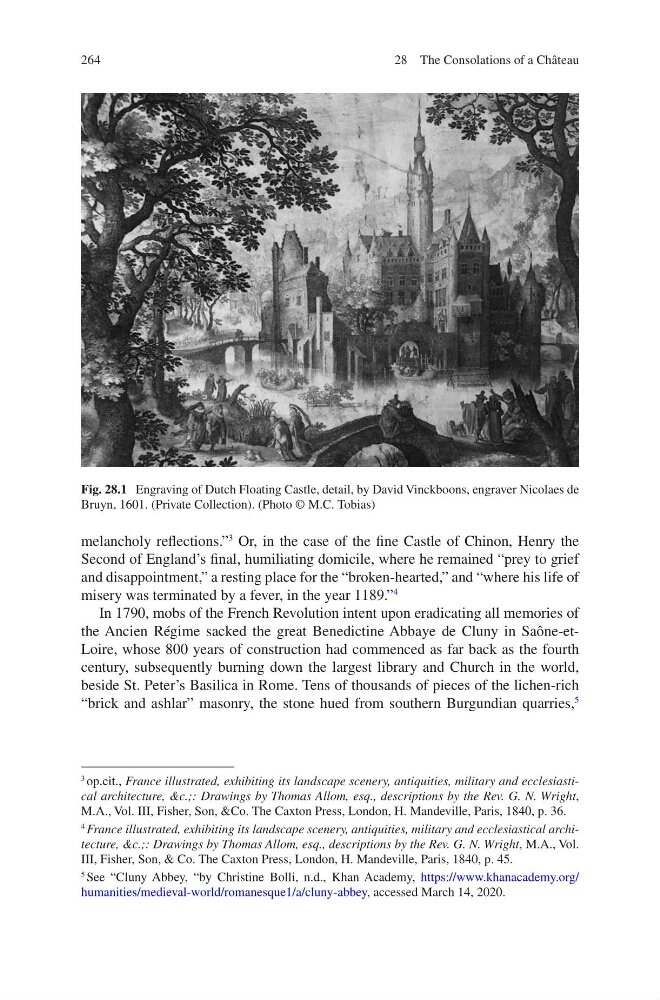
Fig. 28.1 Engraving of Dutch Floating Castle, detail, by David Vinckboons, engraver Nicolaes de
Bruyn, 1601. (Private Collection). (Photo © M.C. Tobias)
28 The Consolations of a Château
melancholy reflections.”
3
Or, in the case of the fine Castle of Chinon, Henry the
Second of England’s final, humiliating domicile, where he remained “prey to grief
and disappointment,” a resting place for the “broken-hearted,” and “where his life of
misery was terminated by a fever, in the year 1189.”
4
In 1790, mobs of the French Revolution intent upon eradicating all memories of
the Ancien Régime sacked the great Benedictine Abbaye de Cluny in Saône-etLoire, whose 800 years of construction had commenced as far back as the fourth
century, subsequently burning down the largest library and Church in the world,
beside St. Peter’s Basilica in Rome. Tens of thousands of pieces of the lichen-rich
“brick and ashlar” masonry, the stone hued from southern Burgundian quarries,
5
3 op.cit., France illustrated, exhibiting its landscape scenery, antiquities, military and ecclesiastical architecture, &c.;: Drawings by Thomas Allom, esq., descriptions by the Rev. G. N. Wright,
M.A., Vol. III, Fisher, Son, &Co. The Caxton Press, London, H. Mandeville, Paris, 1840, p. 36.
4 France illustrated, exhibiting its landscape scenery, antiquities, military and ecclesiastical architecture, &c.;: Drawings by Thomas Allom, esq., descriptions by the Rev. G. N. Wright, M.A., Vol.
III, Fisher, Son, & Co. The Caxton Press, London, H. Mandeville, Paris, 1840, p. 45.
5 See “Cluny Abbey, “by Christine Bolli, n.d., Khan Academy, https://www.khanacademy.org/
humanities/medieval-world/romanesque1/a/cluny-abbey, accessed March 14, 2020.
Fig. 28.1 Engraving of Dutch Floating Castle, detail, by David Vinckboons, engraver Nicolaes de
Bruyn, 1601. (Private Collection). (Photo © M.C. Tobias)
28 The Consolations of a Château