

234
tourist ad?
2
As of 2016, according to “The Belgian Meat Round Table,” “‘The Belgian
is and remains carnivore’: Home consumption of meat, poultry, and game reached
29 kilograms per capita in 2016. Furthermore, 60% of the Belgian meat consumers
declared that they eat meat at least 4 times a week….”
3
As of 2018, there were significant decreases in Belgian meat consumption according to at least one major source,
suggesting that the average household in Belgium consumed 17.2 kilograms of meat
in a year,
4
while the European Union overall remains the largest importer in the world,
consuming over 490 million pounds in 2018 of lamb, hogget, and mutton, primarily from Australia and New Zealand.
5
While Flemish lawmakers in 2018 made new
reforms to the Belgian Animal Welfare laws, the first such reforms in 32 years,
6
reports
suggest that 60% of all animal abuse cases are never followed up by Flemish courts.
7
2 https://visit.gent.be/en/see-do/st-bavos-cathedral-majestic-tower
3 See Euromeat, Belgium. “Belgian Meat Round Table: Meat consumption decreased by 18%
between 2008 and 2016.”
4 See
https://english.fleischwirtschaft.de/economy/news/Data-Belgian-consumption-of-freshmeat-still-on-the-retreat-39239
5 See “International Lamb Profile,” Agricultural Marketing Research Center, https://www.agmrc.
org/commodities-products/livestock/lamb/international-lamb-profile, Accessed May 3, 2019.
6 See “Flanders goes tougher on animal abuse,” The Brussels Times, by Christopher Vincent, July
5, 2018.
7 See “60% of reported cases of animal cruelty not followed up,” Flanders News, n.a., VRT NWS,
February 12, 2018.
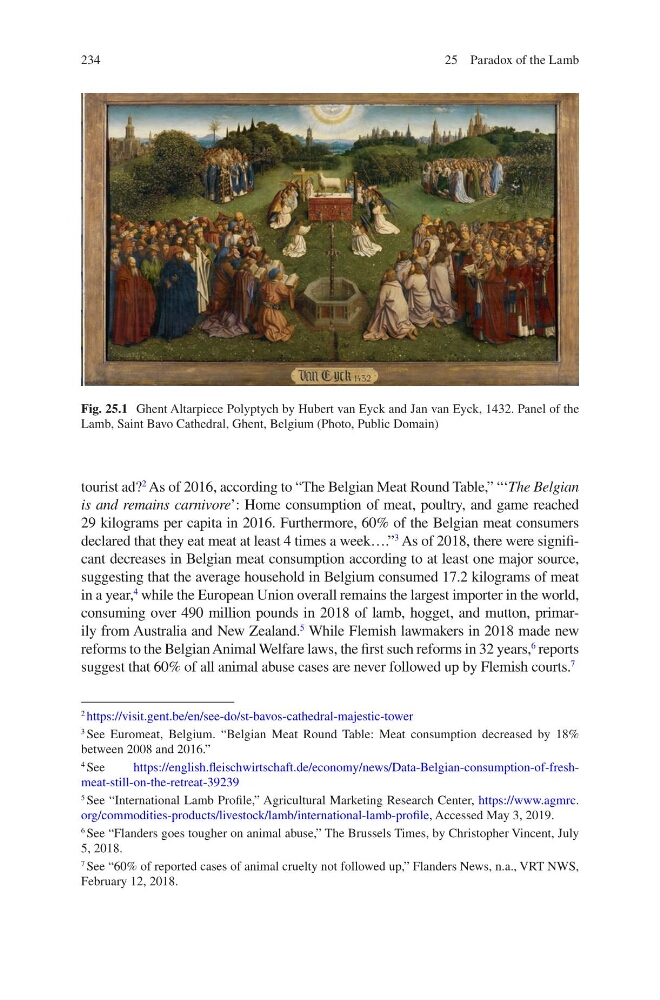
Fig. 25.1 Ghent Altarpiece Polyptych by Hubert van Eyck and Jan van Eyck, 1432. Panel of the
Lamb, Saint Bavo Cathedral, Ghent, Belgium (Photo, Public Domain)
25 Paradox of the Lamb
tourist ad?
2
As of 2016, according to “The Belgian Meat Round Table,” “‘The Belgian
is and remains carnivore’: Home consumption of meat, poultry, and game reached
29 kilograms per capita in 2016. Furthermore, 60% of the Belgian meat consumers
declared that they eat meat at least 4 times a week….”
3
As of 2018, there were significant decreases in Belgian meat consumption according to at least one major source,
suggesting that the average household in Belgium consumed 17.2 kilograms of meat
in a year,
4
while the European Union overall remains the largest importer in the world,
consuming over 490 million pounds in 2018 of lamb, hogget, and mutton, primarily from Australia and New Zealand.
5
While Flemish lawmakers in 2018 made new
reforms to the Belgian Animal Welfare laws, the first such reforms in 32 years,
6
reports
suggest that 60% of all animal abuse cases are never followed up by Flemish courts.
7
2 https://visit.gent.be/en/see-do/st-bavos-cathedral-majestic-tower
3 See Euromeat, Belgium. “Belgian Meat Round Table: Meat consumption decreased by 18%
between 2008 and 2016.”
4 See
https://english.fleischwirtschaft.de/economy/news/Data-Belgian-consumption-of-freshmeat-still-on-the-retreat-39239
5 See “International Lamb Profile,” Agricultural Marketing Research Center, https://www.agmrc.
org/commodities-products/livestock/lamb/international-lamb-profile, Accessed May 3, 2019.
6 See “Flanders goes tougher on animal abuse,” The Brussels Times, by Christopher Vincent, July
5, 2018.
7 See “60% of reported cases of animal cruelty not followed up,” Flanders News, n.a., VRT NWS,
February 12, 2018.
Fig. 25.1 Ghent Altarpiece Polyptych by Hubert van Eyck and Jan van Eyck, 1432. Panel of the
Lamb, Saint Bavo Cathedral, Ghent, Belgium (Photo, Public Domain)
25 Paradox of the Lamb