

186
Principles of Political Right
4
; and an early precursor to the writings of Oswald
Spengler, particularly The Decline of the West (Der Untergang des
Abendlandes, 1918)
5
.
Burke (1729–1797) (unlike a Robson) could not ignore the paradoxical truth that
bloodshed seemed to be the “cement” that held nations together
6
. But, at first glance,
such political contexts seemed utterly incommensurate with the saturation of
Romanticism in the Grampians; from the images of Robson to those of William
Beattie and Thomas Allom
7
; J. Macwhirter’s illustrations for Caledonia; (Described
4 Translated From the French, London 1791, in which he famously summed up the transition from
a state of nature to that of a political state with equally membered citizens, “The man who had till
then regarded non but himself, perceives that he must act on other principles, and learns to consult
his reason before he listens to his propensities.” p.49.
5 See Spengler, Oswald. The Decline of the West. Ed. Arthur Helps, and Helmut Werner. Trans.
Charles F. Atkinson. Preface Hughes, H. Stuart, Oxford University Press, New York, 1991.
6 See “Edmund Burke and the Scottish Enlightenment,” by George McElroy, in Man and Nature,
Volume 11, 1992, URL: https://id.erudit.org/iderudit/1012681ar; https://doi.org/10.7202/1012681ar,
Canadian Society for Eighteenth-Century Studies, pp. 171–185, https://www.erudit.org/en/journals/man/1992-v11-man0306/1012681ar.pdf, Accessed April 9, 2019.
7 See Scotland, by William Beattie, engravings by Thomas Allon, Geo Virtue, London, 1836. See
also, Romantic Gardens – Nature, Art and Landscape Design, by Elizabeth Barlow Rogers,
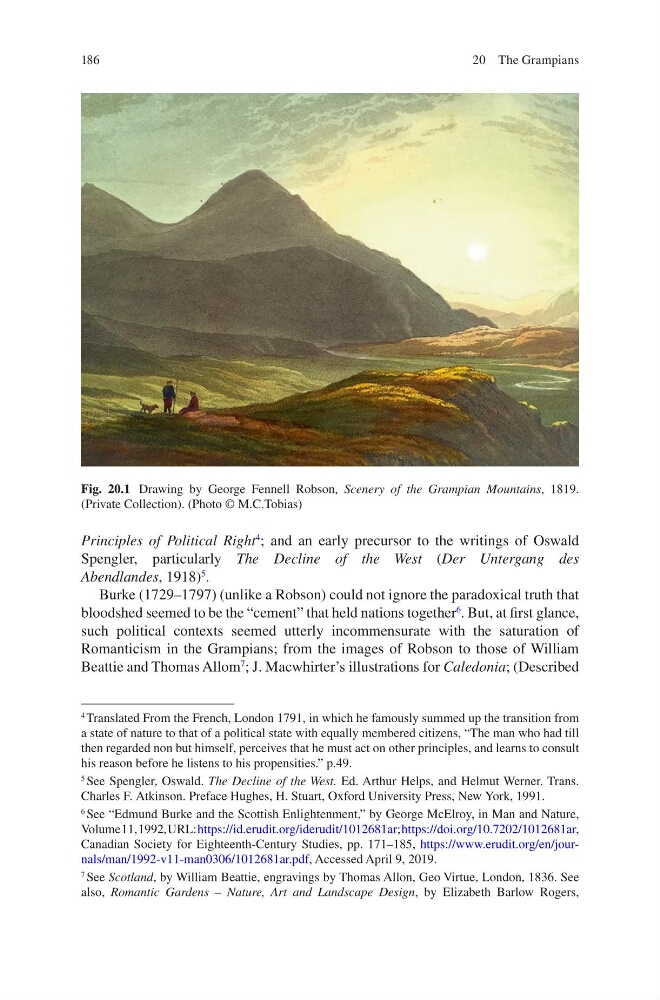
Fig. 20.1 Drawing by George Fennell Robson, Scenery of the Grampian Mountains, 1819.
(Private Collection). (Photo © M.C.Tobias)
20 The Grampians
Principles of Political Right
4
; and an early precursor to the writings of Oswald
Spengler, particularly The Decline of the West (Der Untergang des
Abendlandes, 1918)
5
.
Burke (1729–1797) (unlike a Robson) could not ignore the paradoxical truth that
bloodshed seemed to be the “cement” that held nations together
6
. But, at first glance,
such political contexts seemed utterly incommensurate with the saturation of
Romanticism in the Grampians; from the images of Robson to those of William
Beattie and Thomas Allom
7
; J. Macwhirter’s illustrations for Caledonia; (Described
4 Translated From the French, London 1791, in which he famously summed up the transition from
a state of nature to that of a political state with equally membered citizens, “The man who had till
then regarded non but himself, perceives that he must act on other principles, and learns to consult
his reason before he listens to his propensities.” p.49.
5 See Spengler, Oswald. The Decline of the West. Ed. Arthur Helps, and Helmut Werner. Trans.
Charles F. Atkinson. Preface Hughes, H. Stuart, Oxford University Press, New York, 1991.
6 See “Edmund Burke and the Scottish Enlightenment,” by George McElroy, in Man and Nature,
Volume 11, 1992, URL: https://id.erudit.org/iderudit/1012681ar; https://doi.org/10.7202/1012681ar,
Canadian Society for Eighteenth-Century Studies, pp. 171–185, https://www.erudit.org/en/journals/man/1992-v11-man0306/1012681ar.pdf, Accessed April 9, 2019.
7 See Scotland, by William Beattie, engravings by Thomas Allon, Geo Virtue, London, 1836. See
also, Romantic Gardens – Nature, Art and Landscape Design, by Elizabeth Barlow Rogers,
Fig. 20.1 Drawing by George Fennell Robson, Scenery of the Grampian Mountains, 1819.
(Private Collection). (Photo © M.C.Tobias)
20 The Grampians