

137
How quickly our global problematique is changing! Or, as the poet Christopher
Fry once described, how in spite of all the time that has elapsed, the most amazing
aspect of a human life is that “I am aware of being alive, now….”
12
As William
Faulkner wrote in his majestic and ironic work, Sanctuary, “The insects had fallen
to a low monotonous pitch, everywhere, nowhere, spent, as though the sound were
the chemical agony of a world left stark and dying above the tide-edge of the fluid
in which it lived and breathed. The moon stood overhead, but without light; the
earth lay beneath, without darkness.”
13
The groundwork for such sentiments had
been laid out clearly by John Ruskin in his unforgettable Seven Lamps of Architecture,
and we quote at length: “… I do not know anything more oppressive, when the mind
is once awakened to its characteristics, than the aspect of a dead architecture… to
see the shell of the living creature in its adult form, when its colors are faded, and
its inhabitant perished – this is a sight more humiliating, more melancholy, than the
vanishing of all knowledge, and in the return to confessed and helpless infancy.”
14
12 Death Is A Kind Of Love, by Christopher Fry, Drawings By Charles E. Wadsworth, The Tidal
Press, Cranberry Isles, Maine, 1979, p. 31 – though unnumbered.
13 Sanctuary, William Faulkner, With A New Introduction By The Author, The Modern Library,
New York, 1931 and 1932, p. 267.
14 John Ruskin, Seven Lamps Of Architecture, Chapter Five, “The Lamp of Life,” Thomas
Y. Crowell & Company, Publishers, New York, 1880, p. 199.
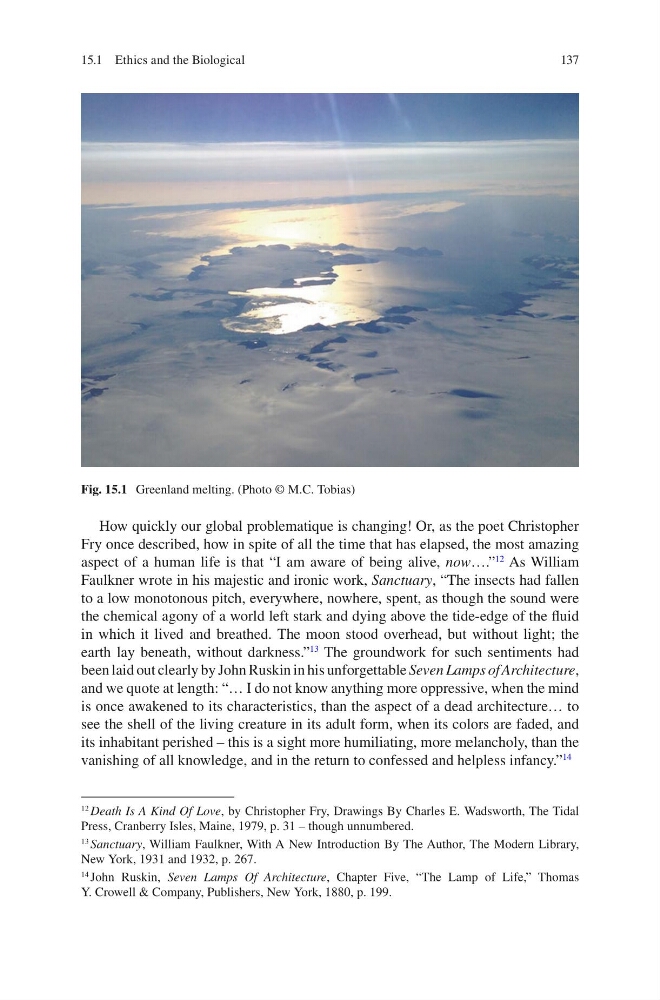
Fig. 15.1 Greenland melting. (Photo © M.C. Tobias)
15.1 Ethics and the Biological
How quickly our global problematique is changing! Or, as the poet Christopher
Fry once described, how in spite of all the time that has elapsed, the most amazing
aspect of a human life is that “I am aware of being alive, now….”
12
As William
Faulkner wrote in his majestic and ironic work, Sanctuary, “The insects had fallen
to a low monotonous pitch, everywhere, nowhere, spent, as though the sound were
the chemical agony of a world left stark and dying above the tide-edge of the fluid
in which it lived and breathed. The moon stood overhead, but without light; the
earth lay beneath, without darkness.”
13
The groundwork for such sentiments had
been laid out clearly by John Ruskin in his unforgettable Seven Lamps of Architecture,
and we quote at length: “… I do not know anything more oppressive, when the mind
is once awakened to its characteristics, than the aspect of a dead architecture… to
see the shell of the living creature in its adult form, when its colors are faded, and
its inhabitant perished – this is a sight more humiliating, more melancholy, than the
vanishing of all knowledge, and in the return to confessed and helpless infancy.”
14
12 Death Is A Kind Of Love, by Christopher Fry, Drawings By Charles E. Wadsworth, The Tidal
Press, Cranberry Isles, Maine, 1979, p. 31 – though unnumbered.
13 Sanctuary, William Faulkner, With A New Introduction By The Author, The Modern Library,
New York, 1931 and 1932, p. 267.
14 John Ruskin, Seven Lamps Of Architecture, Chapter Five, “The Lamp of Life,” Thomas
Y. Crowell & Company, Publishers, New York, 1880, p. 199.
Fig. 15.1 Greenland melting. (Photo © M.C. Tobias)
15.1 Ethics and the Biological