

130
An example of that bias in the midst of human calculations comes from European
histories of forest cover in what today would be France. Writes Carole L. Crumley,
who speaks of a literal “attack by agriculturalists….A somewhat ephemeral assault
on the woodlands of Europe was transformed into a war on the primary vegetative
cover of the continent.”
2
Her “evidence” for these changes in biodiversity encompasses climate change, iron mining, sheep grazing, changing population densities,
even Neolithic “social relations,” the analysis of pollen, and assessment of gravesites.
Such determinations allow for some insight into ancient economic status and thus
the political hierarchies driven by cultural differentiations; of privilege versus poverty; of forest management practices, if any; the evidence for “venerated species,”
of trade, “Roman exploitation,” shipbuilding, and the chemistry of soils indicative
of different regional occupations. Taken together, one can ascertain forms of pasturing and husbandry, as well as fundamental patterns of “agriculture, horticulture, and
viticulture,” and dramatic weather events, like flooding, and erosion.
The build-up over millennia of these anthropogenic presences accounts at once,
in today’s perspective, for a massive sylvan diminution. We who are alive in the present generation have inherited this sum of destructions. Whatever we say about it—
“The commitment made by the first French Environmental Conference in 2012 ‘to
make France a model biodiversity restoration country,’” for example— recognizes
2 See “Historical Ecology,” Carole L. Crumley, in Regional Dynamics – Burgundian Landscapes
in Historical Perspective, Edited by Carole L. Crumley and William H. Marquardt, Academic
Press, Inc., San Diego and London, 1987, p. 241.
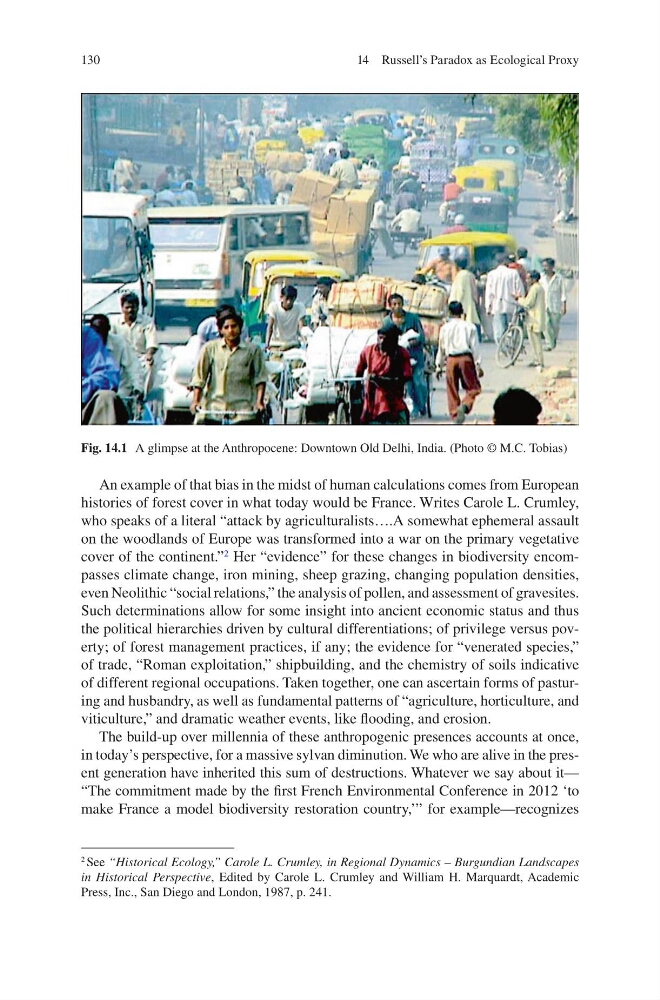
Fig. 14.1 A glimpse at the Anthropocene: Downtown Old Delhi, India. (Photo © M.C. Tobias)
14 Russell’s Paradox as Ecological Proxy
An example of that bias in the midst of human calculations comes from European
histories of forest cover in what today would be France. Writes Carole L. Crumley,
who speaks of a literal “attack by agriculturalists….A somewhat ephemeral assault
on the woodlands of Europe was transformed into a war on the primary vegetative
cover of the continent.”
2
Her “evidence” for these changes in biodiversity encompasses climate change, iron mining, sheep grazing, changing population densities,
even Neolithic “social relations,” the analysis of pollen, and assessment of gravesites.
Such determinations allow for some insight into ancient economic status and thus
the political hierarchies driven by cultural differentiations; of privilege versus poverty; of forest management practices, if any; the evidence for “venerated species,”
of trade, “Roman exploitation,” shipbuilding, and the chemistry of soils indicative
of different regional occupations. Taken together, one can ascertain forms of pasturing and husbandry, as well as fundamental patterns of “agriculture, horticulture, and
viticulture,” and dramatic weather events, like flooding, and erosion.
The build-up over millennia of these anthropogenic presences accounts at once,
in today’s perspective, for a massive sylvan diminution. We who are alive in the present generation have inherited this sum of destructions. Whatever we say about it—
“The commitment made by the first French Environmental Conference in 2012 ‘to
make France a model biodiversity restoration country,’” for example— recognizes
2 See “Historical Ecology,” Carole L. Crumley, in Regional Dynamics – Burgundian Landscapes
in Historical Perspective, Edited by Carole L. Crumley and William H. Marquardt, Academic
Press, Inc., San Diego and London, 1987, p. 241.
Fig. 14.1 A glimpse at the Anthropocene: Downtown Old Delhi, India. (Photo © M.C. Tobias)
14 Russell’s Paradox as Ecological Proxy