

106
projects—from 1500 kilometers to approximately 800 kilometers, a staggering consideration of the human mechanism.
12
Since just 1970, as referenced earlier, current
estimates suggest that humanity has extirpated at least 60% of all wildlife populations, excluding far greater damage to insects and spiders, particularly flying biomass.
13
With such escalating human interventions throughout the biosphere, not to
mention increasing animal consumption by humans—the mindful apotheosis of
hourly holocausts and the ecologically widespread moral and biomass equivalency
of cannibalism—our propositions, introspection, and future human consciousness
and proclivities for virtuous action appear trapped in the worst of all documented
malignancies. A far cry from the pure odyssey just referenced earlier. Even our
notorious, usually well-intended inquiries too easily lead to paradoxical backfire.
Such has been the notorious case of the scientific ledger regarding primate taxonomy in the Amazon, wherein researcher access to regions previously off the map
has been greatly amplified as forest destruction and roadbuilding has allowed for
much greater intrusiveness and often malevolent, human invasion.
14
Our only certain
12 See Zeldzame vogels van Nederland, Avifauna van Nederland 1, by Arnoud B van den Berg and
Cecilia A W Bosman, GMB Uitgeverij, Haarlem/Stichting Uitgeverij van de KNNV, Utrecht 1999,
p. 7.
13 See “Humanity has wiped out 60% of animal populations since 1970, report finds,” By Damian
Carrington, The Guardian, October 29, 2018, https://www.theguardian.com/environment/2018/
oct/30/humanity-wiped-out-animals-since-1970-major-report-finds, Accessed February 15, 2019.
14 Handbook Of The Mammals Of The World, 3. Primates, Chief Editors, Russell A. Mittermeier,
Anthony B. Rylands and Don E. Wilson, Published by Lynx Editions in association Conservation
International and IUCN, Barcelona, Spain, 2013, p. 14 from Dr. Mittermeier’s Introduction
describing how “Paradoxically, the destruction of the forests and the construction of highways into
remote regions have facilitated this search, providing access to parts of Amazonia and the Congo
forests, for example, that were previously inaccessible.”
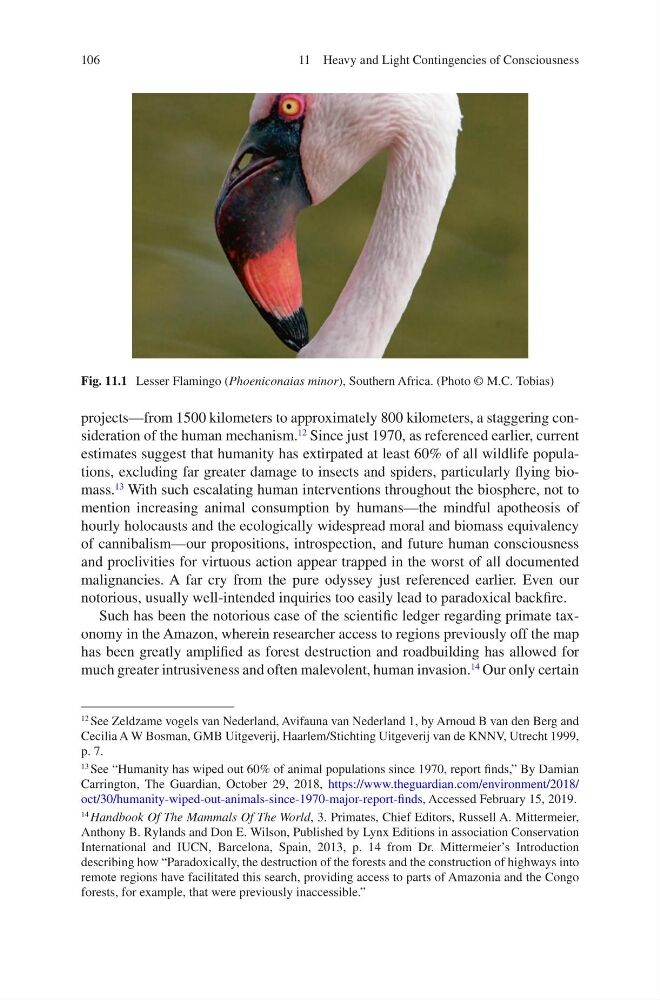
Fig. 11.1 Lesser Flamingo (Phoeniconaias minor), Southern Africa. (Photo © M.C. Tobias)
11 Heavy and Light Contingencies of Consciousness
projects—from 1500 kilometers to approximately 800 kilometers, a staggering consideration of the human mechanism.
12
Since just 1970, as referenced earlier, current
estimates suggest that humanity has extirpated at least 60% of all wildlife populations, excluding far greater damage to insects and spiders, particularly flying biomass.
13
With such escalating human interventions throughout the biosphere, not to
mention increasing animal consumption by humans—the mindful apotheosis of
hourly holocausts and the ecologically widespread moral and biomass equivalency
of cannibalism—our propositions, introspection, and future human consciousness
and proclivities for virtuous action appear trapped in the worst of all documented
malignancies. A far cry from the pure odyssey just referenced earlier. Even our
notorious, usually well-intended inquiries too easily lead to paradoxical backfire.
Such has been the notorious case of the scientific ledger regarding primate taxonomy in the Amazon, wherein researcher access to regions previously off the map
has been greatly amplified as forest destruction and roadbuilding has allowed for
much greater intrusiveness and often malevolent, human invasion.
14
Our only certain
12 See Zeldzame vogels van Nederland, Avifauna van Nederland 1, by Arnoud B van den Berg and
Cecilia A W Bosman, GMB Uitgeverij, Haarlem/Stichting Uitgeverij van de KNNV, Utrecht 1999,
p. 7.
13 See “Humanity has wiped out 60% of animal populations since 1970, report finds,” By Damian
Carrington, The Guardian, October 29, 2018, https://www.theguardian.com/environment/2018/
oct/30/humanity-wiped-out-animals-since-1970-major-report-finds, Accessed February 15, 2019.
14 Handbook Of The Mammals Of The World, 3. Primates, Chief Editors, Russell A. Mittermeier,
Anthony B. Rylands and Don E. Wilson, Published by Lynx Editions in association Conservation
International and IUCN, Barcelona, Spain, 2013, p. 14 from Dr. Mittermeier’s Introduction
describing how “Paradoxically, the destruction of the forests and the construction of highways into
remote regions have facilitated this search, providing access to parts of Amazonia and the Congo
forests, for example, that were previously inaccessible.”
Fig. 11.1 Lesser Flamingo (Phoeniconaias minor), Southern Africa. (Photo © M.C. Tobias)
11 Heavy and Light Contingencies of Consciousness