

96
Matangi, in the Hauraki Gulf of New Zealand’s North Island, where they had
imprinted on the lighthouse keeper’s partner, keeping pace of her rapid stride, hoping for hand-outs. To fly or not to fly? This is not a question glibly dismissed by
some 127 extant rail species. Somehow wonderfully they freely disperse, and have
done so for nearly 50 million years, from the time of the lower Eocene epoch.
3
While every biological pivot that seeks to understand the life of avifauna finds it
“paradoxical” that widely dispersed birds should have made an evolutionary issue
of flying or not (a much easier evolution to understand among most of New Zealand’s
ground-dwelling avifauna, like the Kiwi) we should assume that rails look at humans
in much the same way. Hence, the real paradox should not merely emerge in our
findings pertaining to those many species, from the Inaccessible Island rail, to the
largest of the Ratites, the ostrich, all of whom will not fly (as far as has been
observed). Rather, perhaps our very observations themselves are a clustering patchwork, ideas migrating with the specific birds that have been studied, less any and all
generalizations? This mode of observation would re-ignite the enchantment of individual differences, re-tooling our fundamental organization of ideas as concerns
everything in Nature.
And why should it be any different for our ideas? It is not. Princeton mathematician André Weil writes of Descartes’ methodical self-assurance that he was capable
of knowing perfect numbers and, consequently, “everything there is to know about
the material and immaterial world.” This professed omnipotence encompassed what
was thought of in the 1630s as “aliquot parts,” “perfect,” “amicable,” and
3 See “A Synopsis of the Fossil Rallidae,” buy Storrs L. Olson, Smithsonian Institution, 1977,
https://repository.si.edu/bitstream/handle/.../VZ_77_Synopsis_fossil_Rallidae.pdf?...
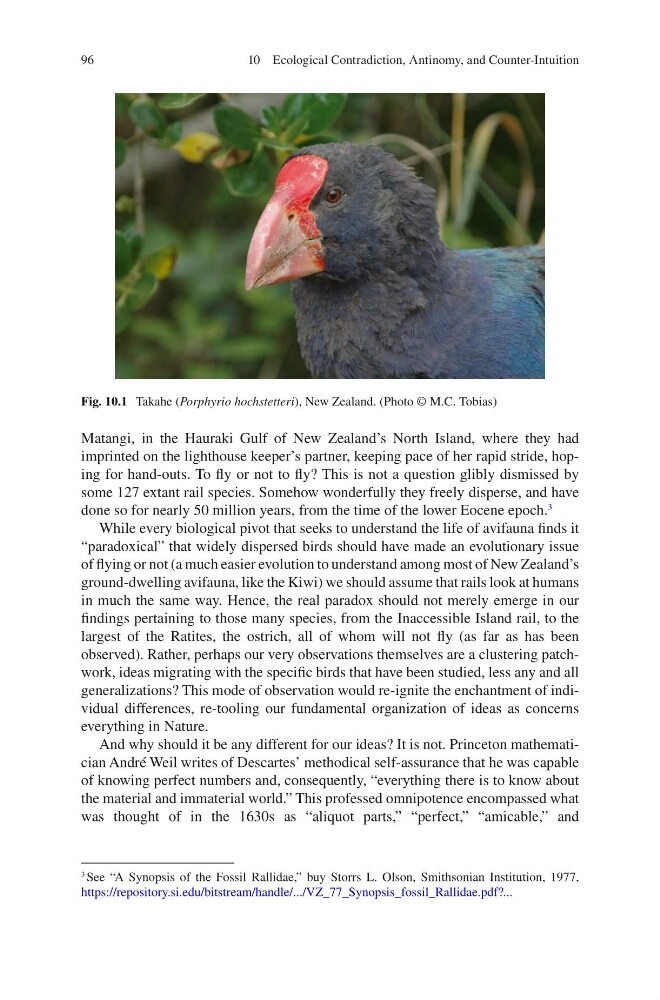
Fig. 10.1 Takahe (Porphyrio hochstetteri), New Zealand. (Photo © M.C. Tobias)
10 Ecological Contradiction, Antinomy, and Counter-Intuition
Matangi, in the Hauraki Gulf of New Zealand’s North Island, where they had
imprinted on the lighthouse keeper’s partner, keeping pace of her rapid stride, hoping for hand-outs. To fly or not to fly? This is not a question glibly dismissed by
some 127 extant rail species. Somehow wonderfully they freely disperse, and have
done so for nearly 50 million years, from the time of the lower Eocene epoch.
3
While every biological pivot that seeks to understand the life of avifauna finds it
“paradoxical” that widely dispersed birds should have made an evolutionary issue
of flying or not (a much easier evolution to understand among most of New Zealand’s
ground-dwelling avifauna, like the Kiwi) we should assume that rails look at humans
in much the same way. Hence, the real paradox should not merely emerge in our
findings pertaining to those many species, from the Inaccessible Island rail, to the
largest of the Ratites, the ostrich, all of whom will not fly (as far as has been
observed). Rather, perhaps our very observations themselves are a clustering patchwork, ideas migrating with the specific birds that have been studied, less any and all
generalizations? This mode of observation would re-ignite the enchantment of individual differences, re-tooling our fundamental organization of ideas as concerns
everything in Nature.
And why should it be any different for our ideas? It is not. Princeton mathematician André Weil writes of Descartes’ methodical self-assurance that he was capable
of knowing perfect numbers and, consequently, “everything there is to know about
the material and immaterial world.” This professed omnipotence encompassed what
was thought of in the 1630s as “aliquot parts,” “perfect,” “amicable,” and
3 See “A Synopsis of the Fossil Rallidae,” buy Storrs L. Olson, Smithsonian Institution, 1977,
https://repository.si.edu/bitstream/handle/.../VZ_77_Synopsis_fossil_Rallidae.pdf?...
Fig. 10.1 Takahe (Porphyrio hochstetteri), New Zealand. (Photo © M.C. Tobias)
10 Ecological Contradiction, Antinomy, and Counter-Intuition