

88
the crucial nexus of US conservation corridor strategies, motives, and projected
outcomes in places like Georgia and Florida and Gorongosa in Mozambique,
E. O. Wilson argues for “the alternative world we are trying to save” by reckoning
upon the essential reality of our current Anthropocene and acknowledging “two
parallel worlds on the planet.” One of them is human, and all but overwhelming by
the nefarious chaos of its inflictions.
The other is that set of strategies and beliefs and subsequent behaviors that turn
to culture and policy for edification and longevity; those “final sanctuaries” that will
by necessity become “our transcendent heritage… preserving our own deep history” and from which, if we are indeed fortunate, we may “take constant pleasure
from the surprise, mystery, awe, wholeness, relief, and redemption they offer.
5
” But,
again, what of the cycad and hippo?
Such imperative considerations are in, themselves, the territory of a John Donne’s
most abundantly mortality-mixing mood of phrase, when he argued “Here dead
men speak their last, and so do I…” which he greatly elaborated upon in his book
dealing with laws of nature and a most candid and (at the time) controversial work
on suicide.
6
Donne’s Paradox connotes the nihilistic origins of all inevitabilities:
Washington D.C., 2007, pp. 288–289.
5 See A Window On Eternity – A Biologist’s Walk Through Gorongosa National Park, by Edward
O. Wilson, Simon & Schuster, New York, 2014, pp. 140–141.
6 John Donne, “The Paradox,” (deemed 1635), p. 70 of the two-volume Grolier Edition, From The
Text Of the Edition of 1633, Revised by James Russell Lowell, Notes by Charles Eliot Norton,
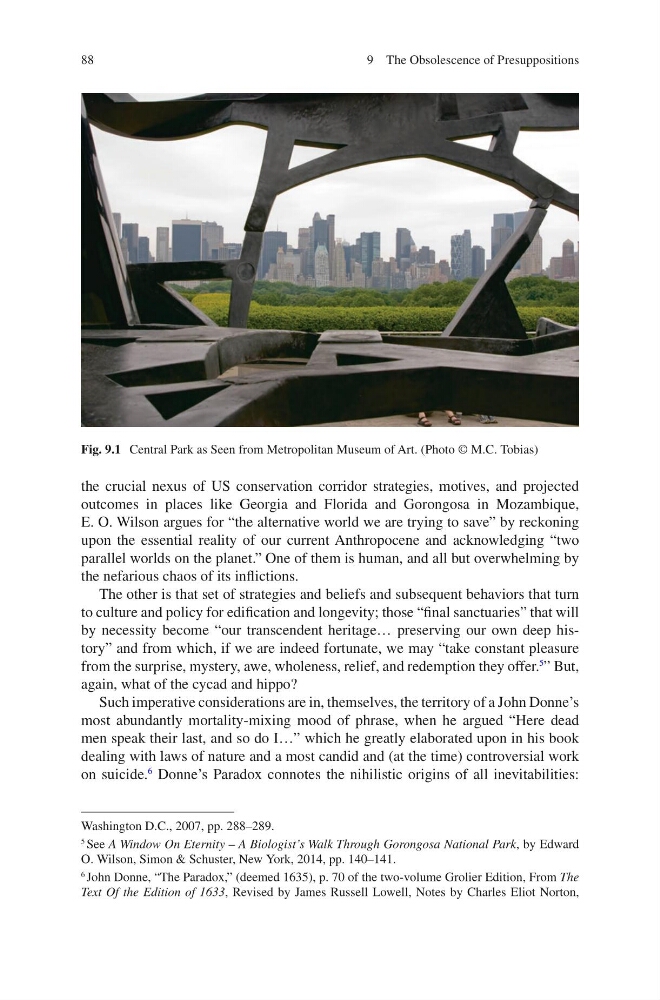
Fig. 9.1 Central Park as Seen from Metropolitan Museum of Art. (Photo © M.C. Tobias)
9 The Obsolescence of Presuppositions
the crucial nexus of US conservation corridor strategies, motives, and projected
outcomes in places like Georgia and Florida and Gorongosa in Mozambique,
E. O. Wilson argues for “the alternative world we are trying to save” by reckoning
upon the essential reality of our current Anthropocene and acknowledging “two
parallel worlds on the planet.” One of them is human, and all but overwhelming by
the nefarious chaos of its inflictions.
The other is that set of strategies and beliefs and subsequent behaviors that turn
to culture and policy for edification and longevity; those “final sanctuaries” that will
by necessity become “our transcendent heritage… preserving our own deep history” and from which, if we are indeed fortunate, we may “take constant pleasure
from the surprise, mystery, awe, wholeness, relief, and redemption they offer.
5
” But,
again, what of the cycad and hippo?
Such imperative considerations are in, themselves, the territory of a John Donne’s
most abundantly mortality-mixing mood of phrase, when he argued “Here dead
men speak their last, and so do I…” which he greatly elaborated upon in his book
dealing with laws of nature and a most candid and (at the time) controversial work
on suicide.
6
Donne’s Paradox connotes the nihilistic origins of all inevitabilities:
Washington D.C., 2007, pp. 288–289.
5 See A Window On Eternity – A Biologist’s Walk Through Gorongosa National Park, by Edward
O. Wilson, Simon & Schuster, New York, 2014, pp. 140–141.
6 John Donne, “The Paradox,” (deemed 1635), p. 70 of the two-volume Grolier Edition, From The
Text Of the Edition of 1633, Revised by James Russell Lowell, Notes by Charles Eliot Norton,
Fig. 9.1 Central Park as Seen from Metropolitan Museum of Art. (Photo © M.C. Tobias)
9 The Obsolescence of Presuppositions