

3.5.3 Microbe-Mediated Sedimentary Processes
As mentioned in the preceding subsection, the exudation of EPS is a mechanism of
paramount importance by which microbial mats and biofilms render stability to the
colonized sediments (Stal 2010). On the other hand, the various metabolic pathways
that grosso modo characterize the roles of microbial guilds in an epibenthic mat also
have a remarkable impact on sediment biogeochemistry by driving redox boundaries
and vice versa. Furthermore, microbial mat biogeochemistry creates favorable
microenvironments for authigenic mineralization, for example, by concentrating
phosphorus from seawater (Martin 1999) and by promoting the deposition of fine
carbonate laminae within the mat lattice (Maisano et al. 2020).
But perhaps the most significant microbe-mediated sedimentary processes taking
place in mats have to do with accretion (i.e., trapping, baffling, binding), and these
necessarily are determined by scale. As shown in Fig. 3.3b, the sediment particles
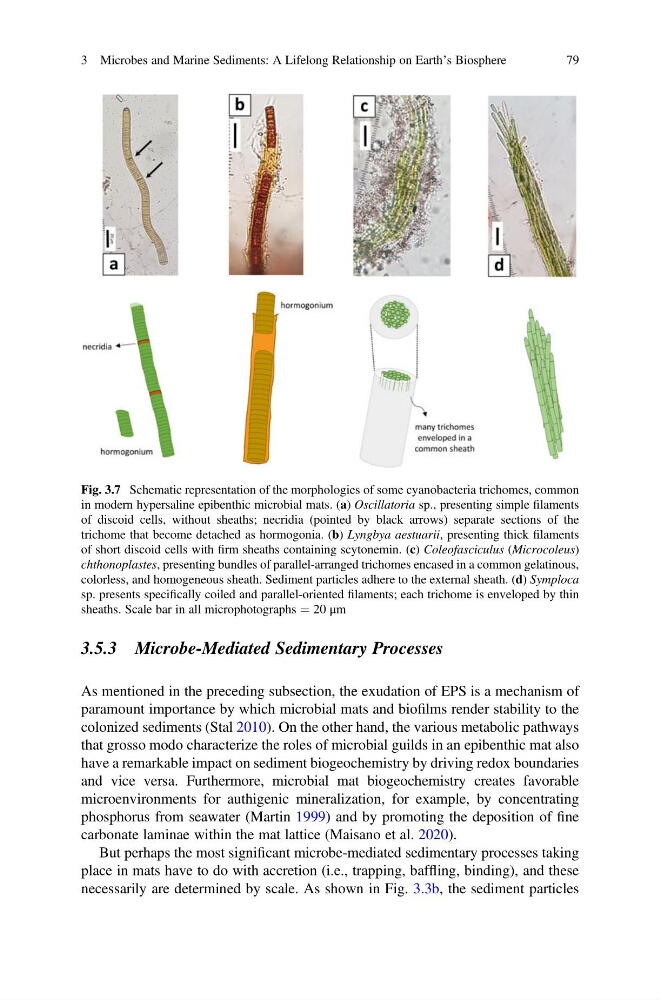
Fig. 3.7 Schematic representation of the morphologies of some cyanobacteria trichomes, common
in modern hypersaline epibenthic microbial mats. (a) Oscillatoria sp., presenting simple filaments
of discoid cells, without sheaths; necridia (pointed by black arrows) separate sections of the
trichome that become detached as hormogonia. (b) Lyngbya aestuarii, presenting thick filaments
of short discoid cells with firm sheaths containing scytonemin. (c) Coleofasciculus (Microcoleus)
chthonoplastes, presenting bundles of parallel-arranged trichomes encased in a common gelatinous,
colorless, and homogeneous sheath. Sediment particles adhere to the external sheath. (d) Symploca
sp. presents specifically coiled and parallel-oriented filaments; each trichome is enveloped by thin
sheaths. Scale bar in all microphotographs ¼ 20 μm
3 Microbes and Marine Sediments: A Lifelong Relationship on Earth’s Biosphere
79
As mentioned in the preceding subsection, the exudation of EPS is a mechanism of
paramount importance by which microbial mats and biofilms render stability to the
colonized sediments (Stal 2010). On the other hand, the various metabolic pathways
that grosso modo characterize the roles of microbial guilds in an epibenthic mat also
have a remarkable impact on sediment biogeochemistry by driving redox boundaries
and vice versa. Furthermore, microbial mat biogeochemistry creates favorable
microenvironments for authigenic mineralization, for example, by concentrating
phosphorus from seawater (Martin 1999) and by promoting the deposition of fine
carbonate laminae within the mat lattice (Maisano et al. 2020).
But perhaps the most significant microbe-mediated sedimentary processes taking
place in mats have to do with accretion (i.e., trapping, baffling, binding), and these
necessarily are determined by scale. As shown in Fig. 3.3b, the sediment particles
Fig. 3.7 Schematic representation of the morphologies of some cyanobacteria trichomes, common
in modern hypersaline epibenthic microbial mats. (a) Oscillatoria sp., presenting simple filaments
of discoid cells, without sheaths; necridia (pointed by black arrows) separate sections of the
trichome that become detached as hormogonia. (b) Lyngbya aestuarii, presenting thick filaments
of short discoid cells with firm sheaths containing scytonemin. (c) Coleofasciculus (Microcoleus)
chthonoplastes, presenting bundles of parallel-arranged trichomes encased in a common gelatinous,
colorless, and homogeneous sheath. Sediment particles adhere to the external sheath. (d) Symploca
sp. presents specifically coiled and parallel-oriented filaments; each trichome is enveloped by thin
sheaths. Scale bar in all microphotographs ¼ 20 μm
3 Microbes and Marine Sediments: A Lifelong Relationship on Earth’s Biosphere
79