

perceive molecules of the microorganisms, for example flagellin or chitin. After
perception of the microorganism, a plant response is rapidly activated leading to a
massive transcriptional reprogramming and change in hormone levels. However,
microorganisms adapted to their host plants have evolved strategies to interfere and
inhibit plant defense by the action of pathogen-secreted virulence factors known as
effectors. For example, the bacterial pathogen, Pseudomonas syringae, can deliver
over 30 effectors into plant cells through the type III secretion system. These
effectors suppress the plant immune system at various levels, including receptor
signaling, cell wall reinforcement, and hormonal signaling, among others. But plants
have a second layer of immune system and recognize microbial effectors directly or
indirectly by intracellular receptors encoded by resistance (R) genes.
Beneficial microorganisms have also evolved to avoid the plant immune system
by producing less damage or by producing molecules to manipulate the host
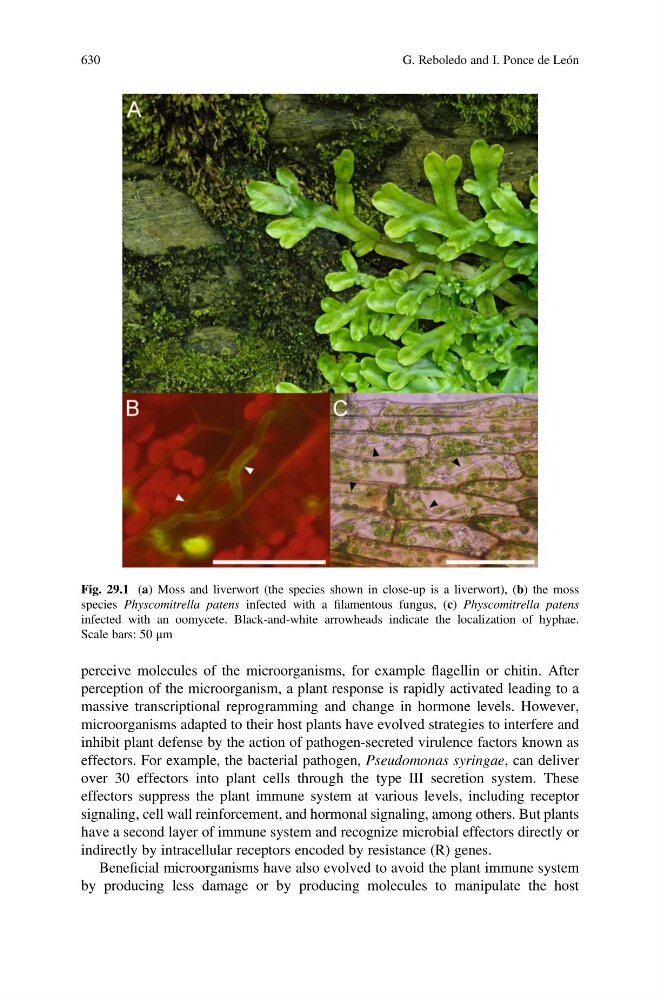
Fig. 29.1 (a) Moss and liverwort (the species shown in close-up is a liverwort), (b) the moss
species Physcomitrella patens infected with a filamentous fungus, (c) Physcomitrella patens
infected with an oomycete. Black-and-white arrowheads indicate the localization of hyphae.
Scale bars: 50 μm
630
G. Reboledo and I. Ponce de León