

Viruses are parasitic symbionts that aid the process of genomic evolution by
acquiring genes from their hosts and then transferring those genes between hosts. It
has been suggested that the coevolving interactions between virus and host may be
one of the factors that drive evolutionary processes. The captured and transferred
genes can evolutionarily benefit both virus and host, which suggests a mutualistic
association.
A viral genome can become endogenous, which means the viral genome is
inherited as a DNA copy when its host replicates. Endogenous viruses can become
grounded, a term that signifies the viruses have lost their ability to form an infectious
viral particle known as a viroid. But then, having become endogenous frees the virus
from needing to be transmitted as an infectious viral particle. Even though an
endogenous virus may have become grounded, genes of that endogenous virus can
actively be expressed within the host cells.
Viral genes that have been captured by a host may become repurposed by the
host. An example of such repurposing has been the usage of endogenous retrovirus
envelope genes, which cause cell fusion, to change fetal trophoblast cells into
placental syncytiotrophoblasts (Soygur and Sati (2016). Most, although perhaps
not all, mammals use these gene products which are called syncytins to assist in
producing a placenta. The process of placental development and the corresponding
choice of retroviral genes differs between mammalian groups (Malik 2012). These
choices have represented evolutionary changes and helped to mark a divide between
monotreme mammals which lay eggs (clade prototheria, order monotremata) and
placental mammals (clade eutheria).
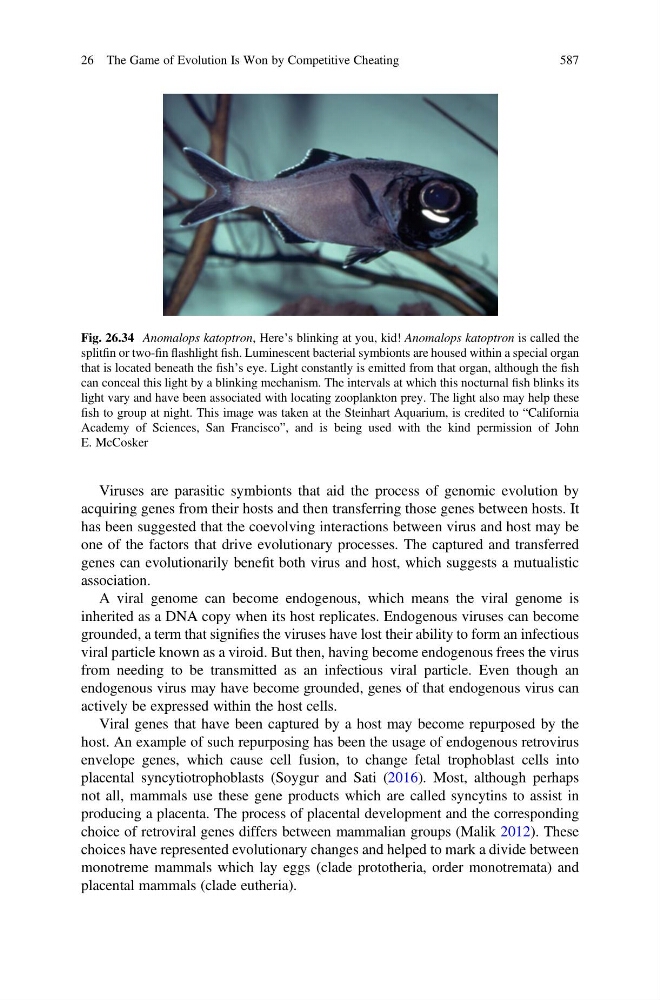
Fig. 26.34 Anomalops katoptron, Here’s blinking at you, kid! Anomalops katoptron is called the
splitfin or two-fin flashlight fish. Luminescent bacterial symbionts are housed within a special organ
that is located beneath the fish’s eye. Light constantly is emitted from that organ, although the fish
can conceal this light by a blinking mechanism. The intervals at which this nocturnal fish blinks its
light vary and have been associated with locating zooplankton prey. The light also may help these
fish to group at night. This image was taken at the Steinhart Aquarium, is credited to “California
Academy of Sciences, San Francisco”, and is being used with the kind permission of John
E. McCosker
26 The Game of Evolution Is Won by Competitive Cheating
587
acquiring genes from their hosts and then transferring those genes between hosts. It
has been suggested that the coevolving interactions between virus and host may be
one of the factors that drive evolutionary processes. The captured and transferred
genes can evolutionarily benefit both virus and host, which suggests a mutualistic
association.
A viral genome can become endogenous, which means the viral genome is
inherited as a DNA copy when its host replicates. Endogenous viruses can become
grounded, a term that signifies the viruses have lost their ability to form an infectious
viral particle known as a viroid. But then, having become endogenous frees the virus
from needing to be transmitted as an infectious viral particle. Even though an
endogenous virus may have become grounded, genes of that endogenous virus can
actively be expressed within the host cells.
Viral genes that have been captured by a host may become repurposed by the
host. An example of such repurposing has been the usage of endogenous retrovirus
envelope genes, which cause cell fusion, to change fetal trophoblast cells into
placental syncytiotrophoblasts (Soygur and Sati (2016). Most, although perhaps
not all, mammals use these gene products which are called syncytins to assist in
producing a placenta. The process of placental development and the corresponding
choice of retroviral genes differs between mammalian groups (Malik 2012). These
choices have represented evolutionary changes and helped to mark a divide between
monotreme mammals which lay eggs (clade prototheria, order monotremata) and
placental mammals (clade eutheria).
Fig. 26.34 Anomalops katoptron, Here’s blinking at you, kid! Anomalops katoptron is called the
splitfin or two-fin flashlight fish. Luminescent bacterial symbionts are housed within a special organ
that is located beneath the fish’s eye. Light constantly is emitted from that organ, although the fish
can conceal this light by a blinking mechanism. The intervals at which this nocturnal fish blinks its
light vary and have been associated with locating zooplankton prey. The light also may help these
fish to group at night. This image was taken at the Steinhart Aquarium, is credited to “California
Academy of Sciences, San Francisco”, and is being used with the kind permission of John
E. McCosker
26 The Game of Evolution Is Won by Competitive Cheating
587