

Frank’s opinion was that, in so far as the mycelium are concerned, the fungus
must undoubtedly be regarded as a parasite to the living root because of the manner
in which the fungus attaches and penetrates into the growing root. He believed that
the underlying nutritional needs of the fungus, as it applied to all parasitic fungi,
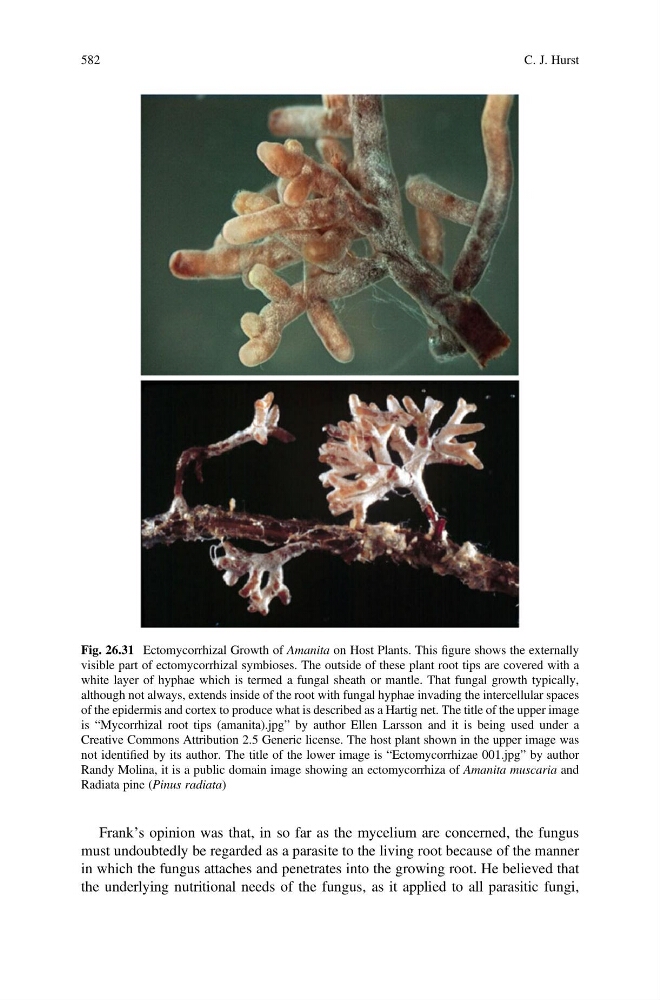
Fig. 26.31 Ectomycorrhizal Growth of Amanita on Host Plants. This figure shows the externally
visible part of ectomycorrhizal symbioses. The outside of these plant root tips are covered with a
white layer of hyphae which is termed a fungal sheath or mantle. That fungal growth typically,
although not always, extends inside of the root with fungal hyphae invading the intercellular spaces
of the epidermis and cortex to produce what is described as a Hartig net. The title of the upper image
is “Mycorrhizal root tips (amanita).jpg” by author Ellen Larsson and it is being used under a
Creative Commons Attribution 2.5 Generic license. The host plant shown in the upper image was
not identified by its author. The title of the lower image is “Ectomycorrhizae 001.jpg” by author
Randy Molina, it is a public domain image showing an ectomycorrhiza of Amanita muscaria and
Radiata pine (Pinus radiata)
582
C. J. Hurst
must undoubtedly be regarded as a parasite to the living root because of the manner
in which the fungus attaches and penetrates into the growing root. He believed that
the underlying nutritional needs of the fungus, as it applied to all parasitic fungi,
Fig. 26.31 Ectomycorrhizal Growth of Amanita on Host Plants. This figure shows the externally
visible part of ectomycorrhizal symbioses. The outside of these plant root tips are covered with a
white layer of hyphae which is termed a fungal sheath or mantle. That fungal growth typically,
although not always, extends inside of the root with fungal hyphae invading the intercellular spaces
of the epidermis and cortex to produce what is described as a Hartig net. The title of the upper image
is “Mycorrhizal root tips (amanita).jpg” by author Ellen Larsson and it is being used under a
Creative Commons Attribution 2.5 Generic license. The host plant shown in the upper image was
not identified by its author. The title of the lower image is “Ectomycorrhizae 001.jpg” by author
Randy Molina, it is a public domain image showing an ectomycorrhiza of Amanita muscaria and
Radiata pine (Pinus radiata)
582
C. J. Hurst