

It is important to understand that although I am mentioning in this essay a few
very specific symbiotic associations, each host simultaneously will have symbiotic
associations with a great many other groups of microorganisms. An example of this
would be the leaf microbiome of duckweed plants (Acosta et al. 2020).
26.6.3 Actinobacteria as Symbionts that Provide Fixed
Nitrogen for Their Host Plants
Frankia alni is a bacterial species that induces the formation of root nodules on black
alder (Alnus glutinosa) trees, also called the common alder. In this regard the
symbiosis of Frankia alni with alder trees is similar to the symbioses that rhizobial
bacteria form with legumes (family Fabaceae). The mechanisms of Frankia symbiosis including signaling which occurs between the host and its candidate symbiont
(Pawlowski and Demchenko 2012).
Frankia strains tend to be host specific with respect to the plant species in which
the bacteria establish their symbiotic relationship. Frankia use their bacterial nitrogenase enzyme to fix nitrogen within those root nodules by converting atmospheric
nitrogen into ammonia. These nodules can become visible above ground if the trees
roots become exposed. Figure 26.30 shows root nodules that were induced by
Frankia on alder.
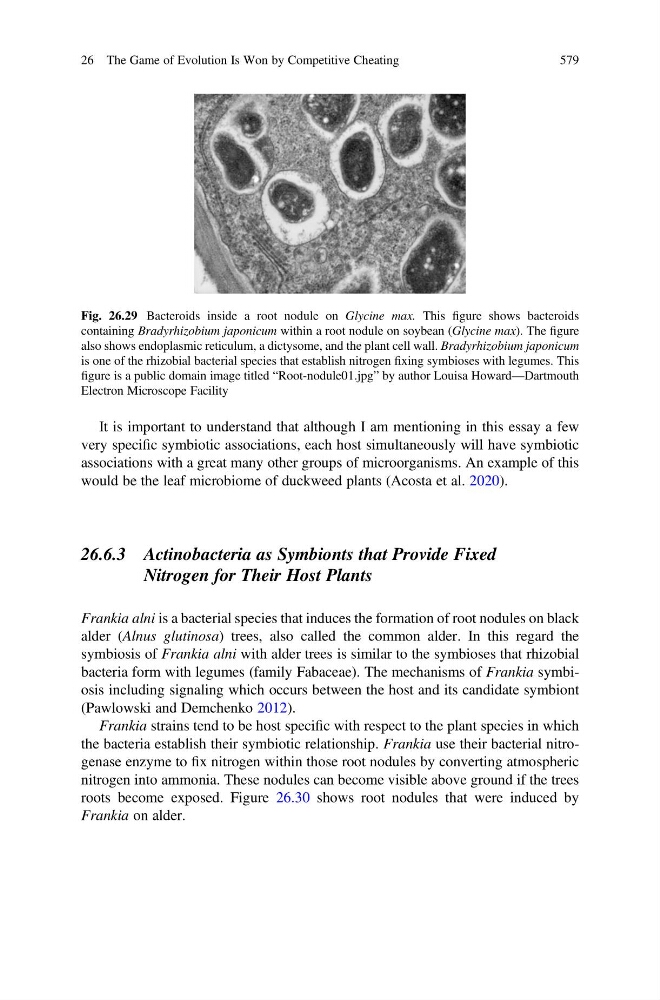
Fig. 26.29 Bacteroids inside a root nodule on Glycine max. This figure shows bacteroids
containing Bradyrhizobium japonicum within a root nodule on soybean (Glycine max). The figure
also shows endoplasmic reticulum, a dictysome, and the plant cell wall. Bradyrhizobium japonicum
is one of the rhizobial bacterial species that establish nitrogen fixing symbioses with legumes. This
figure is a public domain image titled “Root-nodule01.jpg” by author Louisa Howard—Dartmouth
Electron Microscope Facility
26 The Game of Evolution Is Won by Competitive Cheating
579
very specific symbiotic associations, each host simultaneously will have symbiotic
associations with a great many other groups of microorganisms. An example of this
would be the leaf microbiome of duckweed plants (Acosta et al. 2020).
26.6.3 Actinobacteria as Symbionts that Provide Fixed
Nitrogen for Their Host Plants
Frankia alni is a bacterial species that induces the formation of root nodules on black
alder (Alnus glutinosa) trees, also called the common alder. In this regard the
symbiosis of Frankia alni with alder trees is similar to the symbioses that rhizobial
bacteria form with legumes (family Fabaceae). The mechanisms of Frankia symbiosis including signaling which occurs between the host and its candidate symbiont
(Pawlowski and Demchenko 2012).
Frankia strains tend to be host specific with respect to the plant species in which
the bacteria establish their symbiotic relationship. Frankia use their bacterial nitrogenase enzyme to fix nitrogen within those root nodules by converting atmospheric
nitrogen into ammonia. These nodules can become visible above ground if the trees
roots become exposed. Figure 26.30 shows root nodules that were induced by
Frankia on alder.
Fig. 26.29 Bacteroids inside a root nodule on Glycine max. This figure shows bacteroids
containing Bradyrhizobium japonicum within a root nodule on soybean (Glycine max). The figure
also shows endoplasmic reticulum, a dictysome, and the plant cell wall. Bradyrhizobium japonicum
is one of the rhizobial bacterial species that establish nitrogen fixing symbioses with legumes. This
figure is a public domain image titled “Root-nodule01.jpg” by author Louisa Howard—Dartmouth
Electron Microscope Facility
26 The Game of Evolution Is Won by Competitive Cheating
579