

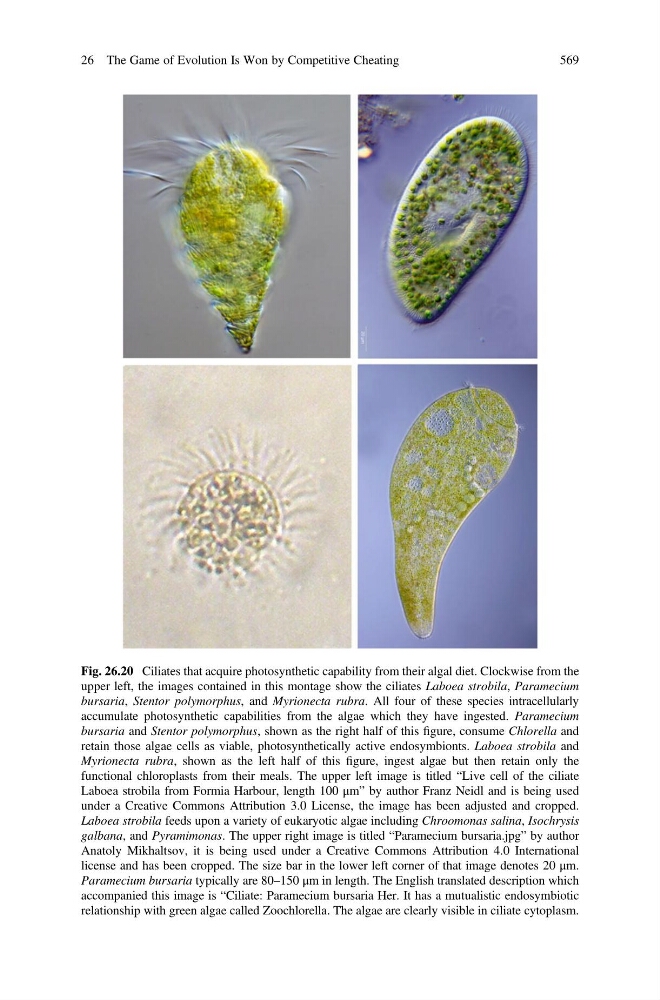
Fig. 26.20 Ciliates that acquire photosynthetic capability from their algal diet. Clockwise from the
upper left, the images contained in this montage show the ciliates Laboea strobila, Paramecium
bursaria, Stentor polymorphus, and Myrionecta rubra. All four of these species intracellularly
accumulate photosynthetic capabilities from the algae which they have ingested. Paramecium
bursaria and Stentor polymorphus, shown as the right half of this figure, consume Chlorella and
retain those algae cells as viable, photosynthetically active endosymbionts. Laboea strobila and
Myrionecta rubra, shown as the left half of this figure, ingest algae but then retain only the
functional chloroplasts from their meals. The upper left image is titled “Live cell of the ciliate
Laboea strobila from Formia Harbour, length 100 μm” by author Franz Neidl and is being used
under a Creative Commons Attribution 3.0 License, the image has been adjusted and cropped.
Laboea strobila feeds upon a variety of eukaryotic algae including Chroomonas salina, Isochrysis
galbana, and Pyramimonas. The upper right image is titled “Paramecium bursaria.jpg” by author
Anatoly Mikhaltsov, it is being used under a Creative Commons Attribution 4.0 International
license and has been cropped. The size bar in the lower left corner of that image denotes 20 μm.
Paramecium bursaria typically are 80–150 μm in length. The English translated description which
accompanied this image is “Ciliate: Paramecium bursaria Her. It has a mutualistic endosymbiotic
relationship with green algae called Zoochlorella. The algae are clearly visible in ciliate cytoplasm.
26 The Game of Evolution Is Won by Competitive Cheating
569
upper left, the images contained in this montage show the ciliates Laboea strobila, Paramecium
bursaria, Stentor polymorphus, and Myrionecta rubra. All four of these species intracellularly
accumulate photosynthetic capabilities from the algae which they have ingested. Paramecium
bursaria and Stentor polymorphus, shown as the right half of this figure, consume Chlorella and
retain those algae cells as viable, photosynthetically active endosymbionts. Laboea strobila and
Myrionecta rubra, shown as the left half of this figure, ingest algae but then retain only the
functional chloroplasts from their meals. The upper left image is titled “Live cell of the ciliate
Laboea strobila from Formia Harbour, length 100 μm” by author Franz Neidl and is being used
under a Creative Commons Attribution 3.0 License, the image has been adjusted and cropped.
Laboea strobila feeds upon a variety of eukaryotic algae including Chroomonas salina, Isochrysis
galbana, and Pyramimonas. The upper right image is titled “Paramecium bursaria.jpg” by author
Anatoly Mikhaltsov, it is being used under a Creative Commons Attribution 4.0 International
license and has been cropped. The size bar in the lower left corner of that image denotes 20 μm.
Paramecium bursaria typically are 80–150 μm in length. The English translated description which
accompanied this image is “Ciliate: Paramecium bursaria Her. It has a mutualistic endosymbiotic
relationship with green algae called Zoochlorella. The algae are clearly visible in ciliate cytoplasm.
26 The Game of Evolution Is Won by Competitive Cheating
569