

24.2 Hawaiian Bobtail Squid and Aliivibrio fischeri,
an Intimate Partnership
The Hawaiian bobtail squid (Euprymna scolopes) is characterised by its ability to
produce light in his ‘light organ’ at night to make him virtually invisible to predators.
However, the genome of the squid does not contain any gene encoding proteins that
can produce light. So, how could an animal produce light if this ability is absent in
his own nature? Hence, why not interact with an organism that has already solved
this issue, such as the luminous bacteria Aliivibrio fischeri, and establish a permanent
association? As a result, evolution has forged one of the most elegant and complex
bacterial-animal interactions in nature between the Hawaiian bobtail squid and the
marine bacteria A. fischeri. The nocturnal squid provides nutrient supplies and
shelter to A. fischeri and in return the mollusc masks its shadow from predators by
mimicking the moonlight using counter-illumination produced by the bacterial
luciferase (Jones and Nishiguchi 2004). The acquisition of A. fischeri is horizontal
and the colonisation of the light organ by this bacterium produces irreversible
morphological changes in the squid (Koropatnick et al. 2014; Stubbendieck et al.
2019). This microbe-host specificity relies on mutual communication between the
partners (Mandel and Dunn 2016).
This symbiotic association starts at the very beginning of the squid life cycle,
when the squid emerges from the egg and swallows a tiny amount of seawater that
contains millions of bacterial cells. Although A. fischeri constitutes a very low
fraction of these planktonic cells, only this organism will colonise the nascent
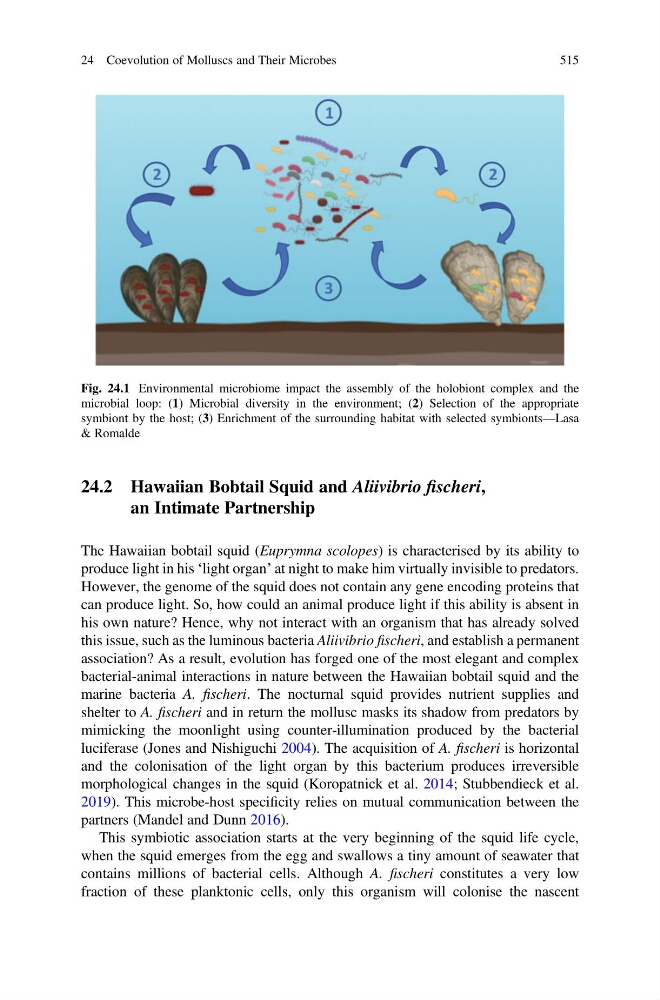
Fig. 24.1 Environmental microbiome impact the assembly of the holobiont complex and the
microbial loop: (1) Microbial diversity in the environment; (2) Selection of the appropriate
symbiont by the host; (3) Enrichment of the surrounding habitat with selected symbionts—Lasa
& Romalde
24 Coevolution of Molluscs and Their Microbes
515
an Intimate Partnership
The Hawaiian bobtail squid (Euprymna scolopes) is characterised by its ability to
produce light in his ‘light organ’ at night to make him virtually invisible to predators.
However, the genome of the squid does not contain any gene encoding proteins that
can produce light. So, how could an animal produce light if this ability is absent in
his own nature? Hence, why not interact with an organism that has already solved
this issue, such as the luminous bacteria Aliivibrio fischeri, and establish a permanent
association? As a result, evolution has forged one of the most elegant and complex
bacterial-animal interactions in nature between the Hawaiian bobtail squid and the
marine bacteria A. fischeri. The nocturnal squid provides nutrient supplies and
shelter to A. fischeri and in return the mollusc masks its shadow from predators by
mimicking the moonlight using counter-illumination produced by the bacterial
luciferase (Jones and Nishiguchi 2004). The acquisition of A. fischeri is horizontal
and the colonisation of the light organ by this bacterium produces irreversible
morphological changes in the squid (Koropatnick et al. 2014; Stubbendieck et al.
2019). This microbe-host specificity relies on mutual communication between the
partners (Mandel and Dunn 2016).
This symbiotic association starts at the very beginning of the squid life cycle,
when the squid emerges from the egg and swallows a tiny amount of seawater that
contains millions of bacterial cells. Although A. fischeri constitutes a very low
fraction of these planktonic cells, only this organism will colonise the nascent
Fig. 24.1 Environmental microbiome impact the assembly of the holobiont complex and the
microbial loop: (1) Microbial diversity in the environment; (2) Selection of the appropriate
symbiont by the host; (3) Enrichment of the surrounding habitat with selected symbionts—Lasa
& Romalde
24 Coevolution of Molluscs and Their Microbes
515