

specific functions depend on the symbiont’s niche space as well as the complexities
of microbe–microbe and host–microbe interactions (Hurst 2016; Foster et al. 2017;
Coyte and Rakoff-Nahoum 2019).
A comfortable intermediate scale for broad functions could focus on the functional categories described in Sect. 17.2. The broad function can then be measured in
such outcomes as nutrient availability, disease symptoms or survival, developmental
timing or metamorphosis success, and extended phenotype products. Intermediate
scale functions can then be easily linked to specific functions and the largest scale
broad function, host fitness.
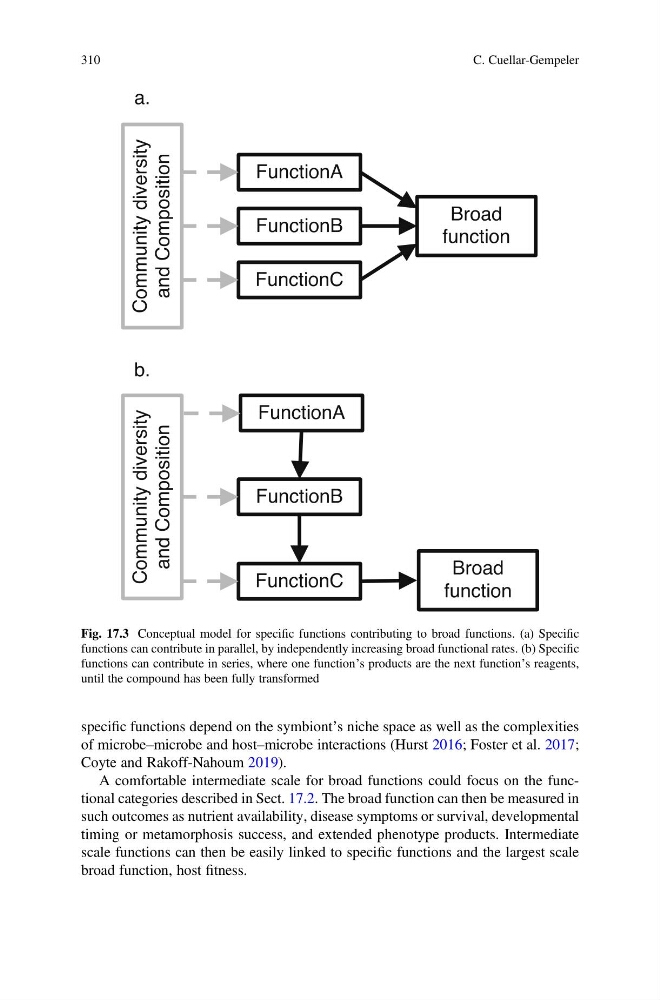
Fig. 17.3 Conceptual model for specific functions contributing to broad functions. (a) Specific
functions can contribute in parallel, by independently increasing broad functional rates. (b) Specific
functions can contribute in series, where one function’s products are the next function’s reagents,
until the compound has been fully transformed
310
C. Cuellar-Gempeler
of microbe–microbe and host–microbe interactions (Hurst 2016; Foster et al. 2017;
Coyte and Rakoff-Nahoum 2019).
A comfortable intermediate scale for broad functions could focus on the functional categories described in Sect. 17.2. The broad function can then be measured in
such outcomes as nutrient availability, disease symptoms or survival, developmental
timing or metamorphosis success, and extended phenotype products. Intermediate
scale functions can then be easily linked to specific functions and the largest scale
broad function, host fitness.
Fig. 17.3 Conceptual model for specific functions contributing to broad functions. (a) Specific
functions can contribute in parallel, by independently increasing broad functional rates. (b) Specific
functions can contribute in series, where one function’s products are the next function’s reagents,
until the compound has been fully transformed
310
C. Cuellar-Gempeler