

Like carbon and oxygen, nitrogen can form double bonds with itself, yielding
polar reactive molecules. When double bonded with carbon or oxygen, the result is
reactive imines or nitrogen oxides. The most common bonds with nitrogen are single
bonds formed with carbon, hydrogen, and oxygen. While the nitrogen-carbon single
bond forms key linkages between amino acids in proteins, bonds with hydrogen and
oxygen result in reduced nitrogen compounds in four different oxidation states or
oxidized nitrogen compounds in five different oxidation states. The resulting ten
different possible oxidation states of nitrogen molecules provide unmatched redoxreactive versatility and, together with the structural stability conferred by carbon
A - Process-focused extant N-cycle
B - Intermediate-focused N-cycle
1 - NITROGEN FIXATION (Ammonification) - Reduction of N 2 to Ammonium
2 - NITRITATION - Oxidation of Ammonia to Nitrite
3 - NITRATATION - Oxidation of Nitrite to Nitrate
4 - Nitrate Reduction to Nitrite (coupled to 5, 6 or 7 in population or community)
5 - DENITRIFICATION (N-oxide gasification) - Reduction of Nitrite to N 2 O or N 2
6 - ANAMMOX (coupled Nitrification-Denitrification)
7 - AMMONIFICATION (Assimilatory / Dissimilatory Nitrite Reduction to NH 4
+ )
8 - NO Dismutation to N 2 and O 2
NITRIFICATION
(Comammox)
7
1
2
2
3
5
5
5
6
6
4
8
NH 3
-3 NH 4
+
+5 NO 3
-
+3 NO 2
-
+1 N 2 O
0 N 2
+2 NO
-2 N 2 H 4
0 O 2
Cooxidation
*
O 3
-
-
-1 NH 2 OH
Dismutation
proportionation
Di-oxygenation
proportionation
Monooxygenation
CO 2
Cyanate
hydrolysis
Ureolysis
2x
2x
HCO 3
- + OCN -
3H + +4 -3
H 2 O
H 2 NCNH 2
O
=
-3
+4
+4
-3
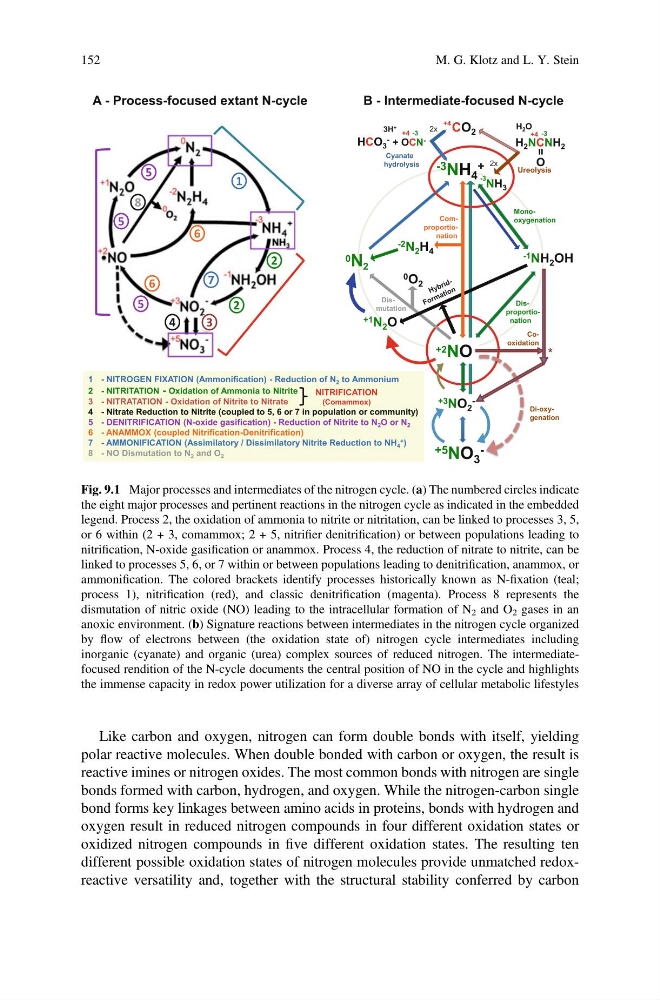
Fig. 9.1 Major processes and intermediates of the nitrogen cycle. (a) The numbered circles indicate
the eight major processes and pertinent reactions in the nitrogen cycle as indicated in the embedded
legend. Process 2, the oxidation of ammonia to nitrite or nitritation, can be linked to processes 3, 5,
or 6 within (2 + 3, comammox; 2 + 5, nitrifier denitrification) or between populations leading to
nitrification, N-oxide gasification or anammox. Process 4, the reduction of nitrate to nitrite, can be
linked to processes 5, 6, or 7 within or between populations leading to denitrification, anammox, or
ammonification. The colored brackets identify processes historically known as N-fixation (teal;
process 1), nitrification (red), and classic denitrification (magenta). Process 8 represents the
dismutation of nitric oxide (NO) leading to the intracellular formation of N 2 and O 2 gases in an
anoxic environment. (b) Signature reactions between intermediates in the nitrogen cycle organized
by flow of electrons between (the oxidation state of) nitrogen cycle intermediates including
inorganic (cyanate) and organic (urea) complex sources of reduced nitrogen. The intermediatefocused rendition of the N-cycle documents the central position of NO in the cycle and highlights
the immense capacity in redox power utilization for a diverse array of cellular metabolic lifestyles
152
M. G. Klotz and L. Y. Stein
polar reactive molecules. When double bonded with carbon or oxygen, the result is
reactive imines or nitrogen oxides. The most common bonds with nitrogen are single
bonds formed with carbon, hydrogen, and oxygen. While the nitrogen-carbon single
bond forms key linkages between amino acids in proteins, bonds with hydrogen and
oxygen result in reduced nitrogen compounds in four different oxidation states or
oxidized nitrogen compounds in five different oxidation states. The resulting ten
different possible oxidation states of nitrogen molecules provide unmatched redoxreactive versatility and, together with the structural stability conferred by carbon
A - Process-focused extant N-cycle
B - Intermediate-focused N-cycle
1 - NITROGEN FIXATION (Ammonification) - Reduction of N 2 to Ammonium
2 - NITRITATION - Oxidation of Ammonia to Nitrite
3 - NITRATATION - Oxidation of Nitrite to Nitrate
4 - Nitrate Reduction to Nitrite (coupled to 5, 6 or 7 in population or community)
5 - DENITRIFICATION (N-oxide gasification) - Reduction of Nitrite to N 2 O or N 2
6 - ANAMMOX (coupled Nitrification-Denitrification)
7 - AMMONIFICATION (Assimilatory / Dissimilatory Nitrite Reduction to NH 4
+ )
8 - NO Dismutation to N 2 and O 2
NITRIFICATION
(Comammox)
7
1
2
2
3
5
5
5
6
6
4
8
NH 3
-3 NH 4
+
+5 NO 3
-
+3 NO 2
-
+1 N 2 O
0 N 2
+2 NO
-2 N 2 H 4
0 O 2
Cooxidation
*
O 3
-
-
-1 NH 2 OH
Dismutation
proportionation
Di-oxygenation
proportionation
Monooxygenation
CO 2
Cyanate
hydrolysis
Ureolysis
2x
2x
HCO 3
- + OCN -
3H + +4 -3
H 2 O
H 2 NCNH 2
O
=
-3
+4
+4
-3
Fig. 9.1 Major processes and intermediates of the nitrogen cycle. (a) The numbered circles indicate
the eight major processes and pertinent reactions in the nitrogen cycle as indicated in the embedded
legend. Process 2, the oxidation of ammonia to nitrite or nitritation, can be linked to processes 3, 5,
or 6 within (2 + 3, comammox; 2 + 5, nitrifier denitrification) or between populations leading to
nitrification, N-oxide gasification or anammox. Process 4, the reduction of nitrate to nitrite, can be
linked to processes 5, 6, or 7 within or between populations leading to denitrification, anammox, or
ammonification. The colored brackets identify processes historically known as N-fixation (teal;
process 1), nitrification (red), and classic denitrification (magenta). Process 8 represents the
dismutation of nitric oxide (NO) leading to the intracellular formation of N 2 and O 2 gases in an
anoxic environment. (b) Signature reactions between intermediates in the nitrogen cycle organized
by flow of electrons between (the oxidation state of) nitrogen cycle intermediates including
inorganic (cyanate) and organic (urea) complex sources of reduced nitrogen. The intermediatefocused rendition of the N-cycle documents the central position of NO in the cycle and highlights
the immense capacity in redox power utilization for a diverse array of cellular metabolic lifestyles
152
M. G. Klotz and L. Y. Stein