

a
b
c
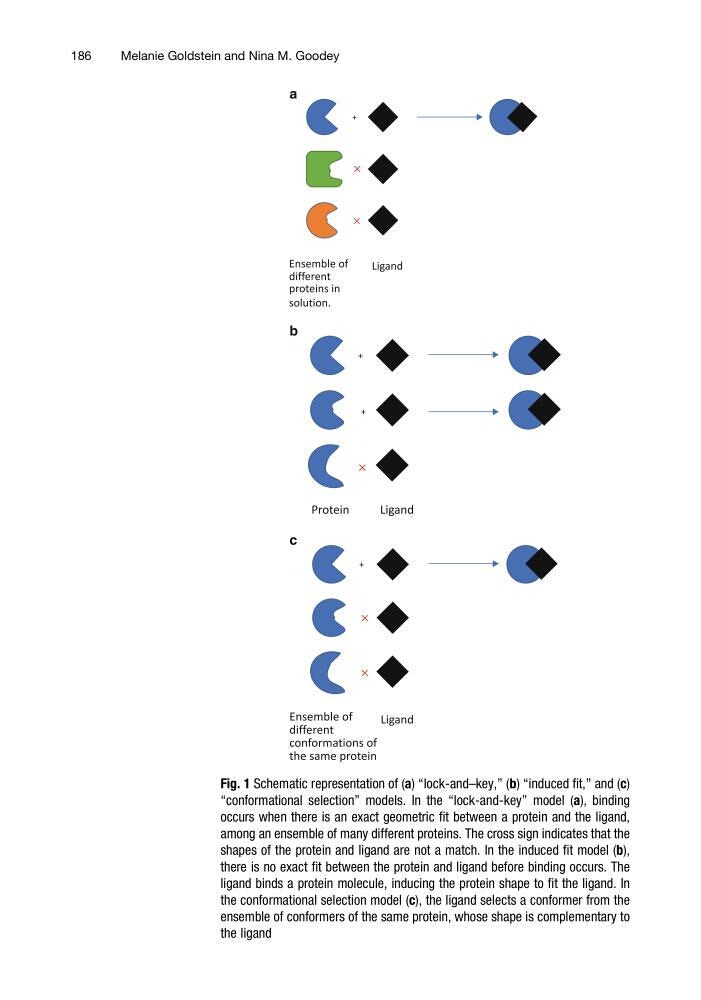
Fig. 1 Schematic representation of (a) “lock-and–key,” (b) “induced fit,” and (c)
“conformational selection” models. In the “lock-and-key” model (a), binding
occurs when there is an exact geometric fit between a protein and the ligand,
among an ensemble of many different proteins. The cross sign indicates that the
shapes of the protein and ligand are not a match. In the induced fit model (b),
there is no exact fit between the protein and ligand before binding occurs. The
ligand binds a protein molecule, inducing the protein shape to fit the ligand. In
the conformational selection model (c), the ligand selects a conformer from the
ensemble of conformers of the same protein, whose shape is complementary to
the ligand
186
Melanie Goldstein and Nina M. Goodey
b
c
Fig. 1 Schematic representation of (a) “lock-and–key,” (b) “induced fit,” and (c)
“conformational selection” models. In the “lock-and-key” model (a), binding
occurs when there is an exact geometric fit between a protein and the ligand,
among an ensemble of many different proteins. The cross sign indicates that the
shapes of the protein and ligand are not a match. In the induced fit model (b),
there is no exact fit between the protein and ligand before binding occurs. The
ligand binds a protein molecule, inducing the protein shape to fit the ligand. In
the conformational selection model (c), the ligand selects a conformer from the
ensemble of conformers of the same protein, whose shape is complementary to
the ligand
186
Melanie Goldstein and Nina M. Goodey