

145
9.4.1 Agriculture Impacts
In general, microbial siderophore has significant impact on plant growth and pathogen biocontrol, where Ahmed and Holmstrom (2014) described the mechanisms a
plant could exhibit in fetching iron (Fe) from the environment. First is the reduced
form of ferrous oxide (Fe(II)) are donated by microbes to the transport system of
plants, i.e., apoplast of the plant roots through high redox potentiality, which is further reduced to ferric form (Fe(III)) by plants for its utilization (Mengel 1995).
Second is the existence of ligand-exchange process which exists between the microbial siderophores and phytosiderophores (Masalha et al. 2000). Siderophores are
apparently connected with rhizosphere microflora and render greater benefits for
both plants and microbial niche. Besides, microbial siderophores possess added
advantage by acting as an alternative for hazardous pesticides (Sulochana et al.
2014); in specific, the mycorrhizal sorghum plants took Fe in higher concentration
than the nonmycrorrhizal plants, and this might be due to the biofertilizer property
of fungal siderophore (Caris et al. 1998). The ectomycorrhizal fungi are associated
with plant nutrition (Van Scholl et al. 2008), and Yadav et al. (2011), through his
investigation, observed that siderophores of A. niger, Penicillium citrinum, and
Trichoderma harzianum significantly promoted the lengthening of chickpeas’ shoot
and root.
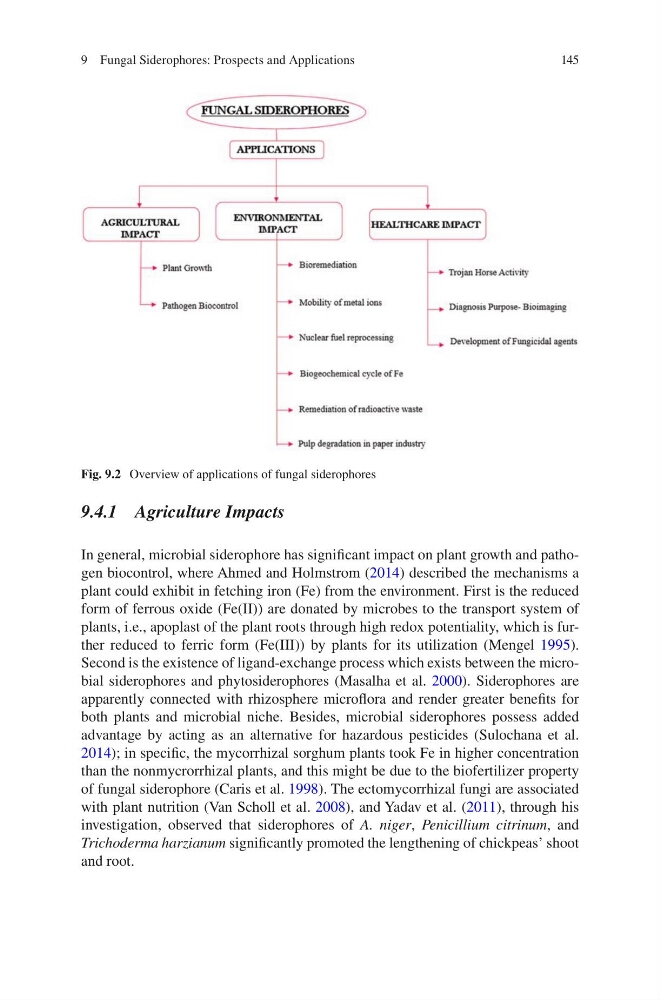
Fig. 9.2 Overview of applications of fungal siderophores
9 Fungal Siderophores: Prospects and Applications
9.4.1 Agriculture Impacts
In general, microbial siderophore has significant impact on plant growth and pathogen biocontrol, where Ahmed and Holmstrom (2014) described the mechanisms a
plant could exhibit in fetching iron (Fe) from the environment. First is the reduced
form of ferrous oxide (Fe(II)) are donated by microbes to the transport system of
plants, i.e., apoplast of the plant roots through high redox potentiality, which is further reduced to ferric form (Fe(III)) by plants for its utilization (Mengel 1995).
Second is the existence of ligand-exchange process which exists between the microbial siderophores and phytosiderophores (Masalha et al. 2000). Siderophores are
apparently connected with rhizosphere microflora and render greater benefits for
both plants and microbial niche. Besides, microbial siderophores possess added
advantage by acting as an alternative for hazardous pesticides (Sulochana et al.
2014); in specific, the mycorrhizal sorghum plants took Fe in higher concentration
than the nonmycrorrhizal plants, and this might be due to the biofertilizer property
of fungal siderophore (Caris et al. 1998). The ectomycorrhizal fungi are associated
with plant nutrition (Van Scholl et al. 2008), and Yadav et al. (2011), through his
investigation, observed that siderophores of A. niger, Penicillium citrinum, and
Trichoderma harzianum significantly promoted the lengthening of chickpeas’ shoot
and root.
Fig. 9.2 Overview of applications of fungal siderophores
9 Fungal Siderophores: Prospects and Applications