

132
8.2.3 Fusarinines
Cis-fusarinine [δ-N-(5-hydroxy-3-methyl-Z-2-pentenoyl)-δ-N-hydroxy-L-ornithine]
(16) is the simplest compound (Fig. 8.12) composed by the substitution of acyl
group of N
5
-hydroxy-N
5
-acylornithine with cis-anhydromevalonic acid
(5-hydroxy-3-methyl-Z-2-pentenoic acid) (Renshaw et al. 2002). It is the first ornithine hydroxamate with the absence of peptide linkage. The other fusarinines are
either cis- or trans- of linear dimers, trimers or cyclic trimers. These monomers are
connected by a labile aminoacyl-ester bond. The cis- dimer and trimer of fusarinine
are named as fusarinine A (43) and B (44), respectively (Jalal et al. 1986), and the
cyclic trimer of it is named as fusarinine C or fusigen (41) (Haselwandter et al.
1992). The trans-trimer 44 is the major product present in most of the Aspergilli
(Moore and Emery 1976), which shows a highest binding and the highest chemical
stability. Neurosporin (45) was isolated as a minor constituent from the fungal species Neurospora crassa. All the fungal siderophores contain l-isomer of N
5
-
hydroxy- N
5
-acylornithine, except (45) (Eng-Wilmot et al. 1984).
8.3 Biomedical Applications
Several studies have demonstrated the efficacy of siderophores in the management
of acute and chronic iron overload, infections, sickle cell anaemia, acute intoxications, malaria and malignancies (Kalinowski and Richardson 2005; Hatcher et al.
2009; Yu et al. 2012). Currently, various studies are ongoing on the applications of
siderophores in the biomedical field.
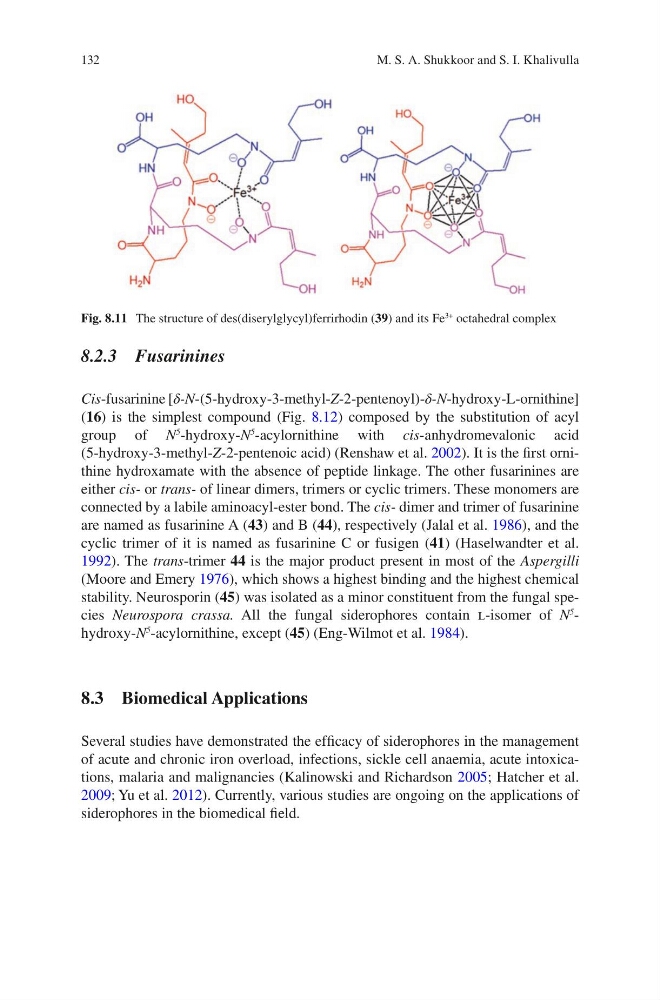
Fig. 8.11 The structure of des(diserylglycyl)ferrirhodin (39) and its Fe
3+ octahedral complex
M. S. A. Shukkoor and S. I. Khalivulla
8.2.3 Fusarinines
Cis-fusarinine [δ-N-(5-hydroxy-3-methyl-Z-2-pentenoyl)-δ-N-hydroxy-L-ornithine]
(16) is the simplest compound (Fig. 8.12) composed by the substitution of acyl
group of N
5
-hydroxy-N
5
-acylornithine with cis-anhydromevalonic acid
(5-hydroxy-3-methyl-Z-2-pentenoic acid) (Renshaw et al. 2002). It is the first ornithine hydroxamate with the absence of peptide linkage. The other fusarinines are
either cis- or trans- of linear dimers, trimers or cyclic trimers. These monomers are
connected by a labile aminoacyl-ester bond. The cis- dimer and trimer of fusarinine
are named as fusarinine A (43) and B (44), respectively (Jalal et al. 1986), and the
cyclic trimer of it is named as fusarinine C or fusigen (41) (Haselwandter et al.
1992). The trans-trimer 44 is the major product present in most of the Aspergilli
(Moore and Emery 1976), which shows a highest binding and the highest chemical
stability. Neurosporin (45) was isolated as a minor constituent from the fungal species Neurospora crassa. All the fungal siderophores contain l-isomer of N
5
-
hydroxy- N
5
-acylornithine, except (45) (Eng-Wilmot et al. 1984).
8.3 Biomedical Applications
Several studies have demonstrated the efficacy of siderophores in the management
of acute and chronic iron overload, infections, sickle cell anaemia, acute intoxications, malaria and malignancies (Kalinowski and Richardson 2005; Hatcher et al.
2009; Yu et al. 2012). Currently, various studies are ongoing on the applications of
siderophores in the biomedical field.
Fig. 8.11 The structure of des(diserylglycyl)ferrirhodin (39) and its Fe
3+ octahedral complex
M. S. A. Shukkoor and S. I. Khalivulla