

59
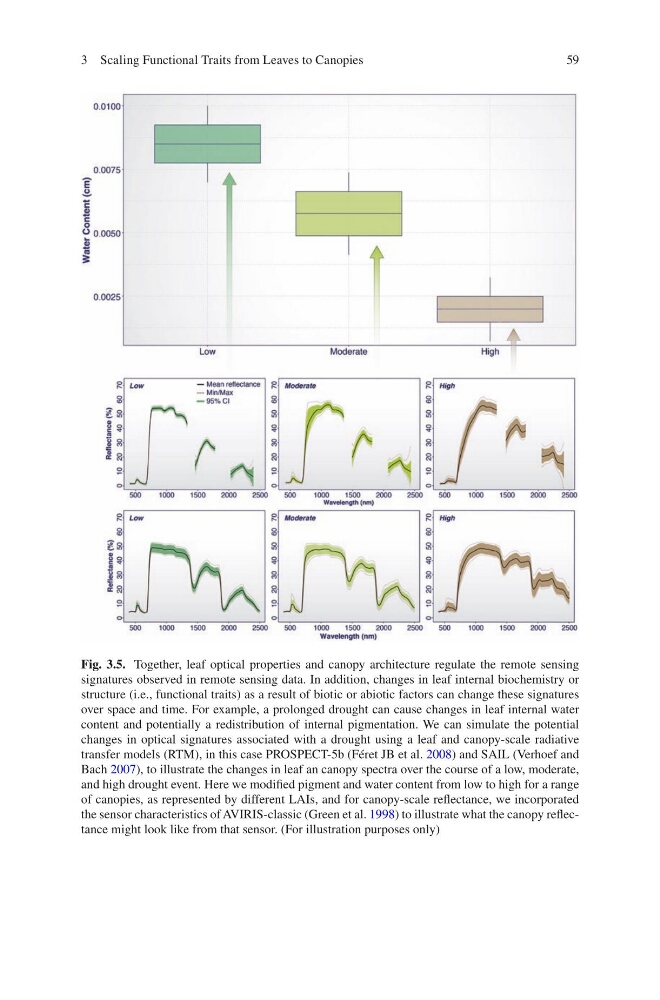
Fig. 3.5. Together, leaf optical properties and canopy architecture regulate the remote sensing
signatures observed in remote sensing data. In addition, changes in leaf internal biochemistry or
structure (i.e., functional traits) as a result of biotic or abiotic factors can change these signatures
over space and time. For example, a prolonged drought can cause changes in leaf internal water
content and potentially a redistribution of internal pigmentation. We can simulate the potential
changes in optical signatures associated with a drought using a leaf and canopy-scale radiative
transfer models (RTM), in this case PROSPECT-5b (Féret JB et al. 2008) and SAIL (Verhoef and
Bach 2007), to illustrate the changes in leaf an canopy spectra over the course of a low, moderate,
and high drought event. Here we modified pigment and water content from low to high for a range
of canopies, as represented by different LAIs, and for canopy-scale reflectance, we incorporated
the sensor characteristics of AVIRIS-classic (Green et al. 1998) to illustrate what the canopy reflectance might look like from that sensor. (For illustration purposes only)
3 Scaling Functional Traits from Leaves to Canopies
Fig. 3.5. Together, leaf optical properties and canopy architecture regulate the remote sensing
signatures observed in remote sensing data. In addition, changes in leaf internal biochemistry or
structure (i.e., functional traits) as a result of biotic or abiotic factors can change these signatures
over space and time. For example, a prolonged drought can cause changes in leaf internal water
content and potentially a redistribution of internal pigmentation. We can simulate the potential
changes in optical signatures associated with a drought using a leaf and canopy-scale radiative
transfer models (RTM), in this case PROSPECT-5b (Féret JB et al. 2008) and SAIL (Verhoef and
Bach 2007), to illustrate the changes in leaf an canopy spectra over the course of a low, moderate,
and high drought event. Here we modified pigment and water content from low to high for a range
of canopies, as represented by different LAIs, and for canopy-scale reflectance, we incorporated
the sensor characteristics of AVIRIS-classic (Green et al. 1998) to illustrate what the canopy reflectance might look like from that sensor. (For illustration purposes only)
3 Scaling Functional Traits from Leaves to Canopies