

186
RS of aboveground properties poses further challenges that include separating
the spectral signals important to canopy chemistry from those of physical properties
of the forest canopy (Townsend et al. 2013). Larger challenges lie in the lack of
accessibility of RS data and processing techniques to the broader ecological research
community.
Several issues of scale present challenges to the application of RS to belowground systems. Large knowledge gaps remain in connecting the small spatial scale
observations of traditional field studies with the large spatial scale observations of
airborne or satellite RS platforms (Asner et al. 2015; Gamon et al., Chap. 16). In
addition, there is a large mismatch in the spatial heterogeneity between above- and
belowground systems, with belowground systems being notoriously heterogeneous
across small spatial scales (Bardgett and van der Putten 2014). The majority of
variation in belowground processes may be due to small, local-scale factors rather
0.1 0 .2 0.3 0 .4 0.5 0 .6 0.7
150 200 250 300 350 400
0.1
0 .2
0.3
0 .4
0.5
0 .6
0.2
0.4
0.6
0.8
1 .0
1.2
0.1 0 .2 0.3 0 .4 0.5 0 .6 0.7
0 100
300
500
700
A
B
C
Productivity
(g m -2
yr -1
)
Cumulative soil respiration
(mg CO
2 -C [g soil]-1
Fungal OTU
Richness
RS % Vegetation Cover
RS % Vegetation Cover
RS % Vegetation Cover
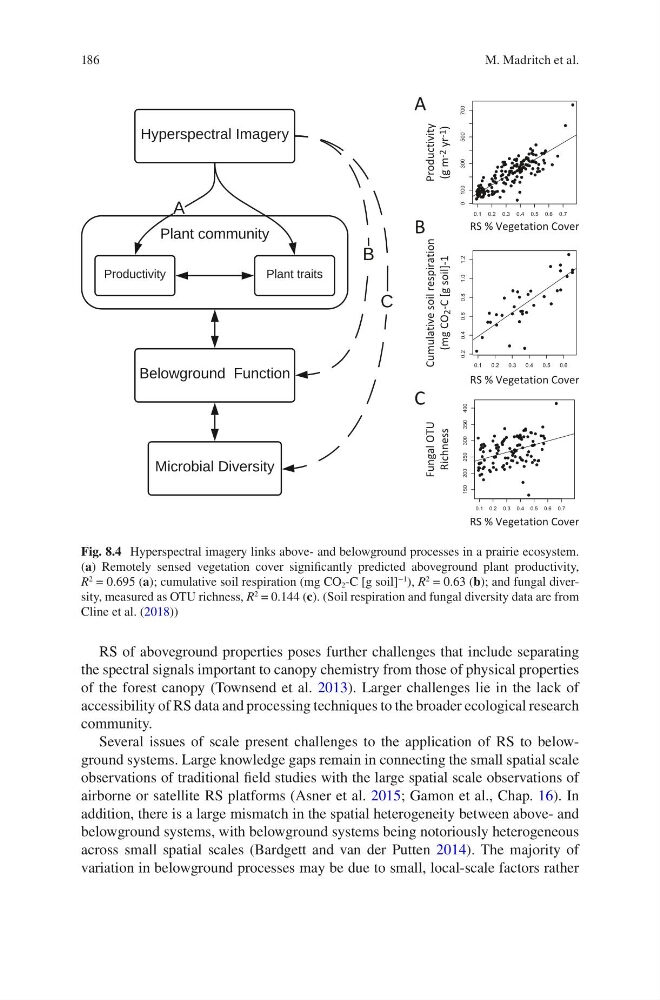
Fig. 8.4 Hyperspectral imagery links above- and belowground processes in a prairie ecosystem.
(a) Remotely sensed vegetation cover significantly predicted aboveground plant productivity,
R
2
= 0.695 (a); cumulative soil respiration (mg CO 2 -C [g soil]
−1
), R
2
= 0.63 (b); and fungal diversity, measured as OTU richness, R
2 = 0.144 (c). (Soil respiration and fungal diversity data are from
Cline et al. (2018))
M. Madritch et al.
RS of aboveground properties poses further challenges that include separating
the spectral signals important to canopy chemistry from those of physical properties
of the forest canopy (Townsend et al. 2013). Larger challenges lie in the lack of
accessibility of RS data and processing techniques to the broader ecological research
community.
Several issues of scale present challenges to the application of RS to belowground systems. Large knowledge gaps remain in connecting the small spatial scale
observations of traditional field studies with the large spatial scale observations of
airborne or satellite RS platforms (Asner et al. 2015; Gamon et al., Chap. 16). In
addition, there is a large mismatch in the spatial heterogeneity between above- and
belowground systems, with belowground systems being notoriously heterogeneous
across small spatial scales (Bardgett and van der Putten 2014). The majority of
variation in belowground processes may be due to small, local-scale factors rather
0.1 0 .2 0.3 0 .4 0.5 0 .6 0.7
150 200 250 300 350 400
0.1
0 .2
0.3
0 .4
0.5
0 .6
0.2
0.4
0.6
0.8
1 .0
1.2
0.1 0 .2 0.3 0 .4 0.5 0 .6 0.7
0 100
300
500
700
A
B
C
Productivity
(g m -2
yr -1
)
Cumulative soil respiration
(mg CO
2 -C [g soil]-1
Fungal OTU
Richness
RS % Vegetation Cover
RS % Vegetation Cover
RS % Vegetation Cover
Fig. 8.4 Hyperspectral imagery links above- and belowground processes in a prairie ecosystem.
(a) Remotely sensed vegetation cover significantly predicted aboveground plant productivity,
R
2
= 0.695 (a); cumulative soil respiration (mg CO 2 -C [g soil]
−1
), R
2
= 0.63 (b); and fungal diversity, measured as OTU richness, R
2 = 0.144 (c). (Soil respiration and fungal diversity data are from
Cline et al. (2018))
M. Madritch et al.