

175
Microorganisms release extracellular enzymes, which degrade organic molecules outside of their cells, and likely differ among groups of microorganisms
(Schneider et al. 2012). As a consequence, microbial composition and diversity
are expected to influence decomposition and nutrient cycling. Most litter decomposition appears to be driven by fungal members, with Ascomycota dominating
early degradation of cellulose and hemicellulose, followed by colonization by
lignin- degrading Basidiomycota (Osono 2007; Schneider et al. 2012). Although
lignin decomposition is dominated by fungal groups, some bacteria also degrade
lignin (Kirby 2006; López-Mondéjar et al. 2016). Bacteria not directly involved
with litter decomposition target the low molecular weight carbohydrates provided by fungal-derived extracellular enzymes (Allison 2005). The degradation
of aromatic polyphenolics is largely limited to fungal member of the
Basidiomycota phylum (Floudas et al. 2012). The wide structural variation
among tannins (see section on carbon (polyphenols) results in a wide range of
effects on specific microbial members (Kraus et al. 2003).
A challenge in predicting belowground processes such as decomposition and
nutrient cycling from the diversity and quality of leaf litter inputs is that such an
approach must also consider the diversity and function of belowground microbial
communities. Belowground mycorrhizal communities can increase net primary production (NPP) and drive variation in plant communities (Wardle et al. 2004). Given
the influence of plant traits on belowground processes, biodiversity may drive variation in decomposition through top-down (microbially driven) rather than bottom-up
(substrate driven) forces (Srivasta et al. 2009). Several reviews have addressed the
importance of belowground community diversity to ecosystem processes (e.g.,
Hättenschwiler et al. 2005; Gessner et al. 2010; Phillips et al. 2013; Bardgett and
van der Putten 2014). Belowground diversity can influence aboveground factors
such as NPP (Wardle et al. 2004; Eisenhauer et al. 2018) that then have important
feedbacks to belowground processes. Decomposition is driven by a combination
of both the microbial community and the quality and quantity of litter that those
communities receive (e.g., Keiser et al. 2013; García-Palacios et al. 2016).
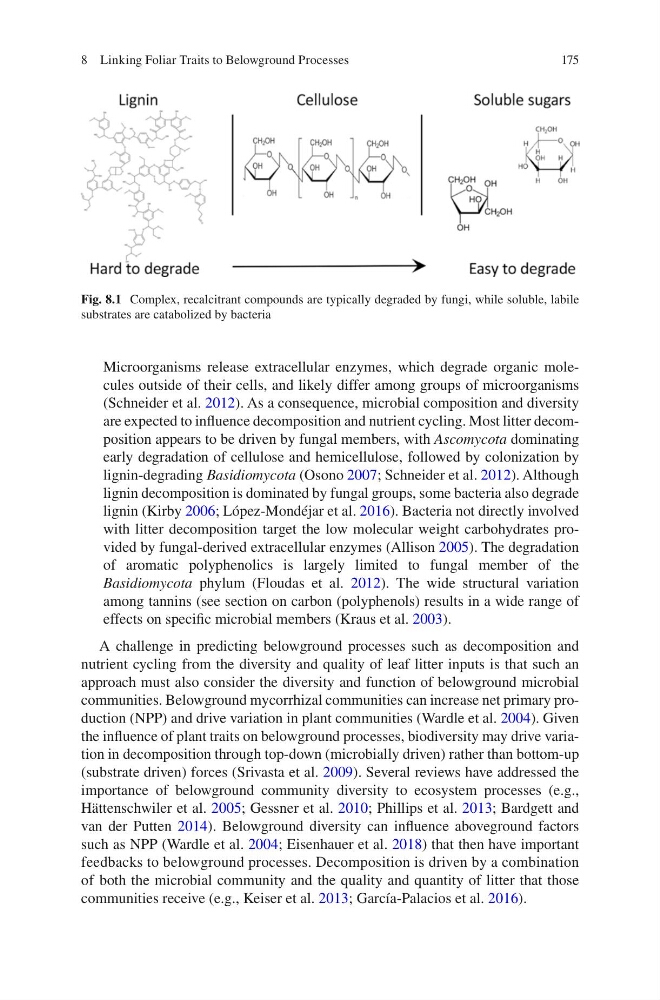
Fig. 8.1 Complex, recalcitrant compounds are typically degraded by fungi, while soluble, labile
substrates are catabolized by bacteria
8 Linking Foliar Traits to Belowground Processes
Microorganisms release extracellular enzymes, which degrade organic molecules outside of their cells, and likely differ among groups of microorganisms
(Schneider et al. 2012). As a consequence, microbial composition and diversity
are expected to influence decomposition and nutrient cycling. Most litter decomposition appears to be driven by fungal members, with Ascomycota dominating
early degradation of cellulose and hemicellulose, followed by colonization by
lignin- degrading Basidiomycota (Osono 2007; Schneider et al. 2012). Although
lignin decomposition is dominated by fungal groups, some bacteria also degrade
lignin (Kirby 2006; López-Mondéjar et al. 2016). Bacteria not directly involved
with litter decomposition target the low molecular weight carbohydrates provided by fungal-derived extracellular enzymes (Allison 2005). The degradation
of aromatic polyphenolics is largely limited to fungal member of the
Basidiomycota phylum (Floudas et al. 2012). The wide structural variation
among tannins (see section on carbon (polyphenols) results in a wide range of
effects on specific microbial members (Kraus et al. 2003).
A challenge in predicting belowground processes such as decomposition and
nutrient cycling from the diversity and quality of leaf litter inputs is that such an
approach must also consider the diversity and function of belowground microbial
communities. Belowground mycorrhizal communities can increase net primary production (NPP) and drive variation in plant communities (Wardle et al. 2004). Given
the influence of plant traits on belowground processes, biodiversity may drive variation in decomposition through top-down (microbially driven) rather than bottom-up
(substrate driven) forces (Srivasta et al. 2009). Several reviews have addressed the
importance of belowground community diversity to ecosystem processes (e.g.,
Hättenschwiler et al. 2005; Gessner et al. 2010; Phillips et al. 2013; Bardgett and
van der Putten 2014). Belowground diversity can influence aboveground factors
such as NPP (Wardle et al. 2004; Eisenhauer et al. 2018) that then have important
feedbacks to belowground processes. Decomposition is driven by a combination
of both the microbial community and the quality and quantity of litter that those
communities receive (e.g., Keiser et al. 2013; García-Palacios et al. 2016).
Fig. 8.1 Complex, recalcitrant compounds are typically degraded by fungi, while soluble, labile
substrates are catabolized by bacteria
8 Linking Foliar Traits to Belowground Processes