

3.2.3.4 Preparatory Investigations
As was discussed earlier, the Hypercarb stationary phase is a very good choice for
the separation of PP by tacticity and the separation of EP copolymers. It has been
shown that iPP elutes before the solvent gradient while sPP and PE adsorb and elute
only with the solvent gradient. For the EP copolymers, the mechanism of interaction has been shown to be based on the alignment of linear PE segments on the flat
surface of the graphite sheets of the Hypercarb. Chain molecules with side groups
(copolymers, branched polymers) cannot form closely packed layers with the
graphite surface and are, therefore, less strongly adsorbed [96, 97].
To confirm the separation capabilities of the stationary phase, a set of blends of
iPP, sPP and PE having different molar masses were prepared and separated. The
elution profiles obtained were very similar to the ones presented in Fig. 3.16.
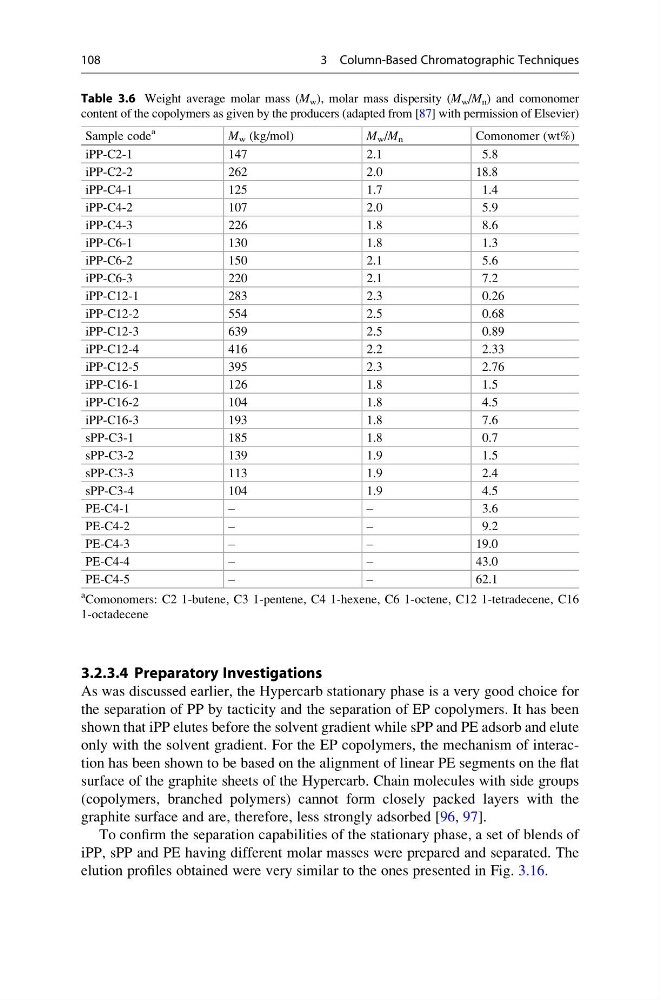
Table 3.6 Weight average molar mass (M w ), molar mass dispersity (M w /M n ) and comonomer
content of the copolymers as given by the producers (adapted from [87] with permission of Elsevier)
Sample code
a
M w (kg/mol)
M w /M n
Comonomer (wt%)
iPP-C2-1
147
2.1
5.8
iPP-C2-2
262
2.0
18.8
iPP-C4-1
125
1.7
1.4
iPP-C4-2
107
2.0
5.9
iPP-C4-3
226
1.8
8.6
iPP-C6-1
130
1.8
1.3
iPP-C6-2
150
2.1
5.6
iPP-C6-3
220
2.1
7.2
iPP-C12-1
283
2.3
0.26
iPP-C12-2
554
2.5
0.68
iPP-C12-3
639
2.5
0.89
iPP-C12-4
416
2.2
2.33
iPP-C12-5
395
2.3
2.76
iPP-C16-1
126
1.8
1.5
iPP-C16-2
104
1.8
4.5
iPP-C16-3
193
1.8
7.6
sPP-C3-1
185
1.8
0.7
sPP-C3-2
139
1.9
1.5
sPP-C3-3
113
1.9
2.4
sPP-C3-4
104
1.9
4.5
PE-C4-1
–
–
3.6
PE-C4-2
–
–
9.2
PE-C4-3
–
–
19.0
PE-C4-4
–
–
43.0
PE-C4-5
–
–
62.1
a
Comonomers: C2 1-butene, C3 1-pentene, C4 1-hexene, C6 1-octene, C12 1-tetradecene, C16
1-octadecene
108
3 Column-Based Chromatographic Techniques
As was discussed earlier, the Hypercarb stationary phase is a very good choice for
the separation of PP by tacticity and the separation of EP copolymers. It has been
shown that iPP elutes before the solvent gradient while sPP and PE adsorb and elute
only with the solvent gradient. For the EP copolymers, the mechanism of interaction has been shown to be based on the alignment of linear PE segments on the flat
surface of the graphite sheets of the Hypercarb. Chain molecules with side groups
(copolymers, branched polymers) cannot form closely packed layers with the
graphite surface and are, therefore, less strongly adsorbed [96, 97].
To confirm the separation capabilities of the stationary phase, a set of blends of
iPP, sPP and PE having different molar masses were prepared and separated. The
elution profiles obtained were very similar to the ones presented in Fig. 3.16.
Table 3.6 Weight average molar mass (M w ), molar mass dispersity (M w /M n ) and comonomer
content of the copolymers as given by the producers (adapted from [87] with permission of Elsevier)
Sample code
a
M w (kg/mol)
M w /M n
Comonomer (wt%)
iPP-C2-1
147
2.1
5.8
iPP-C2-2
262
2.0
18.8
iPP-C4-1
125
1.7
1.4
iPP-C4-2
107
2.0
5.9
iPP-C4-3
226
1.8
8.6
iPP-C6-1
130
1.8
1.3
iPP-C6-2
150
2.1
5.6
iPP-C6-3
220
2.1
7.2
iPP-C12-1
283
2.3
0.26
iPP-C12-2
554
2.5
0.68
iPP-C12-3
639
2.5
0.89
iPP-C12-4
416
2.2
2.33
iPP-C12-5
395
2.3
2.76
iPP-C16-1
126
1.8
1.5
iPP-C16-2
104
1.8
4.5
iPP-C16-3
193
1.8
7.6
sPP-C3-1
185
1.8
0.7
sPP-C3-2
139
1.9
1.5
sPP-C3-3
113
1.9
2.4
sPP-C3-4
104
1.9
4.5
PE-C4-1
–
–
3.6
PE-C4-2
–
–
9.2
PE-C4-3
–
–
19.0
PE-C4-4
–
–
43.0
PE-C4-5
–
–
62.1
a
Comonomers: C2 1-butene, C3 1-pentene, C4 1-hexene, C6 1-octene, C12 1-tetradecene, C16
1-octadecene
108
3 Column-Based Chromatographic Techniques