

HDX experiment), add the buffer to the protein. Mix thoroughly and prepare the pipette (50 μl) for aliquot collection.
Five seconds before the selected time (20 s), aspirate the
labeled protein and at the precise time according to the experiment plan, add aspirated solution to the tube with the quench
solution. Quickly mix/vortex and flash-freeze the tube in liquid nitrogen. Do this for all the samples according to the time
schedule at times indicated by the timer.
7. Transfer the frozen tubes from liquid nitrogen to a deep freezer
and store them until analysis (see Note 26).
8. Also prepare non-labeled reference samples (a non-deuterated
control) for each condition. This is the same as preparing the
(partially) deuterated samples, except that the buffers used are
made with H 2 O only.
9. If possible (depends on protein stability), prepare fully deuterated sample (see Note 27). In order to obtain a fully deuterated
control, prepare deuterated buffer containing high concentration (4–6 M final concentration) of urea or guanidine and
incubate the protein in it overnight at higher (e.g., 37
C)
temperature. Protein concentration should be as high as feasible, so that it can be lowered before quenching using
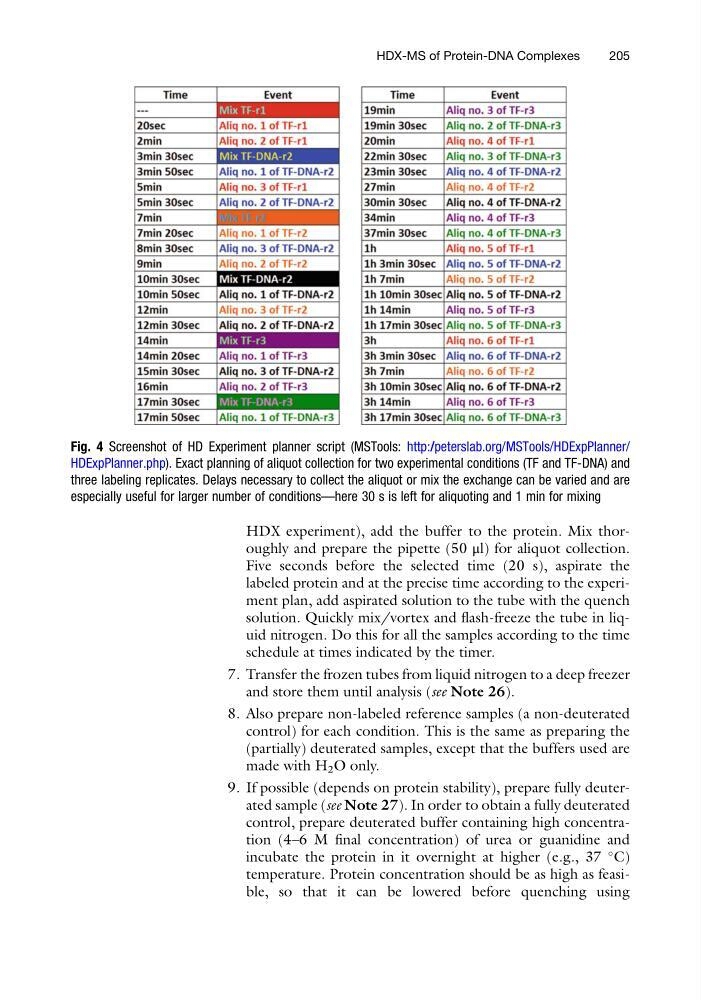
Fig. 4 Screenshot of HD Experiment planner script (MSTools: http:/ /peterslab.org/MSTools/HDExpPlanner/
HDExpPlanner.php). Exact planning of aliquot collection for two experimental conditions (TF and TF-DNA) and
three labeling replicates. Delays necessary to collect the aliquot or mix the exchange can be varied and are
especially useful for larger number of conditions—here 30 s is left for aliquoting and 1 min for mixing
HDX-MS of Protein-DNA Complexes
205
Five seconds before the selected time (20 s), aspirate the
labeled protein and at the precise time according to the experiment plan, add aspirated solution to the tube with the quench
solution. Quickly mix/vortex and flash-freeze the tube in liquid nitrogen. Do this for all the samples according to the time
schedule at times indicated by the timer.
7. Transfer the frozen tubes from liquid nitrogen to a deep freezer
and store them until analysis (see Note 26).
8. Also prepare non-labeled reference samples (a non-deuterated
control) for each condition. This is the same as preparing the
(partially) deuterated samples, except that the buffers used are
made with H 2 O only.
9. If possible (depends on protein stability), prepare fully deuterated sample (see Note 27). In order to obtain a fully deuterated
control, prepare deuterated buffer containing high concentration (4–6 M final concentration) of urea or guanidine and
incubate the protein in it overnight at higher (e.g., 37
C)
temperature. Protein concentration should be as high as feasible, so that it can be lowered before quenching using
Fig. 4 Screenshot of HD Experiment planner script (MSTools: http:/ /peterslab.org/MSTools/HDExpPlanner/
HDExpPlanner.php). Exact planning of aliquot collection for two experimental conditions (TF and TF-DNA) and
three labeling replicates. Delays necessary to collect the aliquot or mix the exchange can be varied and are
especially useful for larger number of conditions—here 30 s is left for aliquoting and 1 min for mixing
HDX-MS of Protein-DNA Complexes
205