

value. MECAT (Xiao et al. 2017) (https://github.
com/xiaochuanle/MECAT) is also an ultra-fast
mapping, error correction and de novo assembly
tool for PacBio and Nanopore sequencing reads.
MECAT employs novel alignment and error
correction algorithms that are much faster than
the state of art of aligners and error correction
tools. MECAT exhibits a faster speed and better
assembly results in the model plant Arabidopsis;
however, the genomes are preferred to be
assembled by mecat2cns and mecat2canu rather
than only by MECAT (Xiao et al. 2017; Guo
et al. 2018; Xia et al. 2018). When the computing
resource is limited for a laboratory,Canu and
MECAT both would be better choices for the
complex duckweed genomes.
6.3 Summary
A single software cannot get the best assembly
for a given genome; whereas, multiple softwares,
parameters, and databases need to be tested to get
the improved results. In summary, we can
directly use FALCON, HGAP, or Canu to de
novo assemble the PacBio or Nanopore long
reads for small duckweed genomes. On the other
side, we need use MECAT or Canu to get
high-quality reads, then assemble them by
FALCON to get a better result for large duckweed genomes.
Until now, only Spirodela polyrhiza and
Lemna gibba genomes have been released
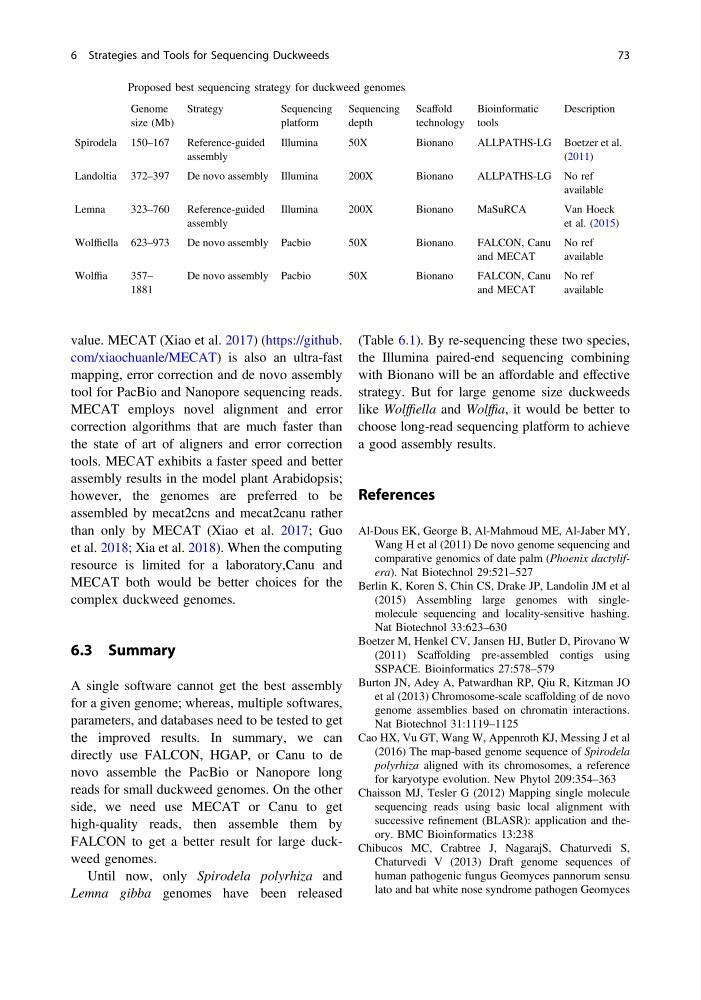
(Table 6.1). By re-sequencing these two species,
the Illumina paired-end sequencing combining
with Bionano will be an affordable and effective
strategy. But for large genome size duckweeds
like Wolffiella and Wolffia, it would be better to
choose long-read sequencing platform to achieve
a good assembly results.
References
Al-Dous EK, George B, Al-Mahmoud ME, Al-Jaber MY,
Wang H et al (2011) De novo genome sequencing and
comparative genomics of date palm (Phoenix dactylifera). Nat Biotechnol 29:521–527
Berlin K, Koren S, Chin CS, Drake JP, Landolin JM et al
(2015) Assembling large genomes with singlemolecule sequencing and locality-sensitive hashing.
Nat Biotechnol 33:623–630
Boetzer M, Henkel CV, Jansen HJ, Butler D, Pirovano W
(2011) Scaffolding pre-assembled contigs using
SSPACE. Bioinformatics 27:578–579
Burton JN, Adey A, Patwardhan RP, Qiu R, Kitzman JO
et al (2013) Chromosome-scale scaffolding of de novo
genome assemblies based on chromatin interactions.
Nat Biotechnol 31:1119–1125
Cao HX, Vu GT, Wang W, Appenroth KJ, Messing J et al
(2016) The map-based genome sequence of Spirodela
polyrhiza aligned with its chromosomes, a reference
for karyotype evolution. New Phytol 209:354–363
Chaisson MJ, Tesler G (2012) Mapping single molecule
sequencing reads using basic local alignment with
successive refinement (BLASR): application and theory. BMC Bioinformatics 13:238
Chibucos MC, Crabtree J, NagarajS, Chaturvedi S,
Chaturvedi V (2013) Draft genome sequences of
human pathogenic fungus Geomyces pannorum sensu
lato and bat white nose syndrome pathogen Geomyces
Table 6.1 Proposed best sequencing strategy for duckweed genomes
Genome
size (Mb)
Strategy
Sequencing
platform
Sequencing
depth
Scaffold
technology
Bioinformatic
tools
Description
Spirodela 150–167
Reference-guided
assembly
Illumina
50X
Bionano
ALLPATHS-LG Boetzer et al.
(2011)
Landoltia 372–397
De novo assembly Illumina
200X
Bionano
ALLPATHS-LG No ref
available
Lemna
323–760
Reference-guided
assembly
Illumina
200X
Bionano
MaSuRCA
Van Hoeck
et al. (2015)
Wolffiella 623–973
De novo assembly Pacbio
50X
Bionano
FALCON, Canu
and MECAT
No ref
available
Wolffia
357–
1881
De novo assembly Pacbio
50X
Bionano
FALCON, Canu
and MECAT
No ref
available
6 Strategies and Tools for Sequencing Duckweeds
73
com/xiaochuanle/MECAT) is also an ultra-fast
mapping, error correction and de novo assembly
tool for PacBio and Nanopore sequencing reads.
MECAT employs novel alignment and error
correction algorithms that are much faster than
the state of art of aligners and error correction
tools. MECAT exhibits a faster speed and better
assembly results in the model plant Arabidopsis;
however, the genomes are preferred to be
assembled by mecat2cns and mecat2canu rather
than only by MECAT (Xiao et al. 2017; Guo
et al. 2018; Xia et al. 2018). When the computing
resource is limited for a laboratory,Canu and
MECAT both would be better choices for the
complex duckweed genomes.
6.3 Summary
A single software cannot get the best assembly
for a given genome; whereas, multiple softwares,
parameters, and databases need to be tested to get
the improved results. In summary, we can
directly use FALCON, HGAP, or Canu to de
novo assemble the PacBio or Nanopore long
reads for small duckweed genomes. On the other
side, we need use MECAT or Canu to get
high-quality reads, then assemble them by
FALCON to get a better result for large duckweed genomes.
Until now, only Spirodela polyrhiza and
Lemna gibba genomes have been released
(Table 6.1). By re-sequencing these two species,
the Illumina paired-end sequencing combining
with Bionano will be an affordable and effective
strategy. But for large genome size duckweeds
like Wolffiella and Wolffia, it would be better to
choose long-read sequencing platform to achieve
a good assembly results.
References
Al-Dous EK, George B, Al-Mahmoud ME, Al-Jaber MY,
Wang H et al (2011) De novo genome sequencing and
comparative genomics of date palm (Phoenix dactylifera). Nat Biotechnol 29:521–527
Berlin K, Koren S, Chin CS, Drake JP, Landolin JM et al
(2015) Assembling large genomes with singlemolecule sequencing and locality-sensitive hashing.
Nat Biotechnol 33:623–630
Boetzer M, Henkel CV, Jansen HJ, Butler D, Pirovano W
(2011) Scaffolding pre-assembled contigs using
SSPACE. Bioinformatics 27:578–579
Burton JN, Adey A, Patwardhan RP, Qiu R, Kitzman JO
et al (2013) Chromosome-scale scaffolding of de novo
genome assemblies based on chromatin interactions.
Nat Biotechnol 31:1119–1125
Cao HX, Vu GT, Wang W, Appenroth KJ, Messing J et al
(2016) The map-based genome sequence of Spirodela
polyrhiza aligned with its chromosomes, a reference
for karyotype evolution. New Phytol 209:354–363
Chaisson MJ, Tesler G (2012) Mapping single molecule
sequencing reads using basic local alignment with
successive refinement (BLASR): application and theory. BMC Bioinformatics 13:238
Chibucos MC, Crabtree J, NagarajS, Chaturvedi S,
Chaturvedi V (2013) Draft genome sequences of
human pathogenic fungus Geomyces pannorum sensu
lato and bat white nose syndrome pathogen Geomyces
Table 6.1 Proposed best sequencing strategy for duckweed genomes
Genome
size (Mb)
Strategy
Sequencing
platform
Sequencing
depth
Scaffold
technology
Bioinformatic
tools
Description
Spirodela 150–167
Reference-guided
assembly
Illumina
50X
Bionano
ALLPATHS-LG Boetzer et al.
(2011)
Landoltia 372–397
De novo assembly Illumina
200X
Bionano
ALLPATHS-LG No ref
available
Lemna
323–760
Reference-guided
assembly
Illumina
200X
Bionano
MaSuRCA
Van Hoeck
et al. (2015)
Wolffiella 623–973
De novo assembly Pacbio
50X
Bionano
FALCON, Canu
and MECAT
No ref
available
Wolffia
357–
1881
De novo assembly Pacbio
50X
Bionano
FALCON, Canu
and MECAT
No ref
available
6 Strategies and Tools for Sequencing Duckweeds
73