

collection at Stanford which had a four-digit ID
numbering system, in that time already occupied up
to ID of ca. 6000 plus. This is the reason why
originally all ID numbers for duckweed clones in
his collection were above 6000. This ID numbering
system was adopted and continued by the duckweed community (Zhao et al. 2012). Accordingly,
in order to share the knowledge resources and to
correlate the results obtained in different laboratories across the world, it was decided that all duckweed axenic clones used for scientific projects be
registered at the Rutgers Duckweed Stock Cooperative at the Rutgers University, NJ, USA, to
obtain a uniform ID for the duckweed clone.
Fig. 3.1 Schematic
representation of the 36
duckweed species categorized
into five genera of the family
Lemnaceae
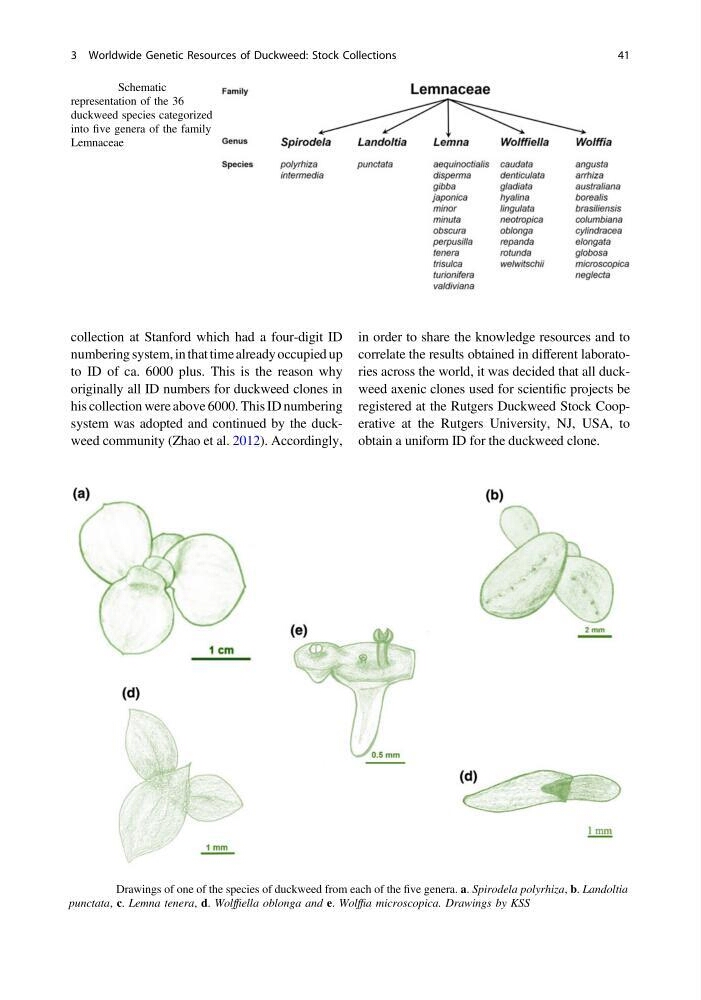
Fig. 3.2 Drawings of one of the species of duckweed from each of the five genera. a. Spirodela polyrhiza, b. Landoltia
punctata, c. Lemna tenera, d. Wolffiella oblonga and e. Wolffia microscopica. Drawings by KSS
3 Worldwide Genetic Resources of Duckweed: Stock Collections
41
numbering system, in that time already occupied up
to ID of ca. 6000 plus. This is the reason why
originally all ID numbers for duckweed clones in
his collection were above 6000. This ID numbering
system was adopted and continued by the duckweed community (Zhao et al. 2012). Accordingly,
in order to share the knowledge resources and to
correlate the results obtained in different laboratories across the world, it was decided that all duckweed axenic clones used for scientific projects be
registered at the Rutgers Duckweed Stock Cooperative at the Rutgers University, NJ, USA, to
obtain a uniform ID for the duckweed clone.
Fig. 3.1 Schematic
representation of the 36
duckweed species categorized
into five genera of the family
Lemnaceae
Fig. 3.2 Drawings of one of the species of duckweed from each of the five genera. a. Spirodela polyrhiza, b. Landoltia
punctata, c. Lemna tenera, d. Wolffiella oblonga and e. Wolffia microscopica. Drawings by KSS
3 Worldwide Genetic Resources of Duckweed: Stock Collections
41