

distinctness of sections Rotundae, Stipitatae, and
Wolffiella (Les et al. 1997, 2002; Tippery et al.
2015). The monophyly of Lemna also has been
confirmed by molecular data, and sections
Alatae, Biformes, Lemna, and Uninerves are
phylogenetically distinct. Section Hydrophylla
Dumort., containing only the submersed species
L. trisulca (Landolt 1986), is nested within section Lemna and thus cannot be considered taxonomically acceptable. Whereas the other genera
are rather cleanly differentiated in phylogenetic
analyses, the monophyly of genus Wolffia is less
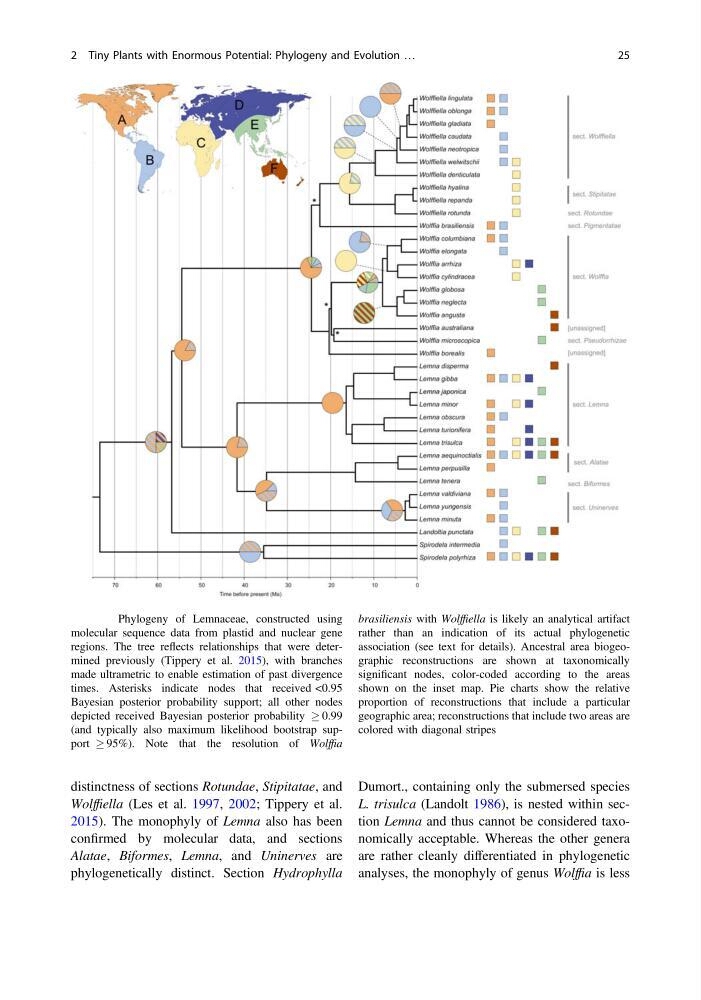
Fig. 2.1 Phylogeny of Lemnaceae, constructed using
molecular sequence data from plastid and nuclear gene
regions. The tree reflects relationships that were determined previously (Tippery et al. 2015), with branches
made ultrametric to enable estimation of past divergence
times. Asterisks indicate nodes that received <0.95
Bayesian posterior probability support; all other nodes
depicted received Bayesian posterior probability 0.99
(and typically also maximum likelihood bootstrap support 95%). Note that the resolution of Wolffia
brasiliensis with Wolffiella is likely an analytical artifact
rather than an indication of its actual phylogenetic
association (see text for details). Ancestral area biogeographic reconstructions are shown at taxonomically
significant nodes, color-coded according to the areas
shown on the inset map. Pie charts show the relative
proportion of reconstructions that include a particular
geographic area; reconstructions that include two areas are
colored with diagonal stripes
2 Tiny Plants with Enormous Potential: Phylogeny and Evolution …
25
Wolffiella (Les et al. 1997, 2002; Tippery et al.
2015). The monophyly of Lemna also has been
confirmed by molecular data, and sections
Alatae, Biformes, Lemna, and Uninerves are
phylogenetically distinct. Section Hydrophylla
Dumort., containing only the submersed species
L. trisulca (Landolt 1986), is nested within section Lemna and thus cannot be considered taxonomically acceptable. Whereas the other genera
are rather cleanly differentiated in phylogenetic
analyses, the monophyly of genus Wolffia is less
Fig. 2.1 Phylogeny of Lemnaceae, constructed using
molecular sequence data from plastid and nuclear gene
regions. The tree reflects relationships that were determined previously (Tippery et al. 2015), with branches
made ultrametric to enable estimation of past divergence
times. Asterisks indicate nodes that received <0.95
Bayesian posterior probability support; all other nodes
depicted received Bayesian posterior probability 0.99
(and typically also maximum likelihood bootstrap support 95%). Note that the resolution of Wolffia
brasiliensis with Wolffiella is likely an analytical artifact
rather than an indication of its actual phylogenetic
association (see text for details). Ancestral area biogeographic reconstructions are shown at taxonomically
significant nodes, color-coded according to the areas
shown on the inset map. Pie charts show the relative
proportion of reconstructions that include a particular
geographic area; reconstructions that include two areas are
colored with diagonal stripes
2 Tiny Plants with Enormous Potential: Phylogeny and Evolution …
25