

occasionally overwhelm smaller systems.
Throughout this process, pathogens are largely
killed off, evaporation is reduced 33%, mosquito
populations are reduced, and odors are partially
suppressed by the duckweed mat (Goopy and
Murray 2003; van der Spiegel et al. 2013).
Finally, polished water and duckweed biomass
can be sterilized and utilized. In a budget estimate for a medium-sized treatment plant in
Texas, USA, Agriquatics illustrated that their
treatment system would have 52% of the capital
and 66% of the total annual costs of a conventional oxidative ditch system. This budget completely excluded the proposed tilapia aquaculture
system that had been proved profitable in
Mirzapur. To make larger duckweed treatment
systems, even more cost-effective Agriquatics
has positioned them on the outskirts of cities to
benefit from rising real estate value as the city
grows, while providing greenspace and reducing
pipe distance.
Since duckweeds have been a traditional feed
for fish and poultry in South East Asia for centuries, they are now being quantitatively investigated in a variety of feed trials. In many cases,
NH 3 -tolerant Lemna and Spirodela species are
used and harvested with dry weight protein contents of 20–30%. To minimize pathogen transfer,
feed trials often use effluent from one species to
grow duckweed, which is then fed to a different
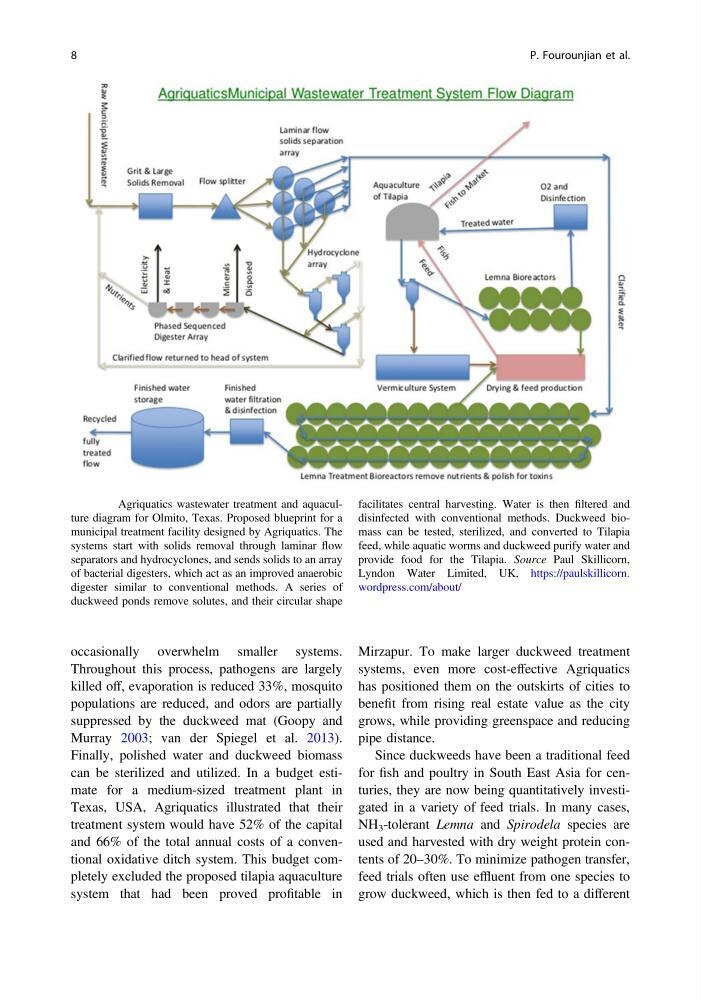
Fig. 1.3 Agriquatics wastewater treatment and aquaculture diagram for Olmito, Texas. Proposed blueprint for a
municipal treatment facility designed by Agriquatics. The
systems start with solids removal through laminar flow
separators and hydrocyclones, and sends solids to an array
of bacterial digesters, which act as an improved anaerobic
digester similar to conventional methods. A series of
duckweed ponds remove solutes, and their circular shape
facilitates central harvesting. Water is then filtered and
disinfected with conventional methods. Duckweed biomass can be tested, sterilized, and converted to Tilapia
feed, while aquatic worms and duckweed purify water and
provide food for the Tilapia. Source Paul Skillicorn,
Lyndon Water Limited, UK, https://paulskillicorn.
wordpress.com/about/
8
P. Fourounjian et al.
Throughout this process, pathogens are largely
killed off, evaporation is reduced 33%, mosquito
populations are reduced, and odors are partially
suppressed by the duckweed mat (Goopy and
Murray 2003; van der Spiegel et al. 2013).
Finally, polished water and duckweed biomass
can be sterilized and utilized. In a budget estimate for a medium-sized treatment plant in
Texas, USA, Agriquatics illustrated that their
treatment system would have 52% of the capital
and 66% of the total annual costs of a conventional oxidative ditch system. This budget completely excluded the proposed tilapia aquaculture
system that had been proved profitable in
Mirzapur. To make larger duckweed treatment
systems, even more cost-effective Agriquatics
has positioned them on the outskirts of cities to
benefit from rising real estate value as the city
grows, while providing greenspace and reducing
pipe distance.
Since duckweeds have been a traditional feed
for fish and poultry in South East Asia for centuries, they are now being quantitatively investigated in a variety of feed trials. In many cases,
NH 3 -tolerant Lemna and Spirodela species are
used and harvested with dry weight protein contents of 20–30%. To minimize pathogen transfer,
feed trials often use effluent from one species to
grow duckweed, which is then fed to a different
Fig. 1.3 Agriquatics wastewater treatment and aquaculture diagram for Olmito, Texas. Proposed blueprint for a
municipal treatment facility designed by Agriquatics. The
systems start with solids removal through laminar flow
separators and hydrocyclones, and sends solids to an array
of bacterial digesters, which act as an improved anaerobic
digester similar to conventional methods. A series of
duckweed ponds remove solutes, and their circular shape
facilitates central harvesting. Water is then filtered and
disinfected with conventional methods. Duckweed biomass can be tested, sterilized, and converted to Tilapia
feed, while aquatic worms and duckweed purify water and
provide food for the Tilapia. Source Paul Skillicorn,
Lyndon Water Limited, UK, https://paulskillicorn.
wordpress.com/about/
8
P. Fourounjian et al.