

forms special “dormant fronds”, named turions,
with high starch content which sink to the
bottom.
As is true with most duckweed species, these
aquatic monocotyledons have high potential for
biotechnological applications. Their high protein
content amounts up to 30% of their dry weight,
and their amino acid balance is of value for both
food and feed (Appenroth et al. 1982; Landolt
1986; Cheng and Stomp 2009). Phytoremediation by growing Wolffia in wastewater allows for
the recovering nutrients like phosphorous or
Table 17.1 Genus Wolffia (distribution acc. (Bog et al. 2013), genome sizes acc. (Wang et al. 2011))
Species
Distribution
Genome size
(1C) (Mbp)
Comment
W. angusta Landolt
Australia, Malaysia
1663 ± 34
Own species since 1980
W. arrhiza (L.)
Horkel ex. Wimm.
Germany, Italy, Portugal,
Morocco, Uganda, South Africa,
Brazil
1881 ± 83
W. australiana
(Benth.) Hartog and
Plas
South Australia, New Zealand,
Tasmania
375 ± 8/385
a
Smallest genome of all Wolffia
species, until 1972 variety of W.
arrhiza
W. borealis (Engelm.
Ex. Hegelm.) Landolt
USA
889 ± 64
W. brasiliensis Wedd. Brazil, Argentina, Venezuela,
Dominican Rep., Bolivia
776 ± 52
W. columbiana H.
Karst
USA, Canada, Venezuela
874 ± 69
W. cylindracea
Hegelm.
Zimbabwe
1076 ± 86
W. elongasta Landolt Colombia
847 ± 42
W. globosa (Roxb.)
Hartog and Plas
USA, Japan, China, Vietnam,
Indonesia, India
1295 ± 42
W. microscopia
(Griff.)
India
1661 ± 12
Rediscovered in 2013
W. neglecta Landolt
Sri Lanka, Pakistan
1176 ± 40
a Our k-mer 17 analysis
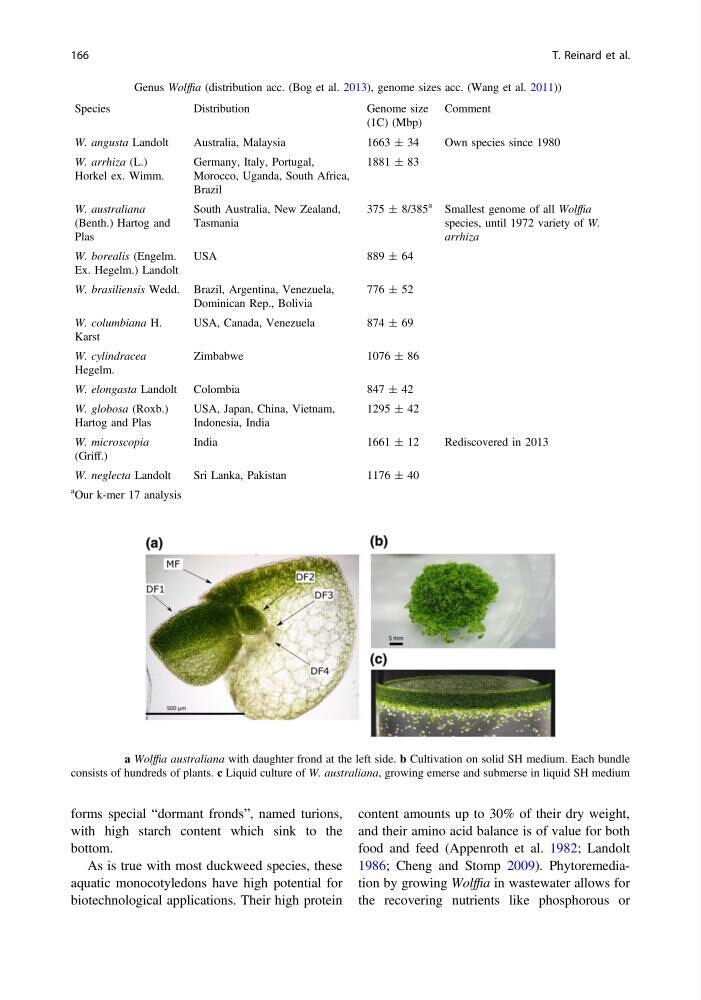
Fig. 17.1 a Wolffia australiana with daughter frond at the left side. b Cultivation on solid SH medium. Each bundle
consists of hundreds of plants. c Liquid culture of W. australiana, growing emerse and submerse in liquid SH medium
166
T. Reinard et al.
with high starch content which sink to the
bottom.
As is true with most duckweed species, these
aquatic monocotyledons have high potential for
biotechnological applications. Their high protein
content amounts up to 30% of their dry weight,
and their amino acid balance is of value for both
food and feed (Appenroth et al. 1982; Landolt
1986; Cheng and Stomp 2009). Phytoremediation by growing Wolffia in wastewater allows for
the recovering nutrients like phosphorous or
Table 17.1 Genus Wolffia (distribution acc. (Bog et al. 2013), genome sizes acc. (Wang et al. 2011))
Species
Distribution
Genome size
(1C) (Mbp)
Comment
W. angusta Landolt
Australia, Malaysia
1663 ± 34
Own species since 1980
W. arrhiza (L.)
Horkel ex. Wimm.
Germany, Italy, Portugal,
Morocco, Uganda, South Africa,
Brazil
1881 ± 83
W. australiana
(Benth.) Hartog and
Plas
South Australia, New Zealand,
Tasmania
375 ± 8/385
a
Smallest genome of all Wolffia
species, until 1972 variety of W.
arrhiza
W. borealis (Engelm.
Ex. Hegelm.) Landolt
USA
889 ± 64
W. brasiliensis Wedd. Brazil, Argentina, Venezuela,
Dominican Rep., Bolivia
776 ± 52
W. columbiana H.
Karst
USA, Canada, Venezuela
874 ± 69
W. cylindracea
Hegelm.
Zimbabwe
1076 ± 86
W. elongasta Landolt Colombia
847 ± 42
W. globosa (Roxb.)
Hartog and Plas
USA, Japan, China, Vietnam,
Indonesia, India
1295 ± 42
W. microscopia
(Griff.)
India
1661 ± 12
Rediscovered in 2013
W. neglecta Landolt
Sri Lanka, Pakistan
1176 ± 40
a Our k-mer 17 analysis
Fig. 17.1 a Wolffia australiana with daughter frond at the left side. b Cultivation on solid SH medium. Each bundle
consists of hundreds of plants. c Liquid culture of W. australiana, growing emerse and submerse in liquid SH medium
166
T. Reinard et al.