

Previously it had been shown that a light-activated adenylyl cyclase (PAC) is
involved in the photoperception and phototaxis in Euglena which produces cyclic
adenosine monophosphate (cAMP) from ATP when excited by light (Iseki et al.
2002; Häder and Iseki 2017). Since earlier experiments had shown that the intracellular cAMP concentration increases in parallel with the precision of gravitaxis during
the circadian rhythm (Lebert et al. 1999a) we designed a very complex space
experiment on TEXUS 36 (Tahedl et al. 1998). 2-mL syringes filled with 1 mL
Euglena suspension each were connected by tubes with corresponding syringes
containing 1 mL ethanol but separated by rubber balls. 112 syringe assemblies
were mounted on a centrifuge at different radii to produce different accelerations.
At predetermined times during the flight in separate groups of 8–12 syringes each the
ethanol was injected into the cell populations by hydraulic pistons to chemically fix
cells at different times and accelerations. After retrieval of the payload the cAMP
of the cells was quantified with a radioimmunoassay in a scintillation counter. At
microgravity and at 0.08 g (which is below the gravitactic threshold) very low
cAMP concentrations were found, but at accelerations of 0.12 and 0.16 the concentration increased significantly (Tahedl et al. 1998). In a parallel experiment
gadolinium-treated (1 mM) cells showed a much lower increase in cAMP following
gravistimulation. Caffeine-treated (10 mM) cells had no elevated cAMP concentrations during gravistimulation but had about three times higher cAMP concentrations
in microgravity (Tahedl et al. 1998). The application of indomethacin, a known
inhibitor of the adenylyl cyclase (Wang et al. 2012), impairs gravitaxis (Richter et al.
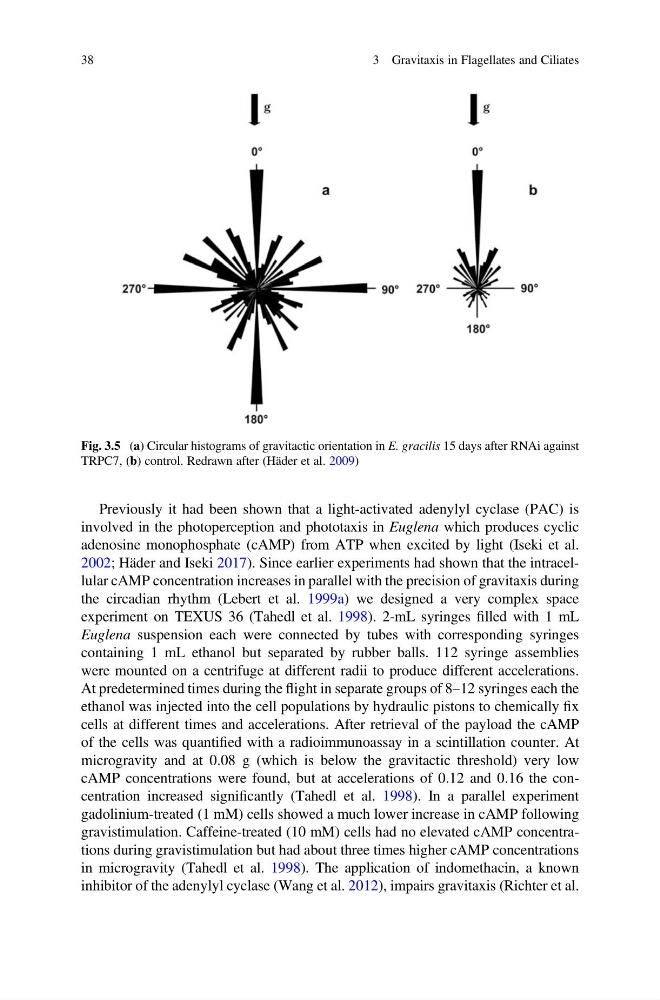
Fig. 3.5 (a) Circular histograms of gravitactic orientation in E. gracilis 15 days after RNAi against
TRPC7, (b) control. Redrawn after (Häder et al. 2009)
38
3 Gravitaxis in Flagellates and Ciliates
involved in the photoperception and phototaxis in Euglena which produces cyclic
adenosine monophosphate (cAMP) from ATP when excited by light (Iseki et al.
2002; Häder and Iseki 2017). Since earlier experiments had shown that the intracellular cAMP concentration increases in parallel with the precision of gravitaxis during
the circadian rhythm (Lebert et al. 1999a) we designed a very complex space
experiment on TEXUS 36 (Tahedl et al. 1998). 2-mL syringes filled with 1 mL
Euglena suspension each were connected by tubes with corresponding syringes
containing 1 mL ethanol but separated by rubber balls. 112 syringe assemblies
were mounted on a centrifuge at different radii to produce different accelerations.
At predetermined times during the flight in separate groups of 8–12 syringes each the
ethanol was injected into the cell populations by hydraulic pistons to chemically fix
cells at different times and accelerations. After retrieval of the payload the cAMP
of the cells was quantified with a radioimmunoassay in a scintillation counter. At
microgravity and at 0.08 g (which is below the gravitactic threshold) very low
cAMP concentrations were found, but at accelerations of 0.12 and 0.16 the concentration increased significantly (Tahedl et al. 1998). In a parallel experiment
gadolinium-treated (1 mM) cells showed a much lower increase in cAMP following
gravistimulation. Caffeine-treated (10 mM) cells had no elevated cAMP concentrations during gravistimulation but had about three times higher cAMP concentrations
in microgravity (Tahedl et al. 1998). The application of indomethacin, a known
inhibitor of the adenylyl cyclase (Wang et al. 2012), impairs gravitaxis (Richter et al.
Fig. 3.5 (a) Circular histograms of gravitactic orientation in E. gracilis 15 days after RNAi against
TRPC7, (b) control. Redrawn after (Häder et al. 2009)
38
3 Gravitaxis in Flagellates and Ciliates