

multiple guest occupancy. In comparison, β-CD did not yield any noticeable emission enhancement owing to poor conformational control on the guest. This is due to
well-known weaker binding strength of β-CD host as well as confinement of its
binding interaction to just the biphenyl moiety (Fig. 21, red spectrum). The lack of
emission of free BP and BP@β-CD, and its increased emission in CB7 and CB8,
respectively, through control of the TICT mechanism, demonstrates versatility of the
host-guest photochemistry.
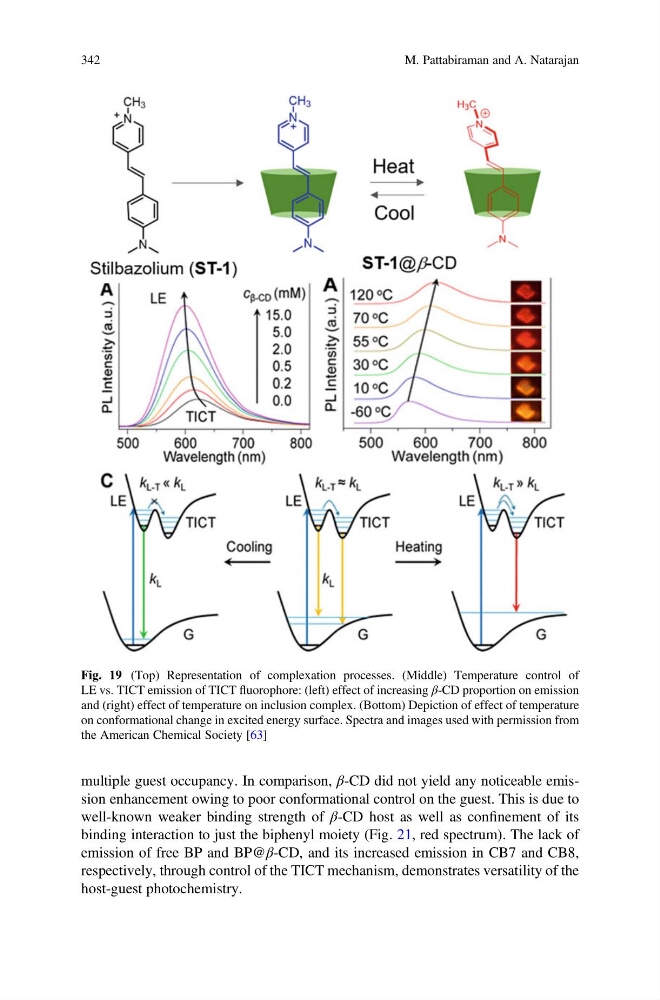
Fig. 19 (Top) Representation of complexation processes. (Middle) Temperature control of
LE vs. TICT emission of TICT fluorophore: (left) effect of increasing β-CD proportion on emission
and (right) effect of temperature on inclusion complex. (Bottom) Depiction of effect of temperature
on conformational change in excited energy surface. Spectra and images used with permission from
the American Chemical Society [63]
342
M. Pattabiraman and A. Natarajan
well-known weaker binding strength of β-CD host as well as confinement of its
binding interaction to just the biphenyl moiety (Fig. 21, red spectrum). The lack of
emission of free BP and BP@β-CD, and its increased emission in CB7 and CB8,
respectively, through control of the TICT mechanism, demonstrates versatility of the
host-guest photochemistry.
Fig. 19 (Top) Representation of complexation processes. (Middle) Temperature control of
LE vs. TICT emission of TICT fluorophore: (left) effect of increasing β-CD proportion on emission
and (right) effect of temperature on inclusion complex. (Bottom) Depiction of effect of temperature
on conformational change in excited energy surface. Spectra and images used with permission from
the American Chemical Society [63]
342
M. Pattabiraman and A. Natarajan