

orientation of dye molecules [90–92]. With layered particles, it is easy to achieve at
least a partial anisotropy by ordering the layers into anisotropic three-dimensional
structures. For example, such ordering takes place when the films are prepared from
colloidal precursors by the preferential alignment of the layered particles with
respect to the surface of a substrate. The layered particles in such films are arranged
in a face-to-face alignment, lying parallel with respect to the substrate. A higher
degree of anisotropy can be achieved by spin coating. For the dye molecules
adsorbed on the surface of layered particles, a preferential orientation is expected
due to specific dye-surface or dye-dye interactions.
Molecular orientation is significantly affected by molecular aggregation. For
example, H-aggregates of some dyes were characterized by a nearly perpendicular
orientation with respect to the plane of the layers, while non-aggregated molecules or
those forming J-aggregates were almost parallel with respect to the substrate surface
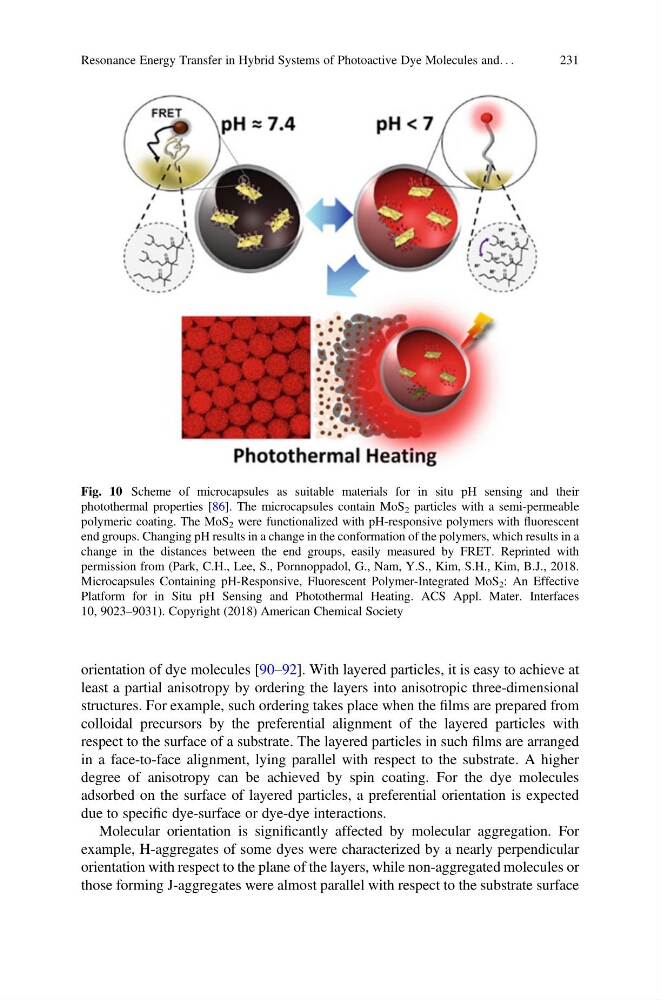
Fig. 10 Scheme of microcapsules as suitable materials for in situ pH sensing and their
photothermal properties [86]. The microcapsules contain MoS 2 particles with a semi-permeable
polymeric coating. The MoS 2 were functionalized with pH-responsive polymers with fluorescent
end groups. Changing pH results in a change in the conformation of the polymers, which results in a
change in the distances between the end groups, easily measured by FRET. Reprinted with
permission from (Park, C.H., Lee, S., Pornnoppadol, G., Nam, Y.S., Kim, S.H., Kim, B.J., 2018.
Microcapsules Containing pH-Responsive, Fluorescent Polymer-Integrated MoS 2 : An Effective
Platform for in Situ pH Sensing and Photothermal Heating. ACS Appl. Mater. Interfaces
10, 9023–9031). Copyright (2018) American Chemical Society
Resonance Energy Transfer in Hybrid Systems of Photoactive Dye Molecules and. . .
231
least a partial anisotropy by ordering the layers into anisotropic three-dimensional
structures. For example, such ordering takes place when the films are prepared from
colloidal precursors by the preferential alignment of the layered particles with
respect to the surface of a substrate. The layered particles in such films are arranged
in a face-to-face alignment, lying parallel with respect to the substrate. A higher
degree of anisotropy can be achieved by spin coating. For the dye molecules
adsorbed on the surface of layered particles, a preferential orientation is expected
due to specific dye-surface or dye-dye interactions.
Molecular orientation is significantly affected by molecular aggregation. For
example, H-aggregates of some dyes were characterized by a nearly perpendicular
orientation with respect to the plane of the layers, while non-aggregated molecules or
those forming J-aggregates were almost parallel with respect to the substrate surface
Fig. 10 Scheme of microcapsules as suitable materials for in situ pH sensing and their
photothermal properties [86]. The microcapsules contain MoS 2 particles with a semi-permeable
polymeric coating. The MoS 2 were functionalized with pH-responsive polymers with fluorescent
end groups. Changing pH results in a change in the conformation of the polymers, which results in a
change in the distances between the end groups, easily measured by FRET. Reprinted with
permission from (Park, C.H., Lee, S., Pornnoppadol, G., Nam, Y.S., Kim, S.H., Kim, B.J., 2018.
Microcapsules Containing pH-Responsive, Fluorescent Polymer-Integrated MoS 2 : An Effective
Platform for in Situ pH Sensing and Photothermal Heating. ACS Appl. Mater. Interfaces
10, 9023–9031). Copyright (2018) American Chemical Society
Resonance Energy Transfer in Hybrid Systems of Photoactive Dye Molecules and. . .
231