

controlled by the ratio of the embedded luminophores [73]. Similar systems were
investigated using R6G as the EA [73]. The fluorescence spectra significantly
changed mainly at higher loadings of R6G, indicating the formation of molecular
aggregates. In another study, the reactivity of hydroxyl groups at the edges of
smectite layers was used to prepare a system exhibiting FRET [51]. The hydroxyl
groups were selectively modified with a reactive pyrene derivative playing the role
of ED. The adsorption of the cationic porphyrin was realized via an ion exchange
reaction in another step. FRET was used to characterize the distribution of cations of
the porphyrin. The energy transfer was very effective to the molecules located near
the particle edges bearing moieties of the pyrene derivative. It appeared that a
significant proportion of porphyrin cations were adsorbed near the center of the
particles and did not participate in the energy transfer [51].
4.2.6 FRET in Hybrids with Polymers
Types of Polymers and Formation of Polymer Nanocomposites
Some hybrids based on layered nanoparticles and organic dyes also included
macromolecular substances as one of the components. In general, various types of
polymeric substances can be used in these materials. For example, molecules of
polyelectrolytes are electrostatically attracted to the surfaces of particles with an
opposite charge. Another type of polymers is polar but neutral macromolecules that
are soluble in water and polar solvents. In contrast to neutral small molecules, a
relatively strong adsorption of such polymers on the surfaces of hydrophilic
nanoparticles occurs. A specific category of macromolecular substances is technical,
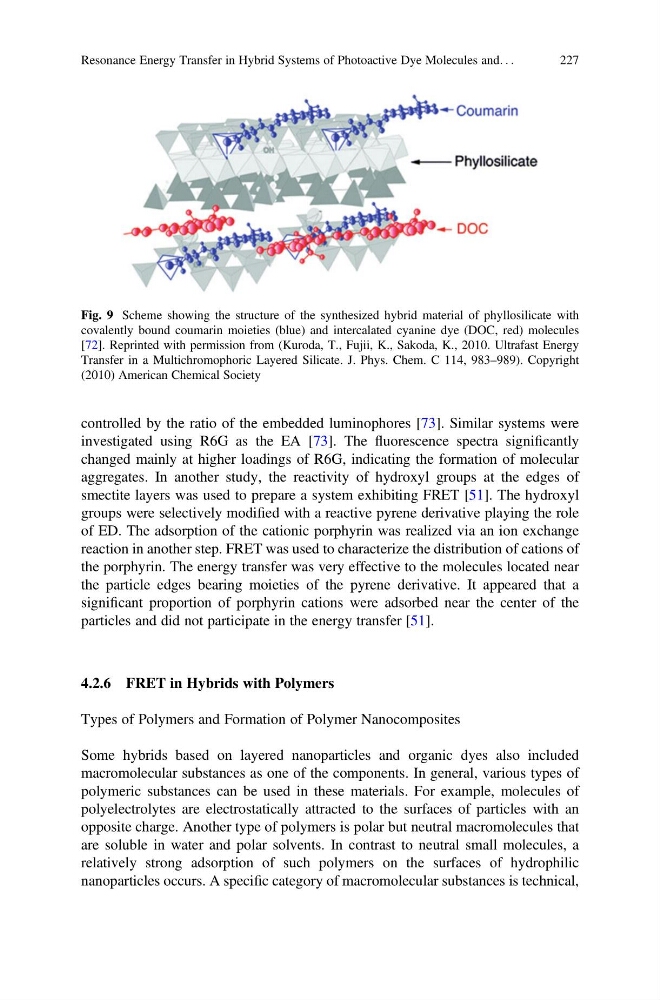
Fig. 9 Scheme showing the structure of the synthesized hybrid material of phyllosilicate with
covalently bound coumarin moieties (blue) and intercalated cyanine dye (DOC, red) molecules
[72]. Reprinted with permission from (Kuroda, T., Fujii, K., Sakoda, K., 2010. Ultrafast Energy
Transfer in a Multichromophoric Layered Silicate. J. Phys. Chem. C 114, 983–989). Copyright
(2010) American Chemical Society
Resonance Energy Transfer in Hybrid Systems of Photoactive Dye Molecules and. . .
227
investigated using R6G as the EA [73]. The fluorescence spectra significantly
changed mainly at higher loadings of R6G, indicating the formation of molecular
aggregates. In another study, the reactivity of hydroxyl groups at the edges of
smectite layers was used to prepare a system exhibiting FRET [51]. The hydroxyl
groups were selectively modified with a reactive pyrene derivative playing the role
of ED. The adsorption of the cationic porphyrin was realized via an ion exchange
reaction in another step. FRET was used to characterize the distribution of cations of
the porphyrin. The energy transfer was very effective to the molecules located near
the particle edges bearing moieties of the pyrene derivative. It appeared that a
significant proportion of porphyrin cations were adsorbed near the center of the
particles and did not participate in the energy transfer [51].
4.2.6 FRET in Hybrids with Polymers
Types of Polymers and Formation of Polymer Nanocomposites
Some hybrids based on layered nanoparticles and organic dyes also included
macromolecular substances as one of the components. In general, various types of
polymeric substances can be used in these materials. For example, molecules of
polyelectrolytes are electrostatically attracted to the surfaces of particles with an
opposite charge. Another type of polymers is polar but neutral macromolecules that
are soluble in water and polar solvents. In contrast to neutral small molecules, a
relatively strong adsorption of such polymers on the surfaces of hydrophilic
nanoparticles occurs. A specific category of macromolecular substances is technical,
Fig. 9 Scheme showing the structure of the synthesized hybrid material of phyllosilicate with
covalently bound coumarin moieties (blue) and intercalated cyanine dye (DOC, red) molecules
[72]. Reprinted with permission from (Kuroda, T., Fujii, K., Sakoda, K., 2010. Ultrafast Energy
Transfer in a Multichromophoric Layered Silicate. J. Phys. Chem. C 114, 983–989). Copyright
(2010) American Chemical Society
Resonance Energy Transfer in Hybrid Systems of Photoactive Dye Molecules and. . .
227