

4.3 Optoelectronic Devices
Besides the use of luminescent silver-containing zeolites as secondary emissive
phosphors in LED devices, such materials have been also tested in hybrid organic/
inorganic light-emitting diodes (OLEDs) as recently demonstrated by Kennes and
collaborators (Fig. 8) [115], where luminescent silver-exchanged zeolites were
embedded in polyvinyl carbazole (PVK). It was observed that the use of silverexchanged zeolites as emitters in a single-layer OLED led to electroluminescence
bands that clearly differ from pristine PVK OLEDs and the typical
photoluminescence behavior of silver-zeolites. Moreover, a clear dependence
between the zeolite silver loading and the electroluminescence intensity was
recorded. A follow-up study of the electroluminescence mechanism of silver-zeolitebased OLEDs addressed the role of the polymer matrix, zeolite framework, and
counter-ions present in the zeolites on the OLED performance. Based on the
obtained results, a silver-exchanged-based OLED device displaying a voltage polarity dependent color was achieved [116]. These studies are paving the way for a new
type of easily tunable hybrid and cost-effective OLEDs using silver-exchanged
zeolites as the emissive materials.
4.4 Encoded Information Carries
The photoactivation of silver clusters in single zeolite crystals has been recently
demonstrated (Fig. 9, upper panel). These new types of optically encoded
microcarriers were created using a two-photon activation process with near-infrared
light [26]. It was suggested that the formation of bright silver clusters was accomplished through the photochemical reduction of the silver ions (serving as counter
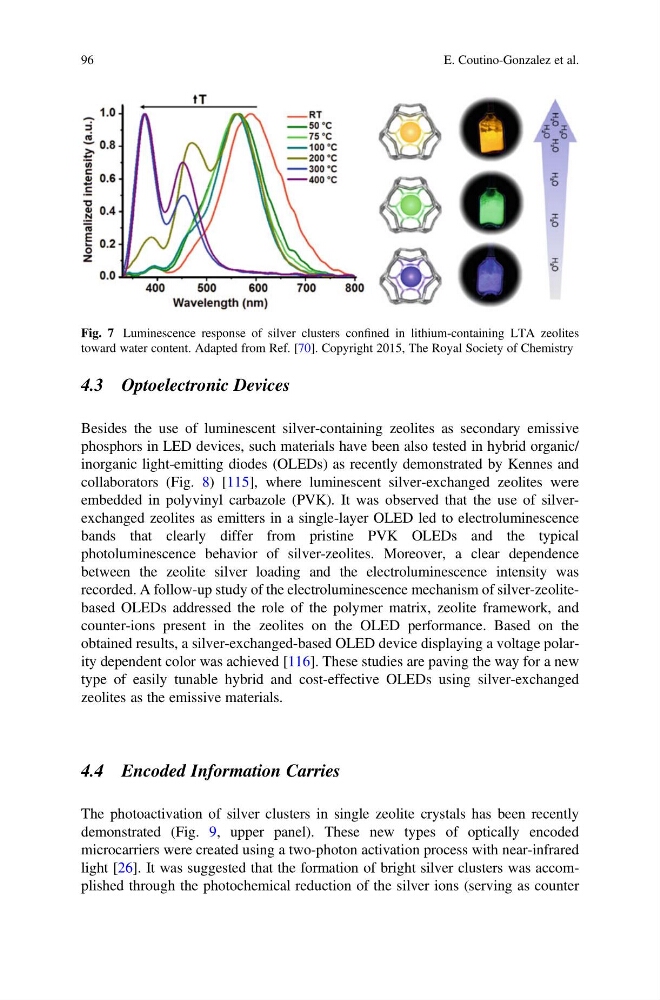
Fig. 7 Luminescence response of silver clusters confined in lithium-containing LTA zeolites
toward water content. Adapted from Ref. [70]. Copyright 2015, The Royal Society of Chemistry
96
E. Coutino-Gonzalez et al.
Besides the use of luminescent silver-containing zeolites as secondary emissive
phosphors in LED devices, such materials have been also tested in hybrid organic/
inorganic light-emitting diodes (OLEDs) as recently demonstrated by Kennes and
collaborators (Fig. 8) [115], where luminescent silver-exchanged zeolites were
embedded in polyvinyl carbazole (PVK). It was observed that the use of silverexchanged zeolites as emitters in a single-layer OLED led to electroluminescence
bands that clearly differ from pristine PVK OLEDs and the typical
photoluminescence behavior of silver-zeolites. Moreover, a clear dependence
between the zeolite silver loading and the electroluminescence intensity was
recorded. A follow-up study of the electroluminescence mechanism of silver-zeolitebased OLEDs addressed the role of the polymer matrix, zeolite framework, and
counter-ions present in the zeolites on the OLED performance. Based on the
obtained results, a silver-exchanged-based OLED device displaying a voltage polarity dependent color was achieved [116]. These studies are paving the way for a new
type of easily tunable hybrid and cost-effective OLEDs using silver-exchanged
zeolites as the emissive materials.
4.4 Encoded Information Carries
The photoactivation of silver clusters in single zeolite crystals has been recently
demonstrated (Fig. 9, upper panel). These new types of optically encoded
microcarriers were created using a two-photon activation process with near-infrared
light [26]. It was suggested that the formation of bright silver clusters was accomplished through the photochemical reduction of the silver ions (serving as counter
Fig. 7 Luminescence response of silver clusters confined in lithium-containing LTA zeolites
toward water content. Adapted from Ref. [70]. Copyright 2015, The Royal Society of Chemistry
96
E. Coutino-Gonzalez et al.